NURS 4540 TEST TWO BLUEPRINT SP 21
Chapter 8 – 7 items –Prenatal care, assessment, nursing care/action/HIV
Chapter 9 –7 items –Weight gain, calcium intake, BMI
Both normal-weight and under- weight women with inadequate weight gain
have an increased risk for giving birth to an infant with intrauterine growth
restriction (IUGR).
A commonly used method of evaluating the appropriateness of weight for
height is the body mass index (BMI), which is calculated by the following
formula:
o BMI = Weight ÷ Height2
Prepregnant BMI can be classified into the following categories: less than 18.5,
underweight or low; 18.5 to 24.9, normal; 25 to 29.9, overweight or high; and
greater than 30, obese
For women with single fetuses, current recommendations are that women with
normal BMI should gain 11.5 to 16 kg (25 to 35 lbs.) during pregnancy
There is no increase in the DRI of calcium during pregnancy and lactation
compared with the recommendation for the nonpregnant woman
o Sources of calcium—milk/dairy, fish (sardines and salmon), beans,
legumes, greens, fruits
Chapter 10 -7 items –Ultrasonography/transvaginal/transabdominal, Chorionic
villus sampling, Diagnostic testing -Nursing
care/intervention, BPP
Diagnostic ultrasonography is an important, safe technique in antepartum
fetal surveillance. It is considered by many to be the most valuable diagnostic
tool used in obstetrics
o Provides critical information to health care providers regarding fetal
activity and gestational age, normal versus abnormal fetal growth
curves, fetal and placental anatomy, fetal well-being, and visual
assistance with which invasive tests can be performed more safely
o Abdominal ultrasonography is more useful after the first trimester
when the pregnant uterus becomes an abdominal organ. During the
, procedure the woman usually should have a full bladder to displace the
uterus upward to provide a better image of the fetus.
o Transvaginal ultrasonography, in which the probe is inserted into the
vagina, allows pelvic anatomic features to be evaluated in greater detail
and intrauterine pregnancy to be diagnosed earlier. Well tolerated by
most pregnant women because it removes the need for a full bladder.
Optimally used in the first trimester to detect ectopic
pregnancies, monitor the developing embryo, help identify
abnormalities, and help establish gestational age
Chorionic villus sampling—a popular technique for genetic studies in the
first trimester.
o CVS can be performed in the first or second trimester, ideally between 10
and 13 weeks of gestation, and involves the removal of a small tissue
specimen from the fetal portion of the placenta
o Tissue reflects the genetic makeup of the fetus
The biophysical profile (BPP) is a noninvasive dynamic assessment of a fetus
that is based on acute and chronic markers of fetal disease.
o Can be considered a physical examination of the fetus, including
determination of vital signs
o Main roles of nurses are counseling and educating women about the
procedure
o Normal score = 8-10
Chapter 11 –7 items –Cardiac diseases, GDM, Math
Classic risk factors for GDM include a family history of diabetes and a previous
pregnancy that resulted in an unexplained stillbirth or the birth of a malformed
or macrosomic fetus. Other risk factors for GDM include obesity, hypertension,
glycosuria, and maternal age older than 25 years
GDM is usually diagnosed during the second half of pregnancy. As fetal nutrient
demands rise during the late second and the third trimesters, maternal nutrient
ingestion induces greater and more sustained levels of blood glucose.
Pregnancy is not advised in women who have several cardiac conditions,
including pulmonary hypertension, Marfan syn- drome with aortic involvement,
and Eisenmenger syndrome, because the associated maternal mortality rate is
extremely high, up to 50%
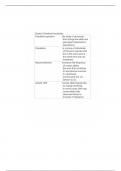
Functional classification of heart disease is a widely accepted standard:
Chapter 8 – 7 items –Prenatal care, assessment, nursing care/action/HIV
Chapter 9 –7 items –Weight gain, calcium intake, BMI
Both normal-weight and under- weight women with inadequate weight gain
have an increased risk for giving birth to an infant with intrauterine growth
restriction (IUGR).
A commonly used method of evaluating the appropriateness of weight for
height is the body mass index (BMI), which is calculated by the following
formula:
o BMI = Weight ÷ Height2
Prepregnant BMI can be classified into the following categories: less than 18.5,
underweight or low; 18.5 to 24.9, normal; 25 to 29.9, overweight or high; and
greater than 30, obese
For women with single fetuses, current recommendations are that women with
normal BMI should gain 11.5 to 16 kg (25 to 35 lbs.) during pregnancy
There is no increase in the DRI of calcium during pregnancy and lactation
compared with the recommendation for the nonpregnant woman
o Sources of calcium—milk/dairy, fish (sardines and salmon), beans,
legumes, greens, fruits
Chapter 10 -7 items –Ultrasonography/transvaginal/transabdominal, Chorionic
villus sampling, Diagnostic testing -Nursing
care/intervention, BPP
Diagnostic ultrasonography is an important, safe technique in antepartum
fetal surveillance. It is considered by many to be the most valuable diagnostic
tool used in obstetrics
o Provides critical information to health care providers regarding fetal
activity and gestational age, normal versus abnormal fetal growth
curves, fetal and placental anatomy, fetal well-being, and visual
assistance with which invasive tests can be performed more safely
o Abdominal ultrasonography is more useful after the first trimester
when the pregnant uterus becomes an abdominal organ. During the
, procedure the woman usually should have a full bladder to displace the
uterus upward to provide a better image of the fetus.
o Transvaginal ultrasonography, in which the probe is inserted into the
vagina, allows pelvic anatomic features to be evaluated in greater detail
and intrauterine pregnancy to be diagnosed earlier. Well tolerated by
most pregnant women because it removes the need for a full bladder.
Optimally used in the first trimester to detect ectopic
pregnancies, monitor the developing embryo, help identify
abnormalities, and help establish gestational age
Chorionic villus sampling—a popular technique for genetic studies in the
first trimester.
o CVS can be performed in the first or second trimester, ideally between 10
and 13 weeks of gestation, and involves the removal of a small tissue
specimen from the fetal portion of the placenta
o Tissue reflects the genetic makeup of the fetus
The biophysical profile (BPP) is a noninvasive dynamic assessment of a fetus
that is based on acute and chronic markers of fetal disease.
o Can be considered a physical examination of the fetus, including
determination of vital signs
o Main roles of nurses are counseling and educating women about the
procedure
o Normal score = 8-10
Chapter 11 –7 items –Cardiac diseases, GDM, Math
Classic risk factors for GDM include a family history of diabetes and a previous
pregnancy that resulted in an unexplained stillbirth or the birth of a malformed
or macrosomic fetus. Other risk factors for GDM include obesity, hypertension,
glycosuria, and maternal age older than 25 years
GDM is usually diagnosed during the second half of pregnancy. As fetal nutrient
demands rise during the late second and the third trimesters, maternal nutrient
ingestion induces greater and more sustained levels of blood glucose.
Pregnancy is not advised in women who have several cardiac conditions,
including pulmonary hypertension, Marfan syn- drome with aortic involvement,
and Eisenmenger syndrome, because the associated maternal mortality rate is
extremely high, up to 50%
Functional classification of heart disease is a widely accepted standard: