

Vivian Leung
Biomolecules
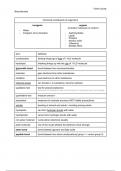
Chemical constituents of organisms
inorganic organic
(complex molecules w/ carbon)
- Water
- Inorganic ions (minerals) - Carbohydrates
- Lipids
- Proteins
- Nucleic acids
- (Vitamins)
- (Dietary fibre)
term definition
condensation binding things tgt w/ loss of 1 H2O molecule
hydrolysis breaking things up with the use of 1 H2O molecule
glycosidic bond bond between two monosaccharides
reduction gain electrons from other substances
oxidation lose electrons to other substances
reducing power can donate e- to substance, become oxidised
qualitative test test for presence/absence
amounts of samples used in food tests X measured very accurately
quantitative test measure amount
precaution measures to increase accuracy (NOT safety precautions)
soluble bonding of solvent and solute > bonding among solute
hydrophilic can form hydrogen bonds with water
hydrophobic cannot form hydrogen bonds with water
non-polar molecule nuclei attract electrons equally
polar molecule one of the nuclei attracts the electrons more strongly
ester bond bond between glycerol and fatty acids
peptide bond bond between two amino acids(carboxyl group 1 + amino group 2)
, Vivian Leung
Biomolecules
Carbohydrates
- Organic substances
- Made up of C, H and O (H:O = 2:1)
Classification
Monosaccharides Disaccharides Polysaccharides
features C6H12O6 C12H22O11 DO NOT taste sweet
Simplest (X smallest) Taste sweet INsoluble in water
X hydrolyse anymore Soluble in water Ideal for storage (X
Taste sweet Reducing power dissolve/ transported)
Soluble in water (except sucrose) Non-reducing
Reducing power (ALL) glycosidic bond H2 bonds between
chains
Strong
mechanical
strength
Maintain shape
of plant cell/
provide support
examples ⬡ Glucose C6H12O6 Maltose Starch
main energy source for Source: germinating storage in plants
cells barley major energy source in
Most readily broken diet
down + absorbed ⬠ Sucrose Source: potatoes and
(in energy drinks, Source: sugar cereal products
glucose solution to cane/beet table sugar
blood) ↓
directly broken down in Lactose ideal for storage
respiration (immediate) Source: milk and dairy compact
Source: fruits and honey products structure
insoluble in
Fructose water
Source: fruits and honey each molecule
contains large no
⬡ Galactose glucose units
Source: milk and dairy X diffuse out of
products (cheese, cells, affect
yoghurt) osmosis balance
↑
Glycogen
storage in animals
in liver and muscles as
energy reserves
, Vivian Leung
Biomolecules
Cellulose
in plants ONLY
plant cell walls, source
of dietary fibre
Source: plant products
Functions
- Main source of energy (each gram provides 17.1 kJ of energy)
- Monosaccharides: directly absorbed, used to provide energy glucose
- Disaccharides and starch: broken down into monosaccharides for absorption,
used to release energy
- As energy reserves
- When take in excess carbohydrates
- Converted into glycogen stored in liver/muscles as energy reserves
- Converted into fat stored under skin
- As source of dietary fibre
- Cellulose (X be digested)
- As structural material
- Cell membrane cell identification (antigens: glycoproteins)
- Nucleic acid ribose
- ATP (energy carrier in cells) triphosphate
Glucose test paper - glucose (qualitative)
- Clinistix paper: pink —> purple
- Diastix paper: blue —> green/ brown (either one only!)
Procedures
1. Transfer a drop of (food sample: glucose solution) to the spot plate with a dropper
Cover any exposed wounds with sterile dressings
Wear disposable gloves
2. Dip the test end of the glucose test paper into the food sample
Read the instructions on the packaging of the test paper before dipping the test
paper into the sample
3. Observe the colour change of the glucose test paper
Eg. The (1: subject) diastix test paper changes from (2: original colour) blue to (3:
new colour) green
4. Repeat Steps 1 to 3 by replacing the food sample with distilled water
distilled water acts as a control
> any colour change of test paper is due to presence of glucose
Iodine test - starch
- Iodine solution: brown —> blue-black
Procedures
(Qualitative)
1. Transfer a drop of (food sample: starch solution) to the spot plate with a dropper
Biomolecules
Chemical constituents of organisms
inorganic organic
(complex molecules w/ carbon)
- Water
- Inorganic ions (minerals) - Carbohydrates
- Lipids
- Proteins
- Nucleic acids
- (Vitamins)
- (Dietary fibre)
term definition
condensation binding things tgt w/ loss of 1 H2O molecule
hydrolysis breaking things up with the use of 1 H2O molecule
glycosidic bond bond between two monosaccharides
reduction gain electrons from other substances
oxidation lose electrons to other substances
reducing power can donate e- to substance, become oxidised
qualitative test test for presence/absence
amounts of samples used in food tests X measured very accurately
quantitative test measure amount
precaution measures to increase accuracy (NOT safety precautions)
soluble bonding of solvent and solute > bonding among solute
hydrophilic can form hydrogen bonds with water
hydrophobic cannot form hydrogen bonds with water
non-polar molecule nuclei attract electrons equally
polar molecule one of the nuclei attracts the electrons more strongly
ester bond bond between glycerol and fatty acids
peptide bond bond between two amino acids(carboxyl group 1 + amino group 2)
, Vivian Leung
Biomolecules
Carbohydrates
- Organic substances
- Made up of C, H and O (H:O = 2:1)
Classification
Monosaccharides Disaccharides Polysaccharides
features C6H12O6 C12H22O11 DO NOT taste sweet
Simplest (X smallest) Taste sweet INsoluble in water
X hydrolyse anymore Soluble in water Ideal for storage (X
Taste sweet Reducing power dissolve/ transported)
Soluble in water (except sucrose) Non-reducing
Reducing power (ALL) glycosidic bond H2 bonds between
chains
Strong
mechanical
strength
Maintain shape
of plant cell/
provide support
examples ⬡ Glucose C6H12O6 Maltose Starch
main energy source for Source: germinating storage in plants
cells barley major energy source in
Most readily broken diet
down + absorbed ⬠ Sucrose Source: potatoes and
(in energy drinks, Source: sugar cereal products
glucose solution to cane/beet table sugar
blood) ↓
directly broken down in Lactose ideal for storage
respiration (immediate) Source: milk and dairy compact
Source: fruits and honey products structure
insoluble in
Fructose water
Source: fruits and honey each molecule
contains large no
⬡ Galactose glucose units
Source: milk and dairy X diffuse out of
products (cheese, cells, affect
yoghurt) osmosis balance
↑
Glycogen
storage in animals
in liver and muscles as
energy reserves
, Vivian Leung
Biomolecules
Cellulose
in plants ONLY
plant cell walls, source
of dietary fibre
Source: plant products
Functions
- Main source of energy (each gram provides 17.1 kJ of energy)
- Monosaccharides: directly absorbed, used to provide energy glucose
- Disaccharides and starch: broken down into monosaccharides for absorption,
used to release energy
- As energy reserves
- When take in excess carbohydrates
- Converted into glycogen stored in liver/muscles as energy reserves
- Converted into fat stored under skin
- As source of dietary fibre
- Cellulose (X be digested)
- As structural material
- Cell membrane cell identification (antigens: glycoproteins)
- Nucleic acid ribose
- ATP (energy carrier in cells) triphosphate
Glucose test paper - glucose (qualitative)
- Clinistix paper: pink —> purple
- Diastix paper: blue —> green/ brown (either one only!)
Procedures
1. Transfer a drop of (food sample: glucose solution) to the spot plate with a dropper
Cover any exposed wounds with sterile dressings
Wear disposable gloves
2. Dip the test end of the glucose test paper into the food sample
Read the instructions on the packaging of the test paper before dipping the test
paper into the sample
3. Observe the colour change of the glucose test paper
Eg. The (1: subject) diastix test paper changes from (2: original colour) blue to (3:
new colour) green
4. Repeat Steps 1 to 3 by replacing the food sample with distilled water
distilled water acts as a control
> any colour change of test paper is due to presence of glucose
Iodine test - starch
- Iodine solution: brown —> blue-black
Procedures
(Qualitative)
1. Transfer a drop of (food sample: starch solution) to the spot plate with a dropper


