

Corporate Strategy
Terms in this set (79)
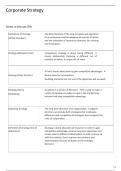
Definitions of strategy The determination of the long-run goals and objectives
(Alfred Chandler) of an enterprise and the adoption of courses of action
and the allocation of resources necessary for carrying
out these goals.
Strategy (Michael Porter) Competitive strategy is about being different. It
means deliberately choosing a different set of
activities to deliver a unique mix of value
A firm's theory about how to gain competitive advantages - A
Strategy (Peter Drucker) theory based on assumptions
(building scenarios but not sure if the objectives will succeed)
Strategy (Henry A pattern in a stream of decisions - Firm's need to make a
Mintzberg) variety of decisions in order to cope in the market (stay
relevant and keep competitive advantage
Exploiring Strategy The long-term direction of an organization - Longterm
direction can include both strategies that emphasize
difference and competition & strategies that recognize the
roles of cooperation
Definition of strategy (mix of Strategy is about allocation of resources in order to gain
definitions) competitive advantage, achieve long-term objectives and
create value to different stakeholders. In order to keep up
with the markets, firm's require new solutions and
improvements that are all based on the strategic
decisions.
1/14
, Organization (Mintzberg) The organization as the flow of formal authority,
regulated activity, informal communication, work
constellations, and ad hoc decision processes.
Coopetition Competition and collaboration.
Industry A group of firms producing products and services that are
essentially the same -For example, the automobile industry
and the airline industry
Sector A broad industry group (or a group of markets)
especially in the public sector - for example the health
sector
Market A group of customers for specific products or
services that are essentially the same - e.g. the
market for luxury cars in Germany
Decisions about:
1. the long-term direction of an organization
2. scope of activities
3. gaining advantage over competitors
Strategic Decisions
4. addressing changes in the business environment
5. building on resources and competences
(capability)
6. values and expectations of stakeholders
Three horizon theory The Three Horizons Theory is a strategic framework
developed by McKinsey, that helps organizations manage
innovation and growth across three distinct timeframes or
"horizons." Each horizon represents a different stage of
business development
Horizon 1 Current core activities - extend and defend these activities
2/14
Terms in this set (79)
Definitions of strategy The determination of the long-run goals and objectives
(Alfred Chandler) of an enterprise and the adoption of courses of action
and the allocation of resources necessary for carrying
out these goals.
Strategy (Michael Porter) Competitive strategy is about being different. It
means deliberately choosing a different set of
activities to deliver a unique mix of value
A firm's theory about how to gain competitive advantages - A
Strategy (Peter Drucker) theory based on assumptions
(building scenarios but not sure if the objectives will succeed)
Strategy (Henry A pattern in a stream of decisions - Firm's need to make a
Mintzberg) variety of decisions in order to cope in the market (stay
relevant and keep competitive advantage
Exploiring Strategy The long-term direction of an organization - Longterm
direction can include both strategies that emphasize
difference and competition & strategies that recognize the
roles of cooperation
Definition of strategy (mix of Strategy is about allocation of resources in order to gain
definitions) competitive advantage, achieve long-term objectives and
create value to different stakeholders. In order to keep up
with the markets, firm's require new solutions and
improvements that are all based on the strategic
decisions.
1/14
, Organization (Mintzberg) The organization as the flow of formal authority,
regulated activity, informal communication, work
constellations, and ad hoc decision processes.
Coopetition Competition and collaboration.
Industry A group of firms producing products and services that are
essentially the same -For example, the automobile industry
and the airline industry
Sector A broad industry group (or a group of markets)
especially in the public sector - for example the health
sector
Market A group of customers for specific products or
services that are essentially the same - e.g. the
market for luxury cars in Germany
Decisions about:
1. the long-term direction of an organization
2. scope of activities
3. gaining advantage over competitors
Strategic Decisions
4. addressing changes in the business environment
5. building on resources and competences
(capability)
6. values and expectations of stakeholders
Three horizon theory The Three Horizons Theory is a strategic framework
developed by McKinsey, that helps organizations manage
innovation and growth across three distinct timeframes or
"horizons." Each horizon represents a different stage of
business development
Horizon 1 Current core activities - extend and defend these activities
2/14


