100% satisfaction guarantee Immediately available after payment Both online and in PDF No strings attached 4.6 TrustPilot
logo-home
Exam (elaborations)

NSCA CPSS Periodization and Programming for Individual Sports Questions and Complete Solutions Graded A+

Rating
-
Sold
-
Pages
7
Grade
A+
Uploaded on
26-03-2025
Written in
2024/2025

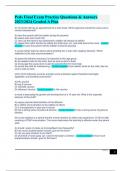
NSCA CPSS Periodization and Programming for Individual Sports Questions and Complete Solutions Graded A+ Periodization - Answer: Process of organizing programming strategies and aligning them with performance goals Framework which specific training programs are made to address specific needs and situations Programming - Answer: Operation of strategic thinking which is best accomplished when ongoing monitoring is integrated into periodization process Categories that fall under periodization - Answer: Training goals Timelines Fitness periods Training phases Categories that fall under programming - Answer: Training variables Strategies Models used for training process - Answer: Parallel Sequential Emphasis Parallel training model - Answer: all factors trained in one session, day, series of days, or microcycles Other name for parallel training model - Answer: Concurrent/complex parallel approach Who benefits most from parallel training model - Answer: youth, novice, or developmental athletes Issue with parallel approach - Answer: training volume/load must increase to stimulate adaptation Best times to use parallel approach - Answer: Transition period Short preparatory period before long competitive period Sequential training model - Answer: factors are sequenced in logical pattern to guide training towards targeted outcome Other name for sequential training model - Answer: Block modeling Who benefits most from sequential training model - Answer: Individual sports such as weightlifting, XC skiing, cycling, T&F, CV endurance sports Issue with sequential approach - Answer: Some factors are no longer emphasized, resulting in reduction in development of those factors "Mini-blocks" are suggested as solution Emphasis training model - Answer: Incorporates both parallel and sequential model Allows for several factors to be trained simultaneously with varying emphasis over time Other name for emphasis training model - Answer: Pendulum approach Vertical integration model (T&F) Who benefits most from emphasis model - Answer: Intermediate to advanced athletes who have to compete in congested competition period Team sports, track cycling, sprinting Suggestion for emphasis model - Answer: Rotate training emphasis every 2 weeks to optimize performance capacity 7 levels of periodized training plan - Answer: Multiyear training plan Annual training plan Macrocycle Mesocycle Microcycle Training day Training session Multiyear training plan - Answer: Central component to long-term development of athlete Establish various performance markers Most common multiyear training plan - Answer: Quadrennial plan (4 years of training) Aligns athletes with Olympics, high school sports, collegiate sports Annual training plan - Answer: Establishes training for entire year Defines targeted developmental/performance goals for individual athlete Load progresses classically from HV/LI to LV/HI Macrocycle - Answer: When annual plan contains one competitive season However, can represent seasons 3 major periods of macrocycle - Answer: preparation, competition, transition period Preparation period - Answer: Development of physiological, psychological, and technical base Competitive period - Answer: Peak performance period Transition period - Answer: link between multiple macrocycles or annual training plans goal is to maintain fitness levels and technical skills while providing recovery and regeneration 5 different training phases - Answer: General preparation, specific preparation, precompetition, main competition, transition Precompetitive phase - Answer: links sport-specific and precompetition phases includes simulated/unofficial competitions Mesocycle - Answer: training block, medium duration training plan, 2 to 6 weeks in length Microcycle - Answer: usually 7 days considered one of the most important levels of planning since it contains very specific training objectives structured into individual sessions Microcycles in Preparatory Period - Answer: Introductory Ordinary Shock Recovery Model Microcycles in Competition Period - Answer: Model Precompetition Competition Recovery Introductory Microcycle - Answer: Reestablish/establish general/sport-specific skills Introduce new skills Elevate performance capacities Ordinary Microcycle - Answer: Contains lower loads w/ submax intensities Loads increase across successive microcycle Shock Microcycle - Answer: AKA concentrated loading Sudden increase in volume and intensity Best used with more developed athletes Recovery Microcycle - Answer: Reduction in training load Induces recovery, reduce fatigue Model Microcycle - Answer: Models the competition Familiarizes athlete with competition environment Precompetition Microcycle - Answer: May have higher training volumes earlier that decrease across microcycle Special attention to recovery Focus on sport-specific training Competition MIcrocycle - Answer: Contains competitions Optimizes performance Includes sessions that align with competition schedule Off-season - Answer: Period that lays foundation for competitive season Generally higher volume, lower intensities Sporting form - Answer: Level of preparedness necessary for competitive success Preseason - Answer: Includes specific prep and precomp phases Link between off-season and in-season Increased sport specificity and use of specialized developmental and competitive exercises In-Season - Answer: Goal is managing fatigue, elevating performance capacity, maximize competitive performance Use intuition to guide program decision or leverage monitoring strategies What can sport scientist do during in-season? - Answer: Use "big data tech" such as machine learning and modeling techniques to provide actionable feedback to coaches Peaking - Answer: Process of elevating athlete's performance Tapering - Answer: Progressive, non-linear reduction of training load during variable period of time Workload reduction for tapers - Answer: 41-60% depending on pre-taper training volumes How long can tapers last - Answer: 1 to 4 weeks Most common is 8 to 14 days Deterministic model - Answer: Determine key factors related to athlete's performance

Show more Read less
Institution
NSCA CPSS
Course
NSCA CPSS


Whoops! We can’t load your doc right now. Try again or contact support.

Written for

Institution
NSCA CPSS
Course
NSCA CPSS

Document information

Uploaded on
March 26, 2025
Number of pages
7
Written in
2024/2025
Type
Exam (elaborations)
Contains
Questions & answers

Subjects

Content preview

NSCA CPSS Periodization and
Programming for Individual Sports
Questions and Complete Solutions
Graded A+
Periodization - Answer: Process of organizing programming strategies and aligning them with
performance goals


Framework which specific training programs are made to address specific needs and situations


Programming - Answer: Operation of strategic thinking which is best accomplished when ongoing
monitoring is integrated into periodization process


Categories that fall under periodization - Answer: Training goals

Timelines

Fitness periods

Training phases


Categories that fall under programming - Answer: Training variables

Strategies


Models used for training process - Answer: Parallel

Sequential

Emphasis


Parallel training model - Answer: all factors trained in one session, day, series of days, or microcycles


Other name for parallel training model - Answer: Concurrent/complex parallel approach

, Who benefits most from parallel training model - Answer: youth, novice, or developmental athletes


Issue with parallel approach - Answer: training volume/load must increase to stimulate adaptation


Best times to use parallel approach - Answer: Transition period


Short preparatory period before long competitive period


Sequential training model - Answer: factors are sequenced in logical pattern to guide training towards
targeted outcome


Other name for sequential training model - Answer: Block modeling


Who benefits most from sequential training model - Answer: Individual sports such as weightlifting, XC
skiing, cycling, T&F, CV endurance sports


Issue with sequential approach - Answer: Some factors are no longer emphasized, resulting in reduction
in development of those factors


"Mini-blocks" are suggested as solution


Emphasis training model - Answer: Incorporates both parallel and sequential model


Allows for several factors to be trained simultaneously with varying emphasis over time


Other name for emphasis training model - Answer: Pendulum approach


Vertical integration model (T&F)

Get to know the seller

Seller avatar
Reputation scores are based on the amount of documents a seller has sold for a fee and the reviews they have received for those documents. There are three levels: Bronze, Silver and Gold. The better the reputation, the more your can rely on the quality of the sellers work.
YourExamplug Grand Canyon University
View profile
Follow You need to be logged in order to follow users or courses
Sold
173
Member since
1 year
Number of followers
26
Documents
14429
Last sold
3 weeks ago
Your Exm Plug

Assignments, Case Studies, Research, Essay writing service, Questions and Answers, Discussions etc. for students who want to see results twice as fast. I have done papers of various topics and complexities. I am punctual and always submit work on-deadline. I write engaging and informative content on all subjects. Send me your research papers, case studies, psychology papers, etc, and I’ll do them to the best of my abilities. Writing is my passion when it comes to academic work. I’ve got a good sense of structure and enjoy finding interesting ways to deliver information in any given paper. I love impressing clients with my work, and I am very punctual about deadlines. Send me your assignment and I’ll take it to the next level. I strive for my content to be of the highest quality. Your wishes come first— send me your requirements and I’ll make a piece of work with fresh ideas, consistent structure, and following the academic formatting rules. For every student you refer to me with an order that is completed and paid transparently, I will do one assignment for you, free of charge!!!!!!!!!!!!

Read more Read less
4.3

67 reviews

5
38
4
16
3
7
2
4
1
2

Recently viewed by you

Why students choose Stuvia

Created by fellow students, verified by reviews

Quality you can trust: written by students who passed their tests and reviewed by others who've used these notes.

Didn't get what you expected? Choose another document

No worries! You can instantly pick a different document that better fits what you're looking for.

Pay as you like, start learning right away

No subscription, no commitments. Pay the way you're used to via credit card and download your PDF document instantly.

Student with book image

“Bought, downloaded, and aced it. It really can be that simple.”

Alisha Student

Frequently asked questions