100% satisfaction guarantee Immediately available after payment Both online and in PDF No strings attached 4.2 TrustPilot
logo-home
Exam (elaborations)

MGMT 3720 Exam 1 Questions with Correct Answers Latest Update 2025

Rating
-
Sold
-
Pages
4
Grade
A+
Uploaded on
26-03-2025
Written in
2024/2025

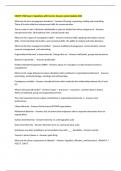
MGMT 3720 Exam 1 Questions with Correct Answers Latest Update 2025 What are the four management functions? - Answers Planning, organizing, leading and controlling. These all involve effective interpersonal skills for communication The ten roles or sets of behavior attributable to jobs are divided into three categories of - Answers interpersonal roles, informational roles, and decisional roles What are the 3 types of management skills? - Answers technical skills: applying information, human skills: communicating information, and conceptual skills: the ability to analyze and make decisions What are the four managerial activities? - Answers traditional management, communication, human resource management, and networking Organizational behavior is determined by 3 things that are - Answers Individuals, groups and structures Behavior is generally... - Answers predictable Evidence-Based Management (EBM) - Answers argues for managers to make decisions based on management. What are the major behavioral science disciplines that contribute to organizational behavior? - Answers psychology, social psychology, sociology and anthropology Contingency variables - Answers situational factors that moderate the relationship between the IV and DV What is the basic OB model? - Answers inputs -> processes -> outcomes...and then back to inputs. Works at individual, group and organizational levels The most important human output contribution to organizational behavior is - Answers task performance Citizen Behavior - Answers Performance BEYOND expectations Withdrawal Behavior - Answers Sets of actions that employees take to separate themselves from an organizations Surface level Diversity - Answers Diversity on a demographic scale Deep Level Diversity - Answers Diversity more on a personal value scale Employees are often unwilling to accommodate most with ____ dissability - Answers mental Tenure is almost always a - Answers good thing What are the three components of attitude? - Answers Cognitive, Affective, and behavioral. I KNOW IT, I FEEL IT, I DO IT. Cognitive Dissonance - Answers Basically cognitive discomfort. We think one thing, but we feel another. In order to deal with dissonance, we rationalize it our heads to keep on tootin. Moderating Variables - Answers the variables that influence attitudes and therefore, behaviors Attitude predicts - Answers behavior Job Involvement - Answers How much do I identify with the work I do? Logical Empowerment - Answers How much influence do I believe I have in my job? 3 dimensions of organizational commitment - Answers affective (emotional attachment), continuance commitment (economic value of staying), normative (moral or ethical obligations) Perceived Organizational Support - Answers How much does my organization care about me? How much does money influence job satisfaction? - Answers After 40,000, there is really no relationship What are the four employee responses to dissatisfaction? - Answers voice, loyalty, exit and neglect The Myth of Rationality - Answers Emotions were seen as irrational Past View of Emotionality - Answers Emotions were believed to be disruptive and only negative emotions were observed Affect - Answers covers a broad range of feelings people exprience Emotion - Answers Generally caused by something or someone; intense but generally short lived Mood - Answers Generally not caused by something specific; usually less intense but longer lived. DA FUNK The 6 basic emotions are - Answers anger, fear, sadness, happiness, disgust, surprise Emotional Dissonance - Answers having to project one emotion while feeling another Surface acting - Answers displaying required emotions Deep acting - Answers displaying actual felt emotions Affective Events Theory - Answers Job satisfaction and job performance are often based on emotional reaction and personal dispositions which are triggered by work environment and work events. Emotional Intelligence - Answers a person's ability to be self aware and detect emotions in others. Not a lot of statistical support Employee deviance - Answers employees that act to violate norms and threaten the organization

Show more Read less
Institution
MGMT 3720
Course
MGMT 3720


Whoops! We can’t load your doc right now. Try again or contact support.

Written for

Institution
MGMT 3720
Course
MGMT 3720

Document information

Uploaded on
March 26, 2025
Number of pages
4
Written in
2024/2025
Type
Exam (elaborations)
Contains
Questions & answers

Subjects

Content preview

MGMT 3720 Exam 1 Questions with Correct Answers Latest Update 2025

What are the four management functions? - Answers Planning, organizing, leading and controlling.
These all involve effective interpersonal skills for communication

The ten roles or sets of behavior attributable to jobs are divided into three categories of - Answers
interpersonal roles, informational roles, and decisional roles

What are the 3 types of management skills? - Answers technical skills: applying information, human
skills: communicating information, and conceptual skills: the ability to analyze and make decisions

What are the four managerial activities? - Answers traditional management, communication, human
resource management, and networking

Organizational behavior is determined by 3 things that are - Answers Individuals, groups and structures

Behavior is generally... - Answers predictable

Evidence-Based Management (EBM) - Answers argues for managers to make decisions based on
management.

What are the major behavioral science disciplines that contribute to organizational behavior? - Answers
psychology, social psychology, sociology and anthropology

Contingency variables - Answers situational factors that moderate the relationship between the IV and
DV

What is the basic OB model? - Answers inputs -> processes -> outcomes...and then back to inputs.
Works at individual, group and organizational levels

The most important human output contribution to organizational behavior is - Answers task
performance

Citizen Behavior - Answers Performance BEYOND expectations

Withdrawal Behavior - Answers Sets of actions that employees take to separate themselves from an
organizations

Surface level Diversity - Answers Diversity on a demographic scale

Deep Level Diversity - Answers Diversity more on a personal value scale

Employees are often unwilling to accommodate most with ____ dissability - Answers mental

Tenure is almost always a - Answers good thing

What are the three components of attitude? - Answers Cognitive, Affective, and behavioral. I KNOW IT, I
FEEL IT, I DO IT.

Get to know the seller

Seller avatar
Reputation scores are based on the amount of documents a seller has sold for a fee and the reviews they have received for those documents. There are three levels: Bronze, Silver and Gold. The better the reputation, the more your can rely on the quality of the sellers work.
TutorJosh Chamberlain College Of Nursing
View profile
Follow You need to be logged in order to follow users or courses
Sold
344
Member since
1 year
Number of followers
16
Documents
28821
Last sold
8 hours ago
Tutor Joshua

Here You will find all Documents and Package Deals Offered By Tutor Joshua.

3.6

54 reviews

5
18
4
14
3
12
2
0
1
10

Recently viewed by you

Why students choose Stuvia

Created by fellow students, verified by reviews

Quality you can trust: written by students who passed their tests and reviewed by others who've used these notes.

Didn't get what you expected? Choose another document

No worries! You can instantly pick a different document that better fits what you're looking for.

Pay as you like, start learning right away

No subscription, no commitments. Pay the way you're used to via credit card and download your PDF document instantly.

Student with book image

“Bought, downloaded, and aced it. It really can be that simple.”

Alisha Student

Frequently asked questions