, TRT3705 Assignment 2 (COMPLETE ANSWERS)
Semester 1 2025 - DUE 4 April 2025; 100% TRUSTED
Complete, trusted solutions and explanations
ALL QUESTIONS ANSWERED CORRECTLY
1.Create your own definition of “tourism governance” by
referring to the importance of governance in a tourism
context.(5)
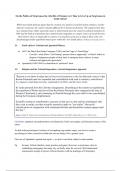
Definition of Tourism Governance:
Tourism governance refers to the framework, processes, and
mechanisms through which public and private sector
stakeholders collaboratively manage and regulate tourism
activities. It involves the coordination, decision-making, and
implementation of policies, regulations, and strategies that
ensure the sustainable development of tourism while balancing
economic, environmental, and social considerations. Effective
tourism governance ensures that tourism benefits local
communities, preserves cultural and natural heritage, and fosters
responsible tourism practices. It is essential for creating an
inclusive, transparent, and accountable system where all
stakeholders, including governments, businesses, local
communities, and tourists, actively participate in shaping
tourism practices, ensuring long-term viability, and addressing
challenges such as overtourism, environmental degradation, and
cultural preservation.
Importance of Governance in Tourism:
1. Sustainable Development: Good governance in tourism
ensures that tourism development aligns with sustainable
Semester 1 2025 - DUE 4 April 2025; 100% TRUSTED
Complete, trusted solutions and explanations
ALL QUESTIONS ANSWERED CORRECTLY
1.Create your own definition of “tourism governance” by
referring to the importance of governance in a tourism
context.(5)
Definition of Tourism Governance:
Tourism governance refers to the framework, processes, and
mechanisms through which public and private sector
stakeholders collaboratively manage and regulate tourism
activities. It involves the coordination, decision-making, and
implementation of policies, regulations, and strategies that
ensure the sustainable development of tourism while balancing
economic, environmental, and social considerations. Effective
tourism governance ensures that tourism benefits local
communities, preserves cultural and natural heritage, and fosters
responsible tourism practices. It is essential for creating an
inclusive, transparent, and accountable system where all
stakeholders, including governments, businesses, local
communities, and tourists, actively participate in shaping
tourism practices, ensuring long-term viability, and addressing
challenges such as overtourism, environmental degradation, and
cultural preservation.
Importance of Governance in Tourism:
1. Sustainable Development: Good governance in tourism
ensures that tourism development aligns with sustainable