

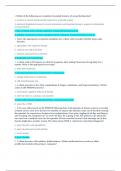
1. Which of the following are considered essential features of sexual dysfunction?
a. aversion to sexual stimuli and the experience of painful orgasm
b. abnormal heightened arousal to sexual stimulation and abnormal timing in orgasm in relationship
to sexual stimuli
c. lack of sexual desire and the experience of pain during the sexual act
d. inability to respond to sexual stimulation of the experience of pain during the sexual act
2. Select the appropriate treatment modalities for a client with circadian rhythm sleep-wake
disorder.
a. alprazolam with cognitive therapy
b. valerian root and sleep diary
c. doxepin and paradoxical intention
d. melatonin and chronotherapy
3. A client with GAD reports no relief of symptoms after taking Paroxetine 20 mg daily for a
month. What is the appropriate next step?
a. adds daily buspirone.
b. increases the daily dose of paroxetine to 40 mg daily.
c. change medication to venlafaxine
d. add benzodiazepine prn.
4. A client presents to the clinic complaining of fatigue, anhedonia, and hypersomnolence. Which
action is the PMHNP priority?
a. recommend cognitive behavioral therapy
b. refer the client to a primary care provider
c. order CBC, thyroid stimulating hormone, and toxicology screen
d. prescribe a SSRI
5. A 32-year-old presents to the PMHNP following four brief episodes of intense anxiety occurring
at home and at work over the last two months. H reports the episodes come out of the blue. During
the episodes, he experiences dyspnea, heart palpitations, chest pain, tingling in his lips and fingers,
and sweating. His symptoms are so severe he fears he is going to die. His primary care physician
has ruled out a medical cause for the episodes. He has canceled several work meetings out of fear
that he might have another attack. The client meets DSM-V criteria for what listed diagnosis?
a. panic disorder with agoraphobia
b. panic disorder and specific phobia
c. social anxiety
d. panic disorder
6. A client presents with auditory hallucinations. Which medication has an adverse effect
profile that includes this primary symptom?
a. aversion to sexual stimuli and the experience of painful orgasm
b. abnormal heightened arousal to sexual stimulation and abnormal timing in orgasm in relationship
to sexual stimuli
c. lack of sexual desire and the experience of pain during the sexual act
d. inability to respond to sexual stimulation of the experience of pain during the sexual act
2. Select the appropriate treatment modalities for a client with circadian rhythm sleep-wake
disorder.
a. alprazolam with cognitive therapy
b. valerian root and sleep diary
c. doxepin and paradoxical intention
d. melatonin and chronotherapy
3. A client with GAD reports no relief of symptoms after taking Paroxetine 20 mg daily for a
month. What is the appropriate next step?
a. adds daily buspirone.
b. increases the daily dose of paroxetine to 40 mg daily.
c. change medication to venlafaxine
d. add benzodiazepine prn.
4. A client presents to the clinic complaining of fatigue, anhedonia, and hypersomnolence. Which
action is the PMHNP priority?
a. recommend cognitive behavioral therapy
b. refer the client to a primary care provider
c. order CBC, thyroid stimulating hormone, and toxicology screen
d. prescribe a SSRI
5. A 32-year-old presents to the PMHNP following four brief episodes of intense anxiety occurring
at home and at work over the last two months. H reports the episodes come out of the blue. During
the episodes, he experiences dyspnea, heart palpitations, chest pain, tingling in his lips and fingers,
and sweating. His symptoms are so severe he fears he is going to die. His primary care physician
has ruled out a medical cause for the episodes. He has canceled several work meetings out of fear
that he might have another attack. The client meets DSM-V criteria for what listed diagnosis?
a. panic disorder with agoraphobia
b. panic disorder and specific phobia
c. social anxiety
d. panic disorder
6. A client presents with auditory hallucinations. Which medication has an adverse effect
profile that includes this primary symptom?


