Lecture 1
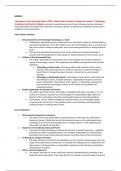
The paper by den Hond and Moser (2022), titled Useful Servant or Dangerous Master? Technology
in Business and Society Debates, provides a comprehensive look at how technology has been discussed
and understood in the intersection of business and society. Below is a detailed but simplified summary that is
suitable for exam preparation:
Main Themes and Ideas:
1. Instrumental View of Technology (Technology as a Tool)
o Traditionally, technology has been understood as an instrument, mainly for solving problems
and improving efficiency. This is the simplest view, where technology is seen as a neutral tool
that can be used to achieve certain goals, such as increasing productivity or solving technical
issues.
o This view has dominated how business and society studies have treated technology. It
assumes that technology itself is neither good nor bad but depends on how humans use it.
2. Criticism of the Instrumental View
o The authors argue that this instrumental view is too simplistic and overlooks important
aspects of technology’s impact. They emphasize two additional perspectives that are often
neglected:
Technology as Value-Laden: Technology reflects and embodies certain values,
interests, and social structures. For instance, who gets to control technology or
benefit from it is shaped by power dynamics, cultural norms, and economic
interests.
Technology as Relationally Agentic: Technology not only reflects social values but
also influences society. It shapes behaviors, organizational structures, and even
power relationships. This is known as the "agency" of technology, meaning that
once introduced, technology can have its own effects on how people and
institutions behave.
3. Broader Implications for Business and Society
o The authors argue that because technology is embedded with values and agency, it is not
neutral. For instance, corporate use of technologies for sustainability might reflect the
interests of the corporation rather than actually addressing environmental problems.
o Technologies, such as artificial intelligence and data systems, are increasingly shaping
corporate and societal norms. They stabilize certain ways of thinking and doing things,
making it harder to challenge these norms.
Key Contributions:
1. The Dominant Perspective in Literature:
o The paper reviews how technology has been discussed in major journals, particularly in
Business & Society. It finds that most of the literature focuses on the instrumental view—
technology as a tool for improving efficiency or solving problems—while neglecting the
value-laden and agentic perspectives.
2. Importance of Considering Values and Power:
o A key point is that technology can embody the interests of specific groups (e.g., capitalists,
governments), often marginalizing others. For example, technologies for environmental
protection may end up serving corporate interests more than those of the environment.
3. Technology as a Shaper of Society:
o The paper introduces the idea that technologies are not just tools used by people; they also
shape how people behave and interact. For example, the widespread use of algorithms and
data systems in hiring practices or sustainability reporting can bias decisions and reinforce
existing power structures.
4. Call for a Nuanced Approach:
o The authors advocate for a more critical and nuanced understanding of technology in the
study of business and society. They argue that it’s not enough to see technology as merely a
, tool; researchers need to consider whose values and interests are being served by
technology and how it influences society.
Limitations of the Paper:
1. Lack of Empirical Evidence:
o The paper is mainly theoretical and conceptual, meaning it doesn’t provide new data but
rather reviews existing literature. This limits its immediate practical applicability.
2. Limited Focus on Specific Technologies:
o While the paper discusses technology broadly, it doesn’t deeply examine specific
technologies (like AI or blockchain) in detail, which could have made the arguments more
concrete and actionable.
3. Overemphasis on Critique:
o The authors critique the instrumental view heavily but spend less time proposing concrete
solutions or alternative frameworks for understanding how technology can be better
integrated into business and society.
Practical Implications:
1. Broader Perspective on Technology: Businesses should not just see technology as a tool to
increase efficiency but also consider the values and interests that technologies embody. This
encourages firms to reflect on whose interests are advanced by a particular technology and to be
aware of any potential biases or exclusions.
2. Technology's Influence on Stakeholder Relations: Technology shapes interactions between
companies and their stakeholders, such as in the case of sustainability reporting systems or data-
driven decision-making. Companies need to acknowledge that technology mediates these
relationships and can perpetuate biases or power imbalances, potentially undermining fairness
and transparency.
3. Challenge Corporate Hegemony: The paper highlights how technology often serves corporate
interests, stabilizing certain discourses (like sustainability) that may hinder actual change. This
means businesses and society must critically assess how technology is used to address societal
problems and avoid complacency in thinking technology alone will solve issues without
addressing underlying power dynamics.
4. Technological Agency: The study suggests that technology is not neutral; it has agency,
influencing how societal issues like sustainability or responsibility are understood and addressed.
Businesses must recognize this and ensure technology is applied ethically and inclusively, taking
into account its broader societal impacts.
The paper by Grodal et al. (2021) titled The Evolution of Technology provides an extensive review of the
mechanisms that drive technological change and highlights four different perspectives: technological realist,
economic realist, cognitive interpretivist, and social constructionist. Here's a summary that captures the main
ideas in a clear, exam-prep-friendly format:
Key Takeaways
1. Technology Evolution: The paper explores how technology evolves through three main mechanisms:
variation, selection, and retention. Different streams of thought have interpreted these mechanisms
in various ways. For example, some see technology evolution as discrete, with major breakthroughs,
while others see it as continuous or cyclical. The study emphasizes the role of recombination (mixing
of old and new ideas), environmental fit (how well a technology matches market needs), and path
dependence (where early choices constrain future options).
2. Four Perspectives:
o Technological Realist: This view focuses on how technical performance and features drive
technology change. Technologies that perform better tend to be selected and retained.
, Variation is seen as a technical outcome, where the strongest and most useful innovations
survive.
o Economic Realist: This perspective looks at economic factors such as firm scale, market
competition, and cost structures. Technology evolves as firms compete and larger companies
gain advantages through economies of scale. Market forces, rather than just technical
aspects, shape which technologies succeed.
o Cognitive Interpretivist: This approach emphasizes the human understanding of technology.
People’s perceptions, mental models, and interpretations affect how technologies are
developed, selected, and retained. This perspective explains why some technologies, despite
their potential, may not succeed if they don’t align with user expectations or market
imaginaries.
o Social Constructionist: Here, the focus is on the role of social dynamics like networks, power,
and influence in shaping technology. Powerful actors, institutions, and regulatory bodies
influence which technologies are selected and sustained. The social structure often plays a
more significant role than the technical aspects of the technology itself.
the limitations for your exam preparation:
Lack of Integration: The four perspectives on technology evolution—technological, economic, cognitive, and
social—are often studied separately. This leads to a fragmented understanding of how technology evolves
because different factors (technical, market, and social) aren't examined together.
1. Insufficient Focus on Users: There’s limited empirical research on how user behavior impacts
technology selection and evolution. Most studies focus on producers and developers, missing the
crucial role users play in technology adoption and success.
2. Overemphasis on Technological Emergence: Research often focuses more on how technologies
emerge rather than how they mature and evolve long term. This overlooks how technologies adapt or
change over time in response to market and user feedback.
3. Lack of Mixed-Method Studies: There is a shortage of research that combines technical, economic,
and social approaches. Mixed-method studies could provide a more comprehensive view of how
these factors interact in shaping technology evolution.
Practical implications
1. Holistic Approach to Technology:
Businesses should consider both technical and non-technical factors (economic, social, and user
perceptions) when developing or adopting new technologies to ensure long-term success.
Policymakers must recognize the importance of public perception and user education in technology
adoption and create policies that balance innovation with user engagement.
2. User-Centric Design:
Companies should prioritize understanding user behavior and incorporate user feedback during the
development phase. This increases the chances of adoption and retention of new technologies by
aligning with real-world needs.
3. Long-Term Strategy:
Firms should focus not just on the emergence of technologies but also their maturation over time.
This requires ongoing adaptation to ensure technologies continue to meet market demands and user
expectations as they evolve.
FROM THE SPECIAL ISSUE EDITORS DIGITAL TRANSFORMATION: WHAT IS NEW IF
ANYTHING? EMERGING PATTERNS AND MANAGEMENT RESEARCH
Summary:
Digital transformation refers to how organizations are leveraging digital technologies like AI, big data, and
automation to change how they operate, compete, and create value. The paper explores the major ways in
which digital transformation impacts organizations, focusing on several areas:
The paper by den Hond and Moser (2022), titled Useful Servant or Dangerous Master? Technology
in Business and Society Debates, provides a comprehensive look at how technology has been discussed
and understood in the intersection of business and society. Below is a detailed but simplified summary that is
suitable for exam preparation:
Main Themes and Ideas:
1. Instrumental View of Technology (Technology as a Tool)
o Traditionally, technology has been understood as an instrument, mainly for solving problems
and improving efficiency. This is the simplest view, where technology is seen as a neutral tool
that can be used to achieve certain goals, such as increasing productivity or solving technical
issues.
o This view has dominated how business and society studies have treated technology. It
assumes that technology itself is neither good nor bad but depends on how humans use it.
2. Criticism of the Instrumental View
o The authors argue that this instrumental view is too simplistic and overlooks important
aspects of technology’s impact. They emphasize two additional perspectives that are often
neglected:
Technology as Value-Laden: Technology reflects and embodies certain values,
interests, and social structures. For instance, who gets to control technology or
benefit from it is shaped by power dynamics, cultural norms, and economic
interests.
Technology as Relationally Agentic: Technology not only reflects social values but
also influences society. It shapes behaviors, organizational structures, and even
power relationships. This is known as the "agency" of technology, meaning that
once introduced, technology can have its own effects on how people and
institutions behave.
3. Broader Implications for Business and Society
o The authors argue that because technology is embedded with values and agency, it is not
neutral. For instance, corporate use of technologies for sustainability might reflect the
interests of the corporation rather than actually addressing environmental problems.
o Technologies, such as artificial intelligence and data systems, are increasingly shaping
corporate and societal norms. They stabilize certain ways of thinking and doing things,
making it harder to challenge these norms.
Key Contributions:
1. The Dominant Perspective in Literature:
o The paper reviews how technology has been discussed in major journals, particularly in
Business & Society. It finds that most of the literature focuses on the instrumental view—
technology as a tool for improving efficiency or solving problems—while neglecting the
value-laden and agentic perspectives.
2. Importance of Considering Values and Power:
o A key point is that technology can embody the interests of specific groups (e.g., capitalists,
governments), often marginalizing others. For example, technologies for environmental
protection may end up serving corporate interests more than those of the environment.
3. Technology as a Shaper of Society:
o The paper introduces the idea that technologies are not just tools used by people; they also
shape how people behave and interact. For example, the widespread use of algorithms and
data systems in hiring practices or sustainability reporting can bias decisions and reinforce
existing power structures.
4. Call for a Nuanced Approach:
o The authors advocate for a more critical and nuanced understanding of technology in the
study of business and society. They argue that it’s not enough to see technology as merely a
, tool; researchers need to consider whose values and interests are being served by
technology and how it influences society.
Limitations of the Paper:
1. Lack of Empirical Evidence:
o The paper is mainly theoretical and conceptual, meaning it doesn’t provide new data but
rather reviews existing literature. This limits its immediate practical applicability.
2. Limited Focus on Specific Technologies:
o While the paper discusses technology broadly, it doesn’t deeply examine specific
technologies (like AI or blockchain) in detail, which could have made the arguments more
concrete and actionable.
3. Overemphasis on Critique:
o The authors critique the instrumental view heavily but spend less time proposing concrete
solutions or alternative frameworks for understanding how technology can be better
integrated into business and society.
Practical Implications:
1. Broader Perspective on Technology: Businesses should not just see technology as a tool to
increase efficiency but also consider the values and interests that technologies embody. This
encourages firms to reflect on whose interests are advanced by a particular technology and to be
aware of any potential biases or exclusions.
2. Technology's Influence on Stakeholder Relations: Technology shapes interactions between
companies and their stakeholders, such as in the case of sustainability reporting systems or data-
driven decision-making. Companies need to acknowledge that technology mediates these
relationships and can perpetuate biases or power imbalances, potentially undermining fairness
and transparency.
3. Challenge Corporate Hegemony: The paper highlights how technology often serves corporate
interests, stabilizing certain discourses (like sustainability) that may hinder actual change. This
means businesses and society must critically assess how technology is used to address societal
problems and avoid complacency in thinking technology alone will solve issues without
addressing underlying power dynamics.
4. Technological Agency: The study suggests that technology is not neutral; it has agency,
influencing how societal issues like sustainability or responsibility are understood and addressed.
Businesses must recognize this and ensure technology is applied ethically and inclusively, taking
into account its broader societal impacts.
The paper by Grodal et al. (2021) titled The Evolution of Technology provides an extensive review of the
mechanisms that drive technological change and highlights four different perspectives: technological realist,
economic realist, cognitive interpretivist, and social constructionist. Here's a summary that captures the main
ideas in a clear, exam-prep-friendly format:
Key Takeaways
1. Technology Evolution: The paper explores how technology evolves through three main mechanisms:
variation, selection, and retention. Different streams of thought have interpreted these mechanisms
in various ways. For example, some see technology evolution as discrete, with major breakthroughs,
while others see it as continuous or cyclical. The study emphasizes the role of recombination (mixing
of old and new ideas), environmental fit (how well a technology matches market needs), and path
dependence (where early choices constrain future options).
2. Four Perspectives:
o Technological Realist: This view focuses on how technical performance and features drive
technology change. Technologies that perform better tend to be selected and retained.
, Variation is seen as a technical outcome, where the strongest and most useful innovations
survive.
o Economic Realist: This perspective looks at economic factors such as firm scale, market
competition, and cost structures. Technology evolves as firms compete and larger companies
gain advantages through economies of scale. Market forces, rather than just technical
aspects, shape which technologies succeed.
o Cognitive Interpretivist: This approach emphasizes the human understanding of technology.
People’s perceptions, mental models, and interpretations affect how technologies are
developed, selected, and retained. This perspective explains why some technologies, despite
their potential, may not succeed if they don’t align with user expectations or market
imaginaries.
o Social Constructionist: Here, the focus is on the role of social dynamics like networks, power,
and influence in shaping technology. Powerful actors, institutions, and regulatory bodies
influence which technologies are selected and sustained. The social structure often plays a
more significant role than the technical aspects of the technology itself.
the limitations for your exam preparation:
Lack of Integration: The four perspectives on technology evolution—technological, economic, cognitive, and
social—are often studied separately. This leads to a fragmented understanding of how technology evolves
because different factors (technical, market, and social) aren't examined together.
1. Insufficient Focus on Users: There’s limited empirical research on how user behavior impacts
technology selection and evolution. Most studies focus on producers and developers, missing the
crucial role users play in technology adoption and success.
2. Overemphasis on Technological Emergence: Research often focuses more on how technologies
emerge rather than how they mature and evolve long term. This overlooks how technologies adapt or
change over time in response to market and user feedback.
3. Lack of Mixed-Method Studies: There is a shortage of research that combines technical, economic,
and social approaches. Mixed-method studies could provide a more comprehensive view of how
these factors interact in shaping technology evolution.
Practical implications
1. Holistic Approach to Technology:
Businesses should consider both technical and non-technical factors (economic, social, and user
perceptions) when developing or adopting new technologies to ensure long-term success.
Policymakers must recognize the importance of public perception and user education in technology
adoption and create policies that balance innovation with user engagement.
2. User-Centric Design:
Companies should prioritize understanding user behavior and incorporate user feedback during the
development phase. This increases the chances of adoption and retention of new technologies by
aligning with real-world needs.
3. Long-Term Strategy:
Firms should focus not just on the emergence of technologies but also their maturation over time.
This requires ongoing adaptation to ensure technologies continue to meet market demands and user
expectations as they evolve.
FROM THE SPECIAL ISSUE EDITORS DIGITAL TRANSFORMATION: WHAT IS NEW IF
ANYTHING? EMERGING PATTERNS AND MANAGEMENT RESEARCH
Summary:
Digital transformation refers to how organizations are leveraging digital technologies like AI, big data, and
automation to change how they operate, compete, and create value. The paper explores the major ways in
which digital transformation impacts organizations, focusing on several areas: