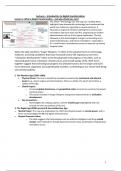
Lectures – Introduction to digital transformation
Lecture 1: What is Digital Transformation ...and why should you care?
The article "Technology over the long run" by Max Roser
highlights how dramatically technology has transformed the
world over millennia, especially in recent centuries. It
illustrates a long-term timeline starting from early human
innovations like stone tools and fire, progressing to modern
advancements such as AI and space exploration. The key
takeaway is that technological change is accelerating at an
unprecedented pace, and future innovations—especially in
AI—could further revolutionize society in ways we can barely
imagine today.
When the slide mentions "longer lifespans," it refers to the advancements in technology,
medicine, and living conditions that have increased human life expectancy over time.
"Civilization development" refers to the broad growth and progress of societies, such as
improved governance, education, infrastructure, and overall quality of life. Both terms
together suggest that technological progress has allowed humans to live longer and build
more advanced, organized, and sophisticated societies, contributing to our overall well-being
and societal stability.
2. The Machine Age (1800–1900):
• Physical Power: This era is marked by innovations powered by mechanical and physical
power (e.g., steam engines and locomotives). There is a photo of a steam locomotive, a
symbol of this age.
• Global Impact:
o Increased global dominance and geopolitical order occurred as countries harnessed
machine power.
o This period resulted in longer lifespans and general improvements in civilization
development.
• Key Innovations:
o Technologies like railways, planes, and the machine gun (highlighted with red
arrows) are seen as products of this era.
3. The Digital Age (2000–present) & Second Machine Age:
• Mental Power: This new era emphasizes the shift from physical power to mental power, with a
focus on technologies like AI and digital advancements.
• Beyond Economic Value:
o The slide suggests that technologies such as artificial intelligence will bring untold
change, with implications that go beyond economic value, potentially reshaping how
innovation occurs.
1
, The Electronic Age (1930–1945): The
invention of the transistor (1930s) and completion of the first computer (ENIAC) in 1945 marked the
beginning of the computer age, allowing for advancements in electronic devices and computing.
• The Information Age (1980s onwards): This period is characterized by a shift from industrial
work to an economy based on information technology (computers, internet).
• The Second Machine Age: As automation and artificial intelligence (AI) improve, machines are
now taking over cognitive tasks, not just physical ones. The increasing power of computing,
driven by Moore’s Law, means more complex tasks can be automated.
• Moore's Law is the observation that the number of transistors on a microchip doubles
approximately every two years, leading to an increase in computing power while costs decrease.
This has driven rapid advancements in technology and the ability to perform more complex tasks
with computers.
• Generations of Mobile Connectivity: The slide shows how mobile technology evolved from 1G
(1980s) with basic voice calls to 5G (2020s), which supports smart homes and the Internet of
Things (IoT). In the future, 6G (2030s) will bring autonomous cars and even faster connectivity.
• IoT (Internet of Things) refers to the network of physical devices (like smart appliances, cars,
and sensors) connected to the internet, allowing them to collect and share data, enhancing
automation and connectivity in everyday life.
1. Digitization: The conversion of physical information into digital form. Example: Converting paper
records into digital spreadsheets.
• Example: Converting a physical photo album into digital images on your computer.
• Purpose: Just making things digital, but not changing how you use them.
2. Digitalization: Using digital technologies to improve processes, like using robotics or automation
to streamline tasks in a business.
• Example: A hospital moving from paper records to a digital system that automatically updates
and tracks patient information, speeding up care.
2
, • Purpose: Improving existing processes using digital technology.
3. Digital Transformation: A larger shift where entire business models, strategies, and markets
change due to advanced technologies (AI, blockchain, IoT, etc.), leading to new services and
innovations, such as "Light as a Service."
• Example: Netflix starting as a DVD rental service but transforming into a fully digital
streaming platform, changing how we consume media.
• Purpose: Completely changing how a business operates by leveraging technology to create
new value.
In the first slide, the teacher explains that organizational analysts help bridge the gap between an
organization’s internal structure (form, strategy, and roles) and external factors like society, laws, and
competition. Analysts ensure organizations align with both internal practices and external market
demands.
In the second slide, the message is that existing organizations must adapt to transformative
technologies (like AI, quantum computing, etc.) to survive. New technologies enable the creation of
new business models, and organizations that fail to adapt risk being disrupted by more innovative
competitors.
1.2 Different perspectives about technology, organizations and society
The slide defines technology as the use of
knowledge to create artifacts (physical
objects or systems) that can solve problems.
Over time, these artifacts change, which is
called technology evolution. This process
involves how designs or innovations are
adopted, improved, and eventually become
dominant in a market. The source emphasizes
how technology is not static but constantly
evolves through the creation of new artifacts
and systems that respond to challenges, as discussed in the referenced text by Basalla (1988) and
further explained in Grodal et al.'s work
Instrumental Perspective of Technology
The instrumental perspective views technology
primarily as a tool or means to solve problems,
enhance efficiency, and improve productivity. In
this view, technology is seen as a neutral entity
3
, that can be used for beneficial purposes, thus contributing to societal issues by providing solutions
that improve welfare and well-being.
Contributing to societal issues: For example, YouTube’s recommendation system can push people
towards more extreme content, showing how technology can amplify problems in society.
Non-Instrumental Perspectives
In contrast, non-instrumental perspectives explore the social, cultural, and political dimensions of
technology. These views recognize that technology is not merely a tool; instead, it is socially
constructed and values-laden. This means that technologies embody specific values and interests,
reflecting the priorities of the stakeholders involved in their development and implementation
Advancing welfare and well-being: On the positive side, technology (like robotic surgery) helps
improve healthcare and overall quality of life.
Instrumental Perspective:
•
Technology is seen as a tool
designed to solve problems efficiently
and effectively. It is about using
technology to achieve practical
outcomes, focusing on functionality and
productivity.
• Example: Using a computer program to automate payroll calculations for a company. The
goal is to solve the payroll process problem more efficiently.
Value-Laden Perspective:
• Technology is viewed as a product of social, cultural, and political influences. It is not
neutral; instead, it embodies the values and interests of those who create and control it.
Relationally Agentic perspective suggests that technology has the power to shape society and
influence people's behavior. It isn't just a tool; it actively participates in maintaining and reinforcing
the dominant structures or power relations in society (called hegemony), whether this is done on
purpose (intended) or by accident (unintended).
Key Points:
• Capacity to influence social life: Technology can change how we interact, live, work, and even think. It
shapes social behaviors, relationships, and systems.
• Maintains hegemony: Technology often supports the existing power structures or the groups in control
(such as governments, large corporations, or dominant ideologies). It helps these groups maintain
their influence over society.
• Blocks counter-hegemony: By supporting the dominant power, technology can inhibit or block efforts
by opposing groups (counter-hegemony) to challenge or change the existing power structures.
Essentially, it keeps the status quo in place, making it harder for resistance or alternative ideas to gain
traction.
Example:
Imagine social media platforms. They influence how we communicate and shape public opinion.
Large corporations or governments can use these platforms to promote their views, reinforcing their
dominance (hegemony). If people try to use the same platforms to organize protests or promote
alternative ideas (counter-hegemony), the platforms could use algorithms or censorship to limit their
reach, thus blocking counter-hegemony.
4
Lecture 1: What is Digital Transformation ...and why should you care?
The article "Technology over the long run" by Max Roser
highlights how dramatically technology has transformed the
world over millennia, especially in recent centuries. It
illustrates a long-term timeline starting from early human
innovations like stone tools and fire, progressing to modern
advancements such as AI and space exploration. The key
takeaway is that technological change is accelerating at an
unprecedented pace, and future innovations—especially in
AI—could further revolutionize society in ways we can barely
imagine today.
When the slide mentions "longer lifespans," it refers to the advancements in technology,
medicine, and living conditions that have increased human life expectancy over time.
"Civilization development" refers to the broad growth and progress of societies, such as
improved governance, education, infrastructure, and overall quality of life. Both terms
together suggest that technological progress has allowed humans to live longer and build
more advanced, organized, and sophisticated societies, contributing to our overall well-being
and societal stability.
2. The Machine Age (1800–1900):
• Physical Power: This era is marked by innovations powered by mechanical and physical
power (e.g., steam engines and locomotives). There is a photo of a steam locomotive, a
symbol of this age.
• Global Impact:
o Increased global dominance and geopolitical order occurred as countries harnessed
machine power.
o This period resulted in longer lifespans and general improvements in civilization
development.
• Key Innovations:
o Technologies like railways, planes, and the machine gun (highlighted with red
arrows) are seen as products of this era.
3. The Digital Age (2000–present) & Second Machine Age:
• Mental Power: This new era emphasizes the shift from physical power to mental power, with a
focus on technologies like AI and digital advancements.
• Beyond Economic Value:
o The slide suggests that technologies such as artificial intelligence will bring untold
change, with implications that go beyond economic value, potentially reshaping how
innovation occurs.
1
, The Electronic Age (1930–1945): The
invention of the transistor (1930s) and completion of the first computer (ENIAC) in 1945 marked the
beginning of the computer age, allowing for advancements in electronic devices and computing.
• The Information Age (1980s onwards): This period is characterized by a shift from industrial
work to an economy based on information technology (computers, internet).
• The Second Machine Age: As automation and artificial intelligence (AI) improve, machines are
now taking over cognitive tasks, not just physical ones. The increasing power of computing,
driven by Moore’s Law, means more complex tasks can be automated.
• Moore's Law is the observation that the number of transistors on a microchip doubles
approximately every two years, leading to an increase in computing power while costs decrease.
This has driven rapid advancements in technology and the ability to perform more complex tasks
with computers.
• Generations of Mobile Connectivity: The slide shows how mobile technology evolved from 1G
(1980s) with basic voice calls to 5G (2020s), which supports smart homes and the Internet of
Things (IoT). In the future, 6G (2030s) will bring autonomous cars and even faster connectivity.
• IoT (Internet of Things) refers to the network of physical devices (like smart appliances, cars,
and sensors) connected to the internet, allowing them to collect and share data, enhancing
automation and connectivity in everyday life.
1. Digitization: The conversion of physical information into digital form. Example: Converting paper
records into digital spreadsheets.
• Example: Converting a physical photo album into digital images on your computer.
• Purpose: Just making things digital, but not changing how you use them.
2. Digitalization: Using digital technologies to improve processes, like using robotics or automation
to streamline tasks in a business.
• Example: A hospital moving from paper records to a digital system that automatically updates
and tracks patient information, speeding up care.
2
, • Purpose: Improving existing processes using digital technology.
3. Digital Transformation: A larger shift where entire business models, strategies, and markets
change due to advanced technologies (AI, blockchain, IoT, etc.), leading to new services and
innovations, such as "Light as a Service."
• Example: Netflix starting as a DVD rental service but transforming into a fully digital
streaming platform, changing how we consume media.
• Purpose: Completely changing how a business operates by leveraging technology to create
new value.
In the first slide, the teacher explains that organizational analysts help bridge the gap between an
organization’s internal structure (form, strategy, and roles) and external factors like society, laws, and
competition. Analysts ensure organizations align with both internal practices and external market
demands.
In the second slide, the message is that existing organizations must adapt to transformative
technologies (like AI, quantum computing, etc.) to survive. New technologies enable the creation of
new business models, and organizations that fail to adapt risk being disrupted by more innovative
competitors.
1.2 Different perspectives about technology, organizations and society
The slide defines technology as the use of
knowledge to create artifacts (physical
objects or systems) that can solve problems.
Over time, these artifacts change, which is
called technology evolution. This process
involves how designs or innovations are
adopted, improved, and eventually become
dominant in a market. The source emphasizes
how technology is not static but constantly
evolves through the creation of new artifacts
and systems that respond to challenges, as discussed in the referenced text by Basalla (1988) and
further explained in Grodal et al.'s work
Instrumental Perspective of Technology
The instrumental perspective views technology
primarily as a tool or means to solve problems,
enhance efficiency, and improve productivity. In
this view, technology is seen as a neutral entity
3
, that can be used for beneficial purposes, thus contributing to societal issues by providing solutions
that improve welfare and well-being.
Contributing to societal issues: For example, YouTube’s recommendation system can push people
towards more extreme content, showing how technology can amplify problems in society.
Non-Instrumental Perspectives
In contrast, non-instrumental perspectives explore the social, cultural, and political dimensions of
technology. These views recognize that technology is not merely a tool; instead, it is socially
constructed and values-laden. This means that technologies embody specific values and interests,
reflecting the priorities of the stakeholders involved in their development and implementation
Advancing welfare and well-being: On the positive side, technology (like robotic surgery) helps
improve healthcare and overall quality of life.
Instrumental Perspective:
•
Technology is seen as a tool
designed to solve problems efficiently
and effectively. It is about using
technology to achieve practical
outcomes, focusing on functionality and
productivity.
• Example: Using a computer program to automate payroll calculations for a company. The
goal is to solve the payroll process problem more efficiently.
Value-Laden Perspective:
• Technology is viewed as a product of social, cultural, and political influences. It is not
neutral; instead, it embodies the values and interests of those who create and control it.
Relationally Agentic perspective suggests that technology has the power to shape society and
influence people's behavior. It isn't just a tool; it actively participates in maintaining and reinforcing
the dominant structures or power relations in society (called hegemony), whether this is done on
purpose (intended) or by accident (unintended).
Key Points:
• Capacity to influence social life: Technology can change how we interact, live, work, and even think. It
shapes social behaviors, relationships, and systems.
• Maintains hegemony: Technology often supports the existing power structures or the groups in control
(such as governments, large corporations, or dominant ideologies). It helps these groups maintain
their influence over society.
• Blocks counter-hegemony: By supporting the dominant power, technology can inhibit or block efforts
by opposing groups (counter-hegemony) to challenge or change the existing power structures.
Essentially, it keeps the status quo in place, making it harder for resistance or alternative ideas to gain
traction.
Example:
Imagine social media platforms. They influence how we communicate and shape public opinion.
Large corporations or governments can use these platforms to promote their views, reinforcing their
dominance (hegemony). If people try to use the same platforms to organize protests or promote
alternative ideas (counter-hegemony), the platforms could use algorithms or censorship to limit their
reach, thus blocking counter-hegemony.
4