HAP 30306
Lecture 1:
Input output (post-prandial phase vs post absorptive phase)
After eating: digestion and absorption > storage > utilisation
Enzymes lower the activation energy
Why does the GI not digest itself?
1. Activity restricted to presence of food
2. Regulation
3. Enzymes stored as inactive
4. Non-digestible mucus lining
5. High turnover rate of cells
Settings of metabolism:
1. Digestion to and absorption of monomers
2. Intermediary: anabolism and catabolism > waste products
Post prandial phase:
Glucose: brain, muscle, adipose tissue
Lipids: adipose tissue
Protein: muscles
Diet-induced thermogenesis: post prandial increases heat production, most
from protein least from fat
Post absorptive phase: mobilisation
Digestive tract:
Transfer: digest to monomers for absorption
Accessary organs: pancreas, liver, gall bladder, teeth, tongue, salivary
glands
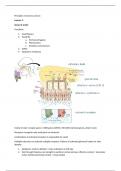
Villus: lacteal (lymphatic drainage), enterocytes (absorptive), goblet cells
(mucus)
4 layers of GI tract:
1. Mucosa: secretion and absorption
2. Submucosa: support (vascular layer)
3. Muscularis: segmental contractions (enteric nervous system)
4. Serosa: protective layer
Gut retention: AA and fats not all directly absorbed
Microvilli = brush border
Cell communication: endocrine, Neurocrine, paracrine
Motor behaviour: circular muscles, creating smaller pieces of bolus
, Peristalsis: regulated via neurons, contraction vs relaxation
Absorption: simple diffusion, facilitated diffusion, active transport
MMC: during the interdigestive phase there are periodic bursts of organ
responses (muscle movement)
1. Prevents bacterial stasis
2. Final cleaning non-digestible parts
Transit time: stomach and small intestine few hours, days for colon.
Lecture 2:
Cephalic phase: before eating
Brain: motor behaviour (stimulus: eye, nose, ear, brain, (not taste)) > higher
braincenters > DVC (dorsal vagal complex) stimulates stomach (relaxation,
secretary: HCl, gastrin), salivary excretion, pancreatic, gall bladder, relaxation of
sphincter of Oddi.
Stomach: ACh stimulates cells along with gastrin to produce HCl and convert
pepsinogen into pepsin.
Short term stimuli: appearance, aroma, mood
Long term stimuli: growth, pregnancy, lactation, society
Oral phase: mouth and saliva > oesophageal phase
1. Teeth
2. Glands: submandibular and parotid
3. Saliva: pH maintenance, anti-bacterial, lubrification, starch and fat
Amylase pH 7-8 > protective ring around starch in stomach> 50% of enzyme
activity in duodenum
Oesophageal phase: upper and lower sphincters, peristalsis
Gastric phase: cardia, fundus, body, antrum (lot of muscle)
Cardia: HCO3 secretion, prevention of reflux
Body: enzymes, acids, reservoir
Antrum: HCO3, mixing, regulation of emptying
In gastric phase same activations as in cephalic phase but more potent + positive
feedback from stomach to brain.
Relaxation of stomach depends on vagus nerve
Protein + pepsin > oligopeptides> increase in gastrin, pepsin, HCl
Acid production in cephalic phase because it takes a long time to arrive at pH2
Acid in atrum inhibits gastrin secretion, free FAs increase CCK
Emptying particles <2mm otherwise send back for further digestion, 8,5kJ/min
Lecture 3:
Lecture 1:
Input output (post-prandial phase vs post absorptive phase)
After eating: digestion and absorption > storage > utilisation
Enzymes lower the activation energy
Why does the GI not digest itself?
1. Activity restricted to presence of food
2. Regulation
3. Enzymes stored as inactive
4. Non-digestible mucus lining
5. High turnover rate of cells
Settings of metabolism:
1. Digestion to and absorption of monomers
2. Intermediary: anabolism and catabolism > waste products
Post prandial phase:
Glucose: brain, muscle, adipose tissue
Lipids: adipose tissue
Protein: muscles
Diet-induced thermogenesis: post prandial increases heat production, most
from protein least from fat
Post absorptive phase: mobilisation
Digestive tract:
Transfer: digest to monomers for absorption
Accessary organs: pancreas, liver, gall bladder, teeth, tongue, salivary
glands
Villus: lacteal (lymphatic drainage), enterocytes (absorptive), goblet cells
(mucus)
4 layers of GI tract:
1. Mucosa: secretion and absorption
2. Submucosa: support (vascular layer)
3. Muscularis: segmental contractions (enteric nervous system)
4. Serosa: protective layer
Gut retention: AA and fats not all directly absorbed
Microvilli = brush border
Cell communication: endocrine, Neurocrine, paracrine
Motor behaviour: circular muscles, creating smaller pieces of bolus
, Peristalsis: regulated via neurons, contraction vs relaxation
Absorption: simple diffusion, facilitated diffusion, active transport
MMC: during the interdigestive phase there are periodic bursts of organ
responses (muscle movement)
1. Prevents bacterial stasis
2. Final cleaning non-digestible parts
Transit time: stomach and small intestine few hours, days for colon.
Lecture 2:
Cephalic phase: before eating
Brain: motor behaviour (stimulus: eye, nose, ear, brain, (not taste)) > higher
braincenters > DVC (dorsal vagal complex) stimulates stomach (relaxation,
secretary: HCl, gastrin), salivary excretion, pancreatic, gall bladder, relaxation of
sphincter of Oddi.
Stomach: ACh stimulates cells along with gastrin to produce HCl and convert
pepsinogen into pepsin.
Short term stimuli: appearance, aroma, mood
Long term stimuli: growth, pregnancy, lactation, society
Oral phase: mouth and saliva > oesophageal phase
1. Teeth
2. Glands: submandibular and parotid
3. Saliva: pH maintenance, anti-bacterial, lubrification, starch and fat
Amylase pH 7-8 > protective ring around starch in stomach> 50% of enzyme
activity in duodenum
Oesophageal phase: upper and lower sphincters, peristalsis
Gastric phase: cardia, fundus, body, antrum (lot of muscle)
Cardia: HCO3 secretion, prevention of reflux
Body: enzymes, acids, reservoir
Antrum: HCO3, mixing, regulation of emptying
In gastric phase same activations as in cephalic phase but more potent + positive
feedback from stomach to brain.
Relaxation of stomach depends on vagus nerve
Protein + pepsin > oligopeptides> increase in gastrin, pepsin, HCl
Acid production in cephalic phase because it takes a long time to arrive at pH2
Acid in atrum inhibits gastrin secretion, free FAs increase CCK
Emptying particles <2mm otherwise send back for further digestion, 8,5kJ/min
Lecture 3: