Real Estate & Urban development
Summary
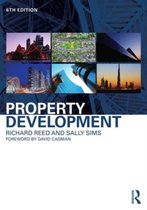
Book: Reed & Sims, Williams, Witkamp, DiPasquale & Wheaton
Course: 7U4X0
Made by: Sven Berghuis
Lecture 2: Reed & Sims - Chapter 1 2
The property development process 2
Phases 2
Main stakeholders 4
Different types of developers 5
Transformation 5
Types of vacancy 5
Lecture 3: DiPasquale & Wheaton 7
Four quadrant model of Dipasquale & Wheaton 7
Lecture 3: Williams - Chapter 5 10
Cyclic property market processes 10
Land and urban economics 11
Circularity 12
Lecture 3: Witkamp - Chapter 2 12
Circular concepts 12
Adoption of circularity in commercial real-estate 13
What does circularity mean for the role of the different actors? 13
Lecture 4: Reed & Sims - Chapter 3 14
Development appraisal 14
Conventional technique 14
Cash Flow method 15
Discounted cashflow method 15
Uncertainty and risk 16
Lecture 4: Williams - Chapter 2 16
Planning 16
Lecture 5: Reed & Sims - Chapter 7 18
Construction 18
1. Procurement 18
2. Procurement methods 18
Design-bid-build contract 18
Design and build contract 19
, Management contracting 20
3. Project management 21
4. Public Private Partnerships 21
5. Partnering 21
Lecture 5: Reed & Sims - Chapter 8 22
Market research 22
Market research in general 23
Primary vs secondary information 23
Types of market research in property development 23
Market research steps 24
Impact of market research 24
2
, Lecture 2: Reed & Sims - Chapter 1
The property development process
Phases
1. Initiation
● Start with location & idea
○ Initiators
■ Public parties: municipality
■ Private parties: project developer, (land/property) owner, investor.
○ Government policy is leading
○ In most instances, the developer is the initiator.
2. Investigation & analysis of viability
● Detailed market research
○ Positive outcome investigation & viability analysis -> decision to proceed by
developer
3. Acquisition
● Preparation prior to acquisition:
○ A: Legal investigation
○ B: Physical inspection & examination
○ C: Finance
4. Design and costing
● Influenced by client’s brief
● Design is a continuous process
3
Summary
Book: Reed & Sims, Williams, Witkamp, DiPasquale & Wheaton
Course: 7U4X0
Made by: Sven Berghuis
Lecture 2: Reed & Sims - Chapter 1 2
The property development process 2
Phases 2
Main stakeholders 4
Different types of developers 5
Transformation 5
Types of vacancy 5
Lecture 3: DiPasquale & Wheaton 7
Four quadrant model of Dipasquale & Wheaton 7
Lecture 3: Williams - Chapter 5 10
Cyclic property market processes 10
Land and urban economics 11
Circularity 12
Lecture 3: Witkamp - Chapter 2 12
Circular concepts 12
Adoption of circularity in commercial real-estate 13
What does circularity mean for the role of the different actors? 13
Lecture 4: Reed & Sims - Chapter 3 14
Development appraisal 14
Conventional technique 14
Cash Flow method 15
Discounted cashflow method 15
Uncertainty and risk 16
Lecture 4: Williams - Chapter 2 16
Planning 16
Lecture 5: Reed & Sims - Chapter 7 18
Construction 18
1. Procurement 18
2. Procurement methods 18
Design-bid-build contract 18
Design and build contract 19
, Management contracting 20
3. Project management 21
4. Public Private Partnerships 21
5. Partnering 21
Lecture 5: Reed & Sims - Chapter 8 22
Market research 22
Market research in general 23
Primary vs secondary information 23
Types of market research in property development 23
Market research steps 24
Impact of market research 24
2
, Lecture 2: Reed & Sims - Chapter 1
The property development process
Phases
1. Initiation
● Start with location & idea
○ Initiators
■ Public parties: municipality
■ Private parties: project developer, (land/property) owner, investor.
○ Government policy is leading
○ In most instances, the developer is the initiator.
2. Investigation & analysis of viability
● Detailed market research
○ Positive outcome investigation & viability analysis -> decision to proceed by
developer
3. Acquisition
● Preparation prior to acquisition:
○ A: Legal investigation
○ B: Physical inspection & examination
○ C: Finance
4. Design and costing
● Influenced by client’s brief
● Design is a continuous process
3