
NURS 8022 Advanced Pathophysiology Exam 3 & Study Guide
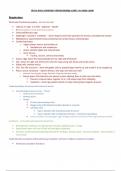
Structures of pulmonary system − NOT ON STUDY GUIDE • Lobes (3 on right, 2 on left) - segments − lobules • Blood vessels serve the pulmonary system • Chest wall/thoracic cage • Diaphragm: involved in ventilation − dome shaped muscle that separates the thoracic and abdominal cavities • Mediastinum: space between lungs containing heart, great vessels, and esophagus • Conducting airways o Upper airways: warms and humifies air ▪ Nasopharynx and oropharynx o Larynx: connects upper and lower airways o Lower airways ▪ Trachea, bronchi, terminal bronchioles • Carina: ridge where the trachea divides into the right and left bronchi • Hila: where the right and left bronchi enter the lungs, along with blood and lymph vessels • Goblet cells: produce mucus • Cilia: hair-like structures − work with goblet cells to propel foreign material up and enable it to be coughed up • Pleura: serous membrane − adheres firmly to the lungs and folds over itself o Visceral: covering the lungs; Parietal: lining the thoracic cavity o Pleural space: fluid lubricates the pleural surfaces allowing them to slide over each other ▪ Pressure in pleural space: negative (-4 to −10); keeps lungs from collapsing ▪ Inspiration − chest cage pulled outward on lungs creates greater negative pressure Understand basic structure and function of alveoli • Gas exchange airways: acinus - “berry” o Respiratory bronchioles o Alveolar ducts o Alveoli ▪ Primary gas exchange units ▪ Oxygen enters the blood and carbon dioxide is removed ▪ Epithelial cells • Type 1 alveolar cells: provide alveolar structure • Type 2 alveolar cells: surfactant production − prevents lung collapse ▪ Contain alveolar macrophages: ingest foreign material and remove it through lymphatic system Surfactant − its function and where it comes from • Detergent like substance secreted by type 2 alveolar epithelial cells in lungs • Keeps alveoli open and free of fluid and pathogens (collectins) • Decrease surface tension by blocking H20 and H+ binding in alveolar space − prevents collapse − allow airflow in more easily Understand the mechanics of the pulmonary circulation and how it relates to systemic circulation • Pulmonary circulation functions: o Facilitate gas exchange o Deliver nutrients to lung tissue o Acts as a blood reservoir for the left ventricle o Serves as a filtering system that removes clots, air, and other debris from the circulation o Pulmonary system pressure is 18 mmHg compared to systemic circulation of 90 mmHg o Gas exchange airways are served by the pulmonary circulation ▪ Low pressure system, high flow − Supplies venous blood from all parts of the body to the alveolar capillaries where O2 is added and CO is removed; contains 100% of CO o Bronchi and other lung structures are served by systemic circulation − bronchial circulation ▪ High pressure system, low flow − supplies blood to trachea, bronchial tree, bronchioles, and out coats (adventia) of pulmonary arteries and veins; contains 1-3% of CO • Pulmonary circulation o Begins at the pulmonary artery, which receives venous blood from the right side of the heart. The pulmonary artery divides into the left and right branches and forms the capillaries that surround the alveoli. After blood is oxygenated via gas exchange, blood returns to the left side of the heart through the pulmonary veins. • Pulmonary artery and accompanying smaller arteries and arterioles have large diameter; systemic vessels are small o Gives the pulmonary artery tree large compliance - accommodate stroke volume and pressure from RV • Pulmonary capillaries surround the acinus • Alveolocapillary membrane o Formed by shared alveolar and capillary walls o Contains the pulmonary capillaries o Where gas exchange occurs • Mechanics of breathing o Major and accessory muscles − The major muscle of breathing is the diaphragm, which performs 80% of the work of breathing. External intercostals function as accessory muscles to raise the ribs up and out, often during respiratory distress. o Alveolar surface tension −Surfactant plays a major role in alveolar surface tension, pulmonary surfactant functions to decrease alveolar surface tension to increase lung compliance and ease the work of breathing. o Elastic properties of the lung and chest wall − The lung and chest wall have elastic properties that permit expansion during inspiration and return to resting volume during expiration. Elastic recoil is the tendency of the lungs to return to the normal resting state after inspiration. Compliance is the measure of the lung and chest wall distensibility. Increased compliance indicates the lungs are abnormally easy to inflate and has lost some elastic recoil. A decrease in compliance indicates the lungs are abnormally stiff and difficult to inflate. o Airway resistance − Airway resistance is the resistance of the respiratory tract to airflow during inspiration and expiration. Airway resistance is increased with bronchitis, asthma, mucous, edema, or spasm. o Work of breathing − The work of breathing is the amount of work that must be performed to overcome the elastic and resistive properties of the lung, determined by lung recoil, chest wall recoil, and surface tension of the alveoli • Lymphatics o Lymph vessels present in all supportive tissues of the lung o Particulate material entering the alveoli is partly removed by the lymph channels − plasma protein leaking from lung capillaries is removed from lung tissue ▪ Helps prevent pulmonary edema and supports the negative pressure in the lungs to help them from collapsing − sucking motion Understand the role of the ANS on the pulmonary system • Phrenic nerve (c3-c5) innervates the diaphragm o Receives voluntary and involuntary respiratory messages from CNS • Respiratory center o Located in the brainstem o Dorsal respiratory group: sets the basic automatic rhythm ▪ Receives impulses from peripheral chemoreceptors in the carotid and aortic bodies − detects the PaCO2 and the amounts of oxygen in the arterial blood o Ventral respiratory group: contains inspiratory and expiratory neurons ▪ Becomes active when increased ventilatory effort is required o Pneumotaxic and apneustic centers: are located on the pons ▪ Modifiers of the inspiratory depth and rate are established by the medullary centers • Brainstem receives feedback o Carbon dioxide and hydrogen ▪ Increased blood CO2 or H+ (decreased pH − acidic) stimulate brainstem respiratory centers to increase respiration to allow blowing off CO2 and decrease blood acidity ▪ Increased CO2 and H+ (decreased pH − acidic) stimulate increased firing of aortic and carotid bodies (peripheral chemoreceptors) - relay messages to brainstem via CN9 and CN10 to increase respiration o Oxygen ▪ Decreased PaO2; carotid and aortic bodies increase signaling to brainstem o Exercise ▪ Motor cortex send direct innervation to stimulate brainstem ▪ Proprioceptive info from contracting skeletal muscle or nerve impulses generated locally for skeletal hypoxia return to brainstem to stimulate respiratory center o Hering-Breuer inflation reflex ▪ Stretch receptor in bronchiolar and bronchial tree send inhibitory impulses to brain stem that limit excessive inspiration • Central chemoreceptors o Reflects PaCO2 o Stimulated by H+ (pH) in CSF − low pH/acidosis o Increases respiratory rate and depth • Peripheral chemoreceptors o Located in the aorta and carotid bodies o Stimulated by hypoxia (PaO2) o Responsible for all the increase in ventilation that occurs in response to arterial hypoxemia Understand perfusion and ventilation and how it relates to each other, shunting • Ventilation: amount of air getting to the alveoli o Minute volume = RR x TV − normal is 6L/min o Alveolar ventilation: how much air is getting to parts where gas exchange takes place − normal is 4.2L min − accounts for dead space (150 mL) ▪ ABG − PaCO2 • Perfusion: amount of blood being sent to the lungs • Normal V/Q ratio = 4L/min ventilation and 5L/min perfusion − 4/5 = 0.8 o Perfusion exceeds ventilation in the bases of the lungs because of gravity − lower ratio ▪ Low PaO2 and high PaCO2 o Ventilation exceeds perfusion in the apices of the lungs − higher ratio ▪ High PaO2 and low PaCO2 o Changes will change normal ratio − can be physiologically controlled ▪ Just by standing up! - V/Q mismatch • Shunting − steps taken to normalize the ratio, control perfusion, increase efficiency o Hypoxic (pulmonary artery) vasoconstriction ▪ V/Q ratio is low (too little ventilation or too much blood) ▪ Causes blood coming into the area to be directed to other parts of the lung ▪ Decreases the perfusion of the hypoxic region will raise the V/Q ratio and bring the arterial blood gases closer to what we expect ▪ Most important cause: low alveolar partial pressure of oxygen (PaO2); also caused by acidemia and inflammatory mediators o Bronchoconstriction ▪ V/Q ratio is high (too much ventilation or not enough blood) ▪ Causes bronchi to constrict slightly to increase the resistance and decrease the amount of ventilation coming into an area that is not well perfused ▪ Limits the amount of alveolar dead space that occurs and minimizes the ‘wasted work’ How is oxygen and carbon dioxide most commonly found in the body • Oxygen delivery o Ventilation of the lungs o Diffusion of oxygen from the alveoli into the capillary blood o Perfusion of systemic capillaries with oxygenated blood o Diffusion of oxygen from systemic capillaries into cells • Carbon dioxide removal o Diffusion of carbon dioxide from the cells into systemic capillaries o Perfusion of the pulmonary capillary bed by venous blood o Diffusion of carbon dioxide into the alveoli o Removal of carbon dioxide from the lung by ventilation o Carbon dioxide transport ▪ Amount of CO2 in blood is a significant factor in acid-base balance ▪ Retaining too much CO2 will cause an increase in respiratory rate ▪ 3 ways: dissolved in plasma, bicarbonate, carb-amino compounds • Bicarbonate: as CO2 moves into the blood is diffuses intothe RBC’s - carbonic anhydratse combines CO2 and H2O to form carbonic acid − carbonic acid dissocaites into HCO3 and H+ - H+ binds to hgb and the HCO3 moves out of the RBC into the plasma • 60% venous CO2 is in bicarbonate form • 90% arterial CO2 is in bicarbonate form • Alveolar oxygen o Oxygen absorbed from alveoli to blood − alveolar oxygen determined by rate of absorption into blood and rate of entry of new oxygen o Partial pressure normally 104 mmHg • Alveolar carbon dioxide o Removed from alveoli o Partial pressure normally 40 mmHg; increases directly in proportion to rate of CO2 excretion; decreases in inverse proportion to alveolar ventilation • Principles of gas exchange o Diffusion in response to concentration gradients − pressure proportional to concentration ▪ CO2 20 times as soluble as O2 o Diffusion depends on partial pressure of gas o Haldane Effect: Oxygenation of blood in the lungs displaces carbon dioxide from hemoglobin which increases the removal of carbon dioxide Understand basic concepts of the oxyhemoglobin curve and what it represents • Oxyhemoglobin association and dissociation o Hemoglobin molecules bind with oxygen − oxyhemoglobin ▪ Binds in areas of high partial pressure and released in areas of low partial pressure ▪ Continues to bind until hgb binding sites are saturated ▪ Diffusion across alveolocapillary membrane − partial pressure of oxygen molecules is much greater in alveolar gas than it is in capillaries − promotes rapid diffusion from the alveolus into the capillary ▪ Determinants of arterial oxygenation: rate of oxygen transport to the tissues in blood and rate at which oxygen is used by the tissues o When hemoglobin saturation and desaturation are plotted one graph, the result is a distinctive S-shaped curve known as the oxyhemoglobin dissociation curve • Oxyhemoglobin shift o Shift to the left/up ▪ Hemoglobin's increased affinity for oxygen − promotes association in the lungs and inhibits dissociation in the tissues ▪ Alkalosis (high pH) and hypocapnia and hypothermia o Shift to the right/down ▪ Hemoglobin's decreased affinity for oxygen − increase in the ease with which oxyhemoglobin dissociates and oxygen moves into the cells ▪ Happens when cells need more O2 ▪ Acidosis (low pH) and hypercapnia and hyperthermia o Bohr effect: shift in the oxyhemoglobin dissociation curve caused by changes in CO2 and H+ concentration in the blood Understand and be able to identify and define abnormal breathing patterns • Kussmaul respirations (hyperpnea) o Slightly increased ventilatory rate, very large tidal volume, no expiratory pause • Cheyne-Stokes respirations o Alternating periods of deep and shallow breathing; apnea lasting 15-60 seconds, followed by ventilations that increase in volume until a peak is reached, after which ventilation decreases again to apnea o Occurs with decreased brainstem blood flow • Hypoventilation o Alveolar ventilation is inadequate in relationship to the metabolic demands o Leads to respiratory acidosis from hypercapnia (CO2 44) o Causes: airway obstruction, chest wall restriction, altered neurologic control of breathing • Hyperventilation o Alveolar ventilation exceeds the metabolic demands o Leads to respiratory alkalosis from hypocapnia (CO2 36) o Causes: anxiety, panic attacks, head injury, severe hypoxemia Know how to identify and define hypercapnia, hypocapnia, hypoxia, and hypoxemia • Hypercapnia o Increased CO2 in the arterial blood (PaCO244) o Occurs from decreased drive to breathe or an inadequate ability to respond to ventilatory stimulation/hypoventilation - retain too much CO2 − respiratory acidosis o Ex: drugs, brainstem (medulla) injury, spinal cord injury, NMJ dysfunction, respiratory muscle disfunction (myasthenia gravis), thoracic cage abnormalities, airway obstruction, sleep apnea • Hypocapnia o Decreased CO2 in the arterial blood (PaCO236) o Caused by hyperventilation − blowing off too much CO2 − respiratory alkalosis o See hyperventilation above • Hypoxemia o Hypoxemia is decreased PaO2 in blood; hypoxia is decreased O2 in cells/reduced level of tissue oxygenation o Most common cause: ventilation-perfusion abnormalities ▪ Shunting: shunting blood to areas that are better ventilated by using vasoconstriction Understand and define the different types of pleural effusions - abnormalities • Pneumothorax: presence of air or gas in the plural space o Primary: spontaneous; occurs unexpectedly in healthy individuals o Secondary: caused by disease, trauma, injury, or condition o Iatrogenic: caused by medical treatments, especially needle aspiration/biopsies o Open: air pressure in pleural space equals barometric pressure because air that is drawn into the pleural space during inspiration is forced back out during expiration − air is not trapped o Tension: site of pleural rupture acts as a one-way valve, permitting air to enter on inspiration but preventing its escape by closing up during expiration − air is trapped − life threatening o S/Sx: sudden pleural pain, tachypnea, possible mild dyspnea ▪ Tension: severe hypoxemia, tracheal deviation away from affected lung, hypotension • Pleural effusion: presence of fluid in the pleural space o Transexudative: watery and diffuses out of the capillaries o Exudative: less watery and contains high concentrations of WBC’s and plasma proteins o Chylothorax: chyle exudate from stomach contents o Hemothorax: blood exudate o S/Sx: dyspnea, pleural pain • Empyema: infected pleural effusion − pus in the pleural space o S/Sx: cyanosis, fever, tachycardia, cough, pleural pain Understand the differences between restrictive and obstructive respiratory alterations. Know which ones are in which category • Restrictive lung disease o Difficult to get air in o Compliance (ability to expand) of lung is reduced − increases stiffness of the lung and limits expansion ▪ A greater pressure than normal is required to give the same increase in volume o Causes: pulmonary fibrosis, pneumonia, pulmonary edema ▪ Stiff lungs, stiff chest wall, weak muscles • Obstructive lung disease o Difficult to get air out o Airway obstruction causes an increase in resistance ▪ Pressure volume relationship is no different − except when breathing rapidly, greater pressure is needed to overcome the resistance to flow and the volume of each breath gets smaller o Causes: asthma, bronchitis, emphysema ▪ Mechanical obstruction, increased resistance, increased tendency for airway closure • Pulmonary function tests o VC = vital capacity o IRV = inspiratory reserve volume o ERV = expiratory reserve volume o RV = residual volume o TLC = total lung capacity Know typical s/s of obstructive and restrictive diseases so that you can identify which one a patient is presenting with • Restrictive o Cough, sputum, dyspnea, decreased lung volumes, hypoxemia, orthopnea, increased WOB, poor response to oxygen supplementation • Obstructive o Increased WOB, ventilation-perfusion mismatching, decreased forced expiratory volume in one second (FEV1), use of accessory muscles, expiratory wheezing, coughing, prolonged expiration - pursed lip breathing, tachypnea, decreased exercise tolerance, SOB, tripod positioning, increased AP diameter Understand pathogenesis of asthma, COPD, emphysema, bronchitis. PE, pulmonary hypertension, bronchogenic cancers, absorption and compression atelectasis, ARDS, pneumothorax types • Asthma o Chronic inflammatory disorder of the bronchial mucosa - causes bronchial hyperresponsiveness, constriction of the airways, and variable airflow obstruction that is reversible o Episodic attacks from allergen or irritant exposure - activation of immune system releasing interleukins and IgE production − causes mast cell degranulation − release of inflammatory mediators (histamine, prostaglandins, and leukotrienes) - leads to vasodilation, increased capillary permeability, mucosal edema, bronchial smooth muscle contraction (bronchospasm) and thick mucus secretions ▪ Early response: • Antigen exposure to bronchial mucous − dendritic cells present antigen to CD4 t cells − B cell activation − antigen-specific IgE production − activation of eosinophils which leads to symptoms of bronchial hyperresponsiveness, fibroblast proliferation, epithelial injury, and airway scarring − neutrophils exaggerate response − furthered symptoms − stimulation of airway epithelial cells cause further innate and adaptive immune responses ▪ Late response: • Begins 4-8 hours after early response • Chemotactic recruitment of lymphocytes, eosinophils, and neutrophils cause prolonged smooth muscle contraction, airway scarring, increased bronchial hyperresponsiveness, impaired mucociliary function with accumulation of mucous and cellular debris forming plugs, leads to airway remodeling if left untreated, air trapping, hyperinflation distal to obstructions, increased WOB, hypoxemia o S/Sx: ▪ Asymptomatic between attacks ▪ Chest constriction, expiratory wheezing, dyspnea, nonproductive coughing, prolonged expiration, tachycardia, tachypnea ▪ Pulsus paradoxus: decreased systolic pressure (10 mmHg) during inspiration ▪ Status asthmaticus: not reversed by usual measures − life threatening • Ominous signs of impending death: silent chest, PaCO2 70 • Bronchitis o Hypersecretion of mucus and chronic productive cough that lasts at least 3 months of the year and for at least 2 consecutive years o Inspired irritants increase mucous production, size and number of mucus glands, and bronchial edema − thick mucus compromised lungs defenses o Hypertrophied bronchial smooth muscle o Hypoxemia (V/Q mismatch) and hypercapnia o Airways collapse early in expiration − gas trapped in lungs o S/Sx: decreased exercise tolerance, wheezing and SOB, copious productive cough, polycythemia from chronic hypoxemia, decreased FEV1, increased infections o Acute bronchitis: acute infection or inflammation of airways or bronchi commonly following viral illness ▪ Symptoms similar to pneumonia but no consolidation or chest infiltrates − nonproductive cough occurs in paroxysms and is aggravated by cold, dry, or dusty air • Emphysema o Permanent enlargement of the gas-exchange airways accompanied by the destruction of the alveolar walls without obvious fibrosis o Loss of elastic recoil o Destruction of the alveoli occurs through the breakdown of elastin in the septa as s result of an imbalance between proteases and antiproteases, oxidative stress, and apoptosis of the lung’s structural cells − also produces large air spaces within the lung parenchyma (bullae) and air spaces adjacent to pleurae (blebs) o Types: ▪ Centriacinar (centrilobular): septal destruction occurs in the respiratory bronchioles and alveolar ducts; upper lobes • Alveolar sac remains intact • Tends to occur in smokers with chronic bronchitis ▪ Panacinar (panlobular): involves the entire acinus; damage is more randomly distributed; involves lower lobes o Primary: inherited deficiency of the enzyme a1-antitrypsin o Secondary: caused by cigarette smoke, air pollution, occupational exposures, and childhood respiratory infections o S/Sx: dyspnea on exertion, at rest when progressed, little coughing with little sputum, thin, tachypnea, prolonged expiration, use of accessory muscles, pursed lips, increased AP diameter, tripod positioning • COPD o Airflow limitation that is not fully reversible; usually progressive and associated with an abnormal inflammatory response of the lung to noxious particles or gases o Chronic bronchitis + emphysema o Risk factors: tobacco smoke, occupational dusts and chemicals, indoor and outdoor air pollution, any factor that affects lung growth during gestation and childhood, alpha1 antitrypsin gene mutation • Pulmonary HTN o Mean pulmonary artery pressure above 25 mmHg at rest o Causes: elevated left ventricular pressure, increased blood flow through the pulmonary circulation, obliteration or obstruction of the vascular bed, active constriction of the vascular bed produced by hypoxemia or acidosis o Patho: overproduction of vasoconstrictors (thromboxane) and decreased production of vasodilators (NO and prostacyclin); remodeling of pulmonary artery intima; resistance to pulmonary artery blood flow increasing the pressure in the pulmonary arteries; workload of the right ventricle increases and subsequent right ventricular hypertrophy − may be followed by failure and eventually death o S/Sx: masked by primary pulmonary or CV disease; chest x-ray shows enlarged pulmonary arteries and right heart border − echo shows right ventricular hypertrophy o Cor pulmonale − secondary to PAH − pulmonary HTN creating chronic pressure overload in right ventricle ▪ S/Sx: heart appears normal at rest; decreased cardiac output and chest pain with exercise • Bronchogenic cancers o Most frequent cause of cancer death in the US; most common cause: cigarette smoking o Laryngeal ▪ Risk factors: smoking, heightened with smoking and alcohol consumption, GERD, HPV ▪ S/Sx: progressive hoarseness, dyspnea, cough o NSCLC ▪ 85% of all lung cancers ▪ Squamous cell carcinoma: nonproductive cough or hemoptysis ▪ Adenocarcinoma: tumor arising from glands − asymptomatic or pleuritic chest pain and SOB ▪ Large cell carcinoma: chest wall pain, pleural effusion, cough, sputum, hemoptysis, airway obstruction resulting in pneumonia o SCLC − neuroendocrine ▪ 10-15% of all lung cancers ▪ Worst prognosis − rapid growth and early metastasis ▪ Strongest correlation with smoking ▪ Arise from neuroendocrine tissue − ectopic hormone secretion − paraneoplastic syndromes • Hyponatremia (ADH); Cushing syndrome (ACTH); hypocalcemia (calcitonin); gynecomastia (gonadotropins); carcinoid syndrome (serotonin) o Lung carcinoid tumor ▪ 5% of all lung cancers ▪ Grow slowly and rarely spread • Atelectasis o Collapse of lung tissues ▪ Absorption: gradual absorption of air from obstructed or hypo-ventilated alveoli ▪ Compression: external compression on the lung ▪ Surfactant impairment: decreased production or inactivation of surfactant o S/Sx: dyspnea, cough, fever, leukocytosis (inflammatory process) • Pulmonary edema o Excess water in the lung from disturbances of capillary hydrostatic pressure, capillary oncotic pressure, or capillary permeability − increased capillary hydrostatic pressure leads to fluid leaking into lung o Most common cause: left sided heart failure o Post-obstructive pulmonary edema: negative pressure pulmonary edema ▪ Rare, life-threatening complication that can occur after relief of upper airway obstruction − obstruction causes negative pressure to build and build as breathing attempts occur ▪ S/Sx: dyspnea, orthopnea, hypoxemia, increased WOB, pink frothy sputum • ARDS o Characterized by acute lung inflammation and diffuse alveolocapillary injury − injury to pulmonary capillary endothelium, increased capillary permeability, inflammation, surfactant inactivation, edema, atelectasis o Dyspnea and hypoxemia with poor response to oxygen supplementation − hyperventilation and respiratory alkalosis − decreased tissue perfusion, metabolic acidosis, organ dysfunction − increased WOB, decreased TV, and hypoventilation − hypercapnia, respiratory acidosis, worsening hypoxia − decreased cardiac output, hypotension, death • Pulmonary embolism o Occlusion of a portion of the pulmonary vascular bed by a thrombus, embolus, tissue fragment, lipids, or air bubble o Virchow triad: venous stasis, hypercoagulability, and injuries to the endothelial cells that line the vessels o Results in widespread hypoxic vasoconstriction, decreased surfactant, release of neurohumoral substances, atelectasis of affected lung segments further contributing to hypoxemia, pulmonary edema, pulmonary HTN, shock, and even death o S/Sx: sudden onset of pleuritic chest pain, dyspnea, tachypnea, tachycardia, unexplained anxiety • Pneumothorax − see above Not on study guide: TB, abscess, pneumonia, CF, bronchiectasis, bronchiolitis Cardiac Understand the basics of cardiac muscle contraction • Resting membrane potential is similar to skeletal muscle (-85 to −95mV) - threshold potential is +105 • Caused by opening of fast sodium channels and slow sodium channels • Slow sodium channels are sodium-calcium channels − open slower and remain open for longer − allows for influx of large quantity of calcium and sodium ions to the interior of the cardiac muscle fiber − maintains prolonged period of depolarization causing the plateau in the AP − calcium ions enter during plateau phase activating the contractile process • Cardiac muscle has low permeability to potassium after onset of AP (not like skeletal) o Decreases the outflux of potassium; prevents early return of AP to resting value • Sodium/calcium channels close and the membrane permeability for potassium ions increases rapidly • Repolarization occurs quickly as potassium moves outward − returns to RMP • Relaxation: occurs at the end of plateau when influx of calcium ions to the interior of the muscle is cut off o Calcium ions in SR and t-tubules are rapidly pumped back into ECF o Transport in SR is the result of calcium-ATPase pump o Sodium that enters in this exchange then pumped out by Na/K ATPase pump o Contraction ceases until new AP occurs • Refractory period: during this time cardiac muscle cannot be re-excited − lasts 0.35-0.3 seconds in ventricles o Relative refractory period of 0.05 sec − period in which re-excitation is more difficult • Excitation contraction coupling: process by which an AP triggers the cycle of events leading to cross bridge activity and contraction o Requires calcium; calcium-troponin C complex facilitates the contraction process o Cross-bridge cycling: attachment of actin to myosin at the cross bridge − thin and thick filaments slide past each other causing contraction Understand cardiac cycle and what each part represents • Cardiac cycle: one contraction and one relaxation − one heartbeat o Diastole: relaxation − ventricles fill o Systole: contraction − blood leaves the ventricles • Phase 1: atrial systole or ventricular diastole • Phase 2: isovolumetric ventricular systole − the ventricles begin to open the pulmonary and aortic values by pressure building • Phase 3: ventricular ejection - semilunar valves open completely (most blood goes in the first ejection • Phase 4: isovolumetric ventricular relaxation - aortic valve closes • Phase 5: passive ventricular filling − mitral and tricuspid valves Understand EKG basics, waves, and intervals • P wave: atrial depolarization • PR interval: time from the onset of atrial activation to the onset of ventricular activation • QRS complex: sum all of ventricular depolarization • ST interval: ventricular myocardium depolarized • QT interval: “electrical systole” of the ventricles o Varies inversely with the heart rate; approximates time of ventricular contraction Remember the basic of the sequence of blood through the pulmonary system, heart, and systemic circulation, (superior vena cava, to RA, through tricuspid valve, into RV, and so on). As well as where there is oxygenated and unoxygenated blood Function of atria and ventricle • Atria act as primer pumps • 80% of blood flows directly into ventricle from atria before atrial systole • Atrial contraction causes an additional 20% • If atria fail the patient is non normally symptomatic unless under stress − ex) exercise • Right heart function: pumps blood through pulmonary circulation − low pressure system • Left heart function: pumps oxygenated blood through systemic circulation; delivers waste products to the lungs, kidneys, and liver − high pressure system Understand volumes, EF, Cardiac output, preload, and afterload • Cardiac output: volume of blood flowing through either the systemic or the pulmonary circuit o HR x SV = CO in L/min o Normal at rest is 5 L/mi o Factors that affect cardiac output: preload, afterload, Frank Starling Law, Laplace’s Law, heart rate, myocardial contractility ▪ Preload: “filling pressure” • The pressure generated at the end of diastole (ventricular relaxation) o Represents fluid returning to the heart o Increased preload represents increased myocardial oxygen consumption − heart is working harder • Determined by: amounts of venous return to the ventricle, blood left in the ventricle after systole (end-systolic volume) • Right ventricle preload = CVP • Left ventricle preload = pulmonary artery occlusion or wedge pressure • When preload exceeds physiologic range - further muscle stretching - decreased CO ▪ Afterload: “resistance” • The resistance to ejection during systole o Increased afterload = increased work of the heart and oxygen demand o Caused by: vasoconstriction, valvular stenosis, increased blood volume • Decreased afterload: heart contracts more rapidly • Increased afterload: slows contractions and increases heart workload • Right ventricle afterload = PVR (pulmonary vascular resistance) • Left ventricle afterload = SVR (systemic vascular resistance) ▪ Frank Starling Law: • Related to the volume of blood at the end of diastole/preload and stretch placed on the ventricle • Myocardial stretch determines the force of myocardial contraction • More stretch = increased force of contraction o Greater stretch during diastole = greater force of contraction = greater amount of blood pumped out ▪ Laplace Law: • Contractile force within a chamber depends on the radius of the chamber and the thickness of its wall • Smaller chambers and thicker chamber walls equal increased contraction force o In ventricular dilation, the force needed to maintain ventricular pressure lessens available contractile force ▪ Heart rate • Effected by cardiovascular control center (sympatheticand parasympathetic), neural reflexes (sinus arrythmia with inspiration and expiration; baroreceptor reflex; Bainbridge reflex [IV infusions]; and atrial receptors), and hormones and biochemicals (epinephrine, norepinephrine, thyroid hormone, growth hormone) ▪ Myocardial contractility • Stroke volume: volume of blood ejected during systole (ventricular contraction) • Force determined by: stretch/preload, nervous system input (symp v parasymp), adequacy of myocardial oxygen supply • Positive inotropes: increase force of contraction o Norepinephrine (sympathetic), epinephrine (adrenal medulla), thyroid hormone, dopamine • Negative inotropes: decrease force of contraction o Acetylcholine (vagus nerve) • Hypoxia decreased contractility • EF: amounts of blood ejected per heartbeat by the ventricles o SV/end-diastolic volume o Normal is 55% or higher o Indicator of ventricular function • Cardiac index: CI = CO/BSA - normal is 2.5-4 L/min/m2 • Decreased CO/CI - anything that causes decreased contractility or decreased blood flow to the heart o MI, shock, bradycardia, decreased SV, negative inotropes, increased vascular resistance, cardiac tamponade, hypovolemia, valvular heart disease, high PEEP • Increased CO/CI - anything that causes increased contractility or increased blood flow to the heart o HTN, decreased vascular resistance, pulmonary edema, increased metabolic state, positive inotropes • Factors that regulate blood flow: degree of cardiac contractility, heart rate, venous return to the heart o Blood volume, patency of venous system, degree of arteriolar dilation, differential pressure, skeletal muscle pump, respiratory pump (inspiration causes increase in negative pressure that draws blood into the heart and increases venous return), velocity, viscosity, vascular compliance (opposite of stiffness − veins are more compliant) o Laminar versus turbulent flow o Poiseuille’s Law ▪ Greater the resistance, the lower the blood flow Know different valves and which type they are • Ensure one way blood flow • AV valves: atrioventricular valves o Tricuspid: between right atrium and right ventricle; three leaflets or cusps o Bicuspid (mitral): between left atrium and left ventricle; two leaflets or cusps • Semilunar valves o Pulmonic semilunar valve: from right ventricle to pulmonary artery o Aortic semilunar valve: from left ventricle to the aorta
Document information
- Uploaded on
- March 17, 2025
- Number of pages
- 48
- Written in
- 2024/2025
- Type
- Exam (elaborations)
- Contains
- Questions & answers


