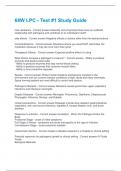
68W LPC - Test #1 Study Guide
host resistance - Correct answer-Naturally occurring body floras have an antibiotic
relationship with pathogens and contribute to an individual's health
side effects - Correct answer-Negative effects or actions other than the desired actions
Contraindications - Correct answer-Situations where you would NOT administer the
medication because it may do more harm than good
Therapeutic Effects - Correct answer-Expected positive effect of a drug
What factors increase a pathogen's virulence? - Correct answer-- Ability to produce
enzymes that destroy blood cells
- Ability to produce enzymes that stop normal blood clotting
- Ability to produce enzymes that consume muscle fibers
- Ability to form protective capsules
Spores - Correct answer-Protect certain bacteria and become resistant to the
environment and can cursive extreme conditions of light, dying and many chemicals.
Spore forming bacteria are most difficult to control and destroy
Pathogenic Bacteria - Correct answer-Neisseria causes gonorrhea, upper respiratory
infections and infectious meningitis.
Droplet Diseases - Correct answer-Meningitis, Pneumonia, Diphtheria, Streptococcal
Pharyngitis, Influenza, Mumps, and Rubella
contact precautions - Correct answer-Diseases include drug-resistant gastrointestinal,
respiratory, skin and wound infections, hepatitis A, herpes simplex virus, and acute
diarrhea
Response to infection - Correct answer-Incubation - When the Pathogen Enters the
Body
Prodromal Stage - onset of initial symptoms
Full Stage of Illness - symptoms are acute and specific to the type of infection
Convalescent Stage - acute symptoms subside
nosocomial infection - Correct answer-a disease acquired in a hospital or clinical setting
Potential reservoirs for pathogenic growth in clinical setting - Correct answer-IV Fluids
Foods
Biological Materials
host resistance - Correct answer-Naturally occurring body floras have an antibiotic
relationship with pathogens and contribute to an individual's health
side effects - Correct answer-Negative effects or actions other than the desired actions
Contraindications - Correct answer-Situations where you would NOT administer the
medication because it may do more harm than good
Therapeutic Effects - Correct answer-Expected positive effect of a drug
What factors increase a pathogen's virulence? - Correct answer-- Ability to produce
enzymes that destroy blood cells
- Ability to produce enzymes that stop normal blood clotting
- Ability to produce enzymes that consume muscle fibers
- Ability to form protective capsules
Spores - Correct answer-Protect certain bacteria and become resistant to the
environment and can cursive extreme conditions of light, dying and many chemicals.
Spore forming bacteria are most difficult to control and destroy
Pathogenic Bacteria - Correct answer-Neisseria causes gonorrhea, upper respiratory
infections and infectious meningitis.
Droplet Diseases - Correct answer-Meningitis, Pneumonia, Diphtheria, Streptococcal
Pharyngitis, Influenza, Mumps, and Rubella
contact precautions - Correct answer-Diseases include drug-resistant gastrointestinal,
respiratory, skin and wound infections, hepatitis A, herpes simplex virus, and acute
diarrhea
Response to infection - Correct answer-Incubation - When the Pathogen Enters the
Body
Prodromal Stage - onset of initial symptoms
Full Stage of Illness - symptoms are acute and specific to the type of infection
Convalescent Stage - acute symptoms subside
nosocomial infection - Correct answer-a disease acquired in a hospital or clinical setting
Potential reservoirs for pathogenic growth in clinical setting - Correct answer-IV Fluids
Foods
Biological Materials