

The Theory-Practice Gap and Nursing Research
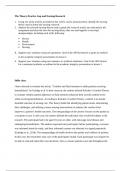
1. Using one of the articles provided in this week's course announcement, identify the nursing
theory used to frame the nursing research.
2. Analyze the selected nursing theory used to guide the research article you selected for the
assignment and describe how the nursing theory that was used applies to nursing's
metaparadigm, including each of the following:
Person
Health
Environment
Nursing
3. Support your summary using one quotation, cited in the APA format for a quote as outlined
in the academic integrity presentation in lesson 1.
4. Support your summary using one summary or synthesis statement, cited in the APA format
for a summary/synthesis as outlined in the academic integrity presentation in lesson 1.
Hello class,
I have selected to evaluate the article, “Comfort and fluid retention in adult patients receiving
hemodialysis” by Estridge et al. In their research, the authors utilized Kolcaba’s Comfort Theory
to evaluate whether patient adherence to fluid retention enhanced their overall comfort levels
while receiving hemodialysis. According to Kolcaba’s Comfort Theory, comfort is an instant
desirable outcome of nursing care. This theory holds that identifying patient needs, determining
their challenges, and utilizing various nursing interventions to enhance the comfort level
improves a patient’s health outcomes. The metaparadigm of the 'person' focuses on the patient as
a recipient of care. In this case, the authors defined the individual who would fall subject to the
research. The participant had to be aged 18 years or older, with end-stage renal disease and
undergoing hemodialysis. The authors respected each participant; before participating, everyone
was informed about the study, and their informed consent was obtained via signed paperwork
(Estridge et al., 2018). The metaparadigm of health involves the quality and wellness of patients.
In this case, the researchers took care of the participants' health. Each participant was required to
be able to read and make their own decisions. Also, to ensure patients were safe throughout the
1. Using one of the articles provided in this week's course announcement, identify the nursing
theory used to frame the nursing research.
2. Analyze the selected nursing theory used to guide the research article you selected for the
assignment and describe how the nursing theory that was used applies to nursing's
metaparadigm, including each of the following:
Person
Health
Environment
Nursing
3. Support your summary using one quotation, cited in the APA format for a quote as outlined
in the academic integrity presentation in lesson 1.
4. Support your summary using one summary or synthesis statement, cited in the APA format
for a summary/synthesis as outlined in the academic integrity presentation in lesson 1.
Hello class,
I have selected to evaluate the article, “Comfort and fluid retention in adult patients receiving
hemodialysis” by Estridge et al. In their research, the authors utilized Kolcaba’s Comfort Theory
to evaluate whether patient adherence to fluid retention enhanced their overall comfort levels
while receiving hemodialysis. According to Kolcaba’s Comfort Theory, comfort is an instant
desirable outcome of nursing care. This theory holds that identifying patient needs, determining
their challenges, and utilizing various nursing interventions to enhance the comfort level
improves a patient’s health outcomes. The metaparadigm of the 'person' focuses on the patient as
a recipient of care. In this case, the authors defined the individual who would fall subject to the
research. The participant had to be aged 18 years or older, with end-stage renal disease and
undergoing hemodialysis. The authors respected each participant; before participating, everyone
was informed about the study, and their informed consent was obtained via signed paperwork
(Estridge et al., 2018). The metaparadigm of health involves the quality and wellness of patients.
In this case, the researchers took care of the participants' health. Each participant was required to
be able to read and make their own decisions. Also, to ensure patients were safe throughout the


