TEST BANK FOR
n n
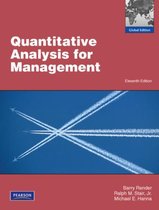
Quantitativen Analysisn forn Management,n 14thn editionn Render
Chaptern1-15
Chaptern1 IntroductionntonQuantitativenAnalysis
1.1n n True/False
1) Interviews,n statisticaln sampling,n and n companynreportsn provideninput ndatan forn quantitativen
analysisn models.
Answer:n TRUEn Dif
f:n n Moderate
Topic:n n THEn QUANTITATIVE n ANALYSISn APPROACH
LO:n 1.3:n Describen then usen ofnmodelingn innquantitativen analysis.n AACSB:
n Analyticaln thinking
Classification:n n Concept
2) Innthenearlyn1900s,nFredericknWinslow nTaylornpioneered nthenprinciplesnof nthenscientificnapproachn t
on management.
Answer:n TRUEn Dif
f:n n Moderate
Topic:n n WHATn ISn QUANTITATIVE n ANALYSIS?
LO:n 1.1:n Describen then quantitativen analysisn approachn and nunderstandn howntonapplynit n tonanrealn situation
.
AACSB:n Analyticalnthinkingn
Classification:n Concept
3) Managersn don notn neednton benfamiliarn withnthen limitations,n assumptions,n and/orn specificn a
pplicabilitynof n then quantitativen analysisn techniquen ton usen it nforn accuratendecisionn making.n A
nswer:n FALSE
Diff:n n Moderate
Topic:n n INTRODUCTION
LO:n 1.6:n Recognizen possiblen problemsn inn usingn quantitativen analysis.n A
ACSB:n Analyticaln thinking
Classification:n n Concept
4) DuringnWorld nWarnII,nmanynnew nscientificnandn quantitativentechniquesnwerendevelopedntonassist n t
henmilitary,nand nthesendevelopmentsnwerensonsuccessfulnthat nmanyncompaniesnstarted nusingnsimilarn te
chniquesn inn managerialn decisionn makingn and n planningn aftern then war.
Answer:n TRUEn Dif
f:n n Moderate
Topic:n n WHATn ISn QUANTITATIVE n ANALYSIS?
LO:n 1.1:n Describen then quantitativen analysisn approachn and nunderstandn howntonapplynit n tonanrealn situation
.
AACSB:n Analyticalnthinkingn
Classification:n Concept
1
Copyright n©n 2024 n Pearson nEducation,nInc.
,5) Then studynof n Businessn Analyticsninvolvesn then usenofnlargen datasetsn knownn asn bign data.n
Answer:n TRUE
Diff:n n Moderate
Topic:n n BUSINESSn ANALYTICS
LO:n 1.2:n Describen then threencategoriesn of nbusinessn analytics.n AA
CSB:n Analyticaln thinking
Classification:n n Concept
6) Predictiven Analyticsn isn aimed n at nforecastingn futuren outcomesn based nonnpatternsn inn then past n data.n
Answer:n TRUE
Diff:n n Moderate
Topic:n n BUSINESSn ANALYTICS
LO:n 1.2:n Describen then threencategoriesn of nbusinessn analytics.n AA
CSB:n Analyticaln thinking
Classification:n n Concept
7) Whenn an problemn isn difficult n ton quantify,n it n mayn ben necessarynton developn unspecificn objectives.n
Answer:n FALSE
Diff:n n Moderate
Topic:n n THEn QUANTITATIVE n ANALYSISn APPROACH
LO:n 1.3:n Describen then usen ofnmodelingn innquantitativen analysis.n AACSB:
n Analyticaln thinking
Classification:n n Concept
8) Then Quantitativen Analysisn Approachn consistsn ofn sixn steps.n
Answer:n FALSE
Diff:n n Moderate
Topic:n n THEn QUANTITATIVE n ANALYSISn APPROACH
LO:n 1.3:n Describen then usen ofnmodelingn innquantitativen analysis.n AACSB:
n Analyticaln thinking
Classification:n n Concept
9) A n schematicn modeln isn an picture,ndrawing,n orn chart n of n reality.n
Answer:n TRUE
Diff:n n Moderate
Topic:n n THEn QUANTITATIVE n ANALYSISn APPROACH
LO:n 1.3:n Describen then usen ofnmodelingn innquantitativen analysis.n AACSB:
n Analyticaln thinking
Classification:n n Concept
10) Decisionn variablesn maynalson ben called n parameters.n
Answer:n FALSE
Diff:n n Moderate
Topic:n n THEn QUANTITATIVE n ANALYSISn APPROACH
LO:n 1.3:n Describen then usen ofnmodelingn innquantitativen analysis.n AACSB:
n Analyticaln thinking
Classification:n n Concept
2
Copyright n©n 2024 n Pearson nEducation,nInc.
,11) Modeln variablesn cann bencontrollablen orn uncontrollable.n
Answer:n TRUE
Diff:n n Moderate
Topic:n n THEn QUANTITATIVE n ANALYSISn APPROACH
LO:n 1.3:n Describen then usen ofnmodelingn innquantitativen analysis.n AACSB:
n Analyticaln thinking
Classification:n n Concept
12) A n seriesn of n stepsn ornproceduresn that n aren repeated n isn knownn asn ann algorithm.n
Answer:n TRUE
Diff:n n Moderate
Topic:n n THEn QUANTITATIVE n ANALYSISn APPROACH
LO:n 1.3:n Describen then usen ofnmodelingn innquantitativen analysis.n AACSB:
n Analyticaln thinking
Classification:n n Concept
13) A n modeln isn anrepresentationn ofnan situation.n
Answer:n TRUE
Diff:n n Moderate
Topic:n n THEn QUANTITATIVE n ANALYSISn APPROACH
LO:n 1.3:n Describen then usen ofnmodelingn innquantitativen analysis.n AACSB:
n Analyticaln thinking
Classification:n n Concept
14) A n parametern isn an measurablen quantityn that n mayn varyn orn isn subject n ton change.n
Answer:n FALSE
Diff:n n Moderate
Topic:n n THEn QUANTITATIVE n ANALYSISn APPROACH
LO:n 1.3:n Describen then usen ofnmodelingn innquantitativen analysis.n AACSB:
n Analyticaln thinking
Classification:n n Concept
15) Tryingn variousn approachesn and n pickingn then onen resultingn inn thenbest n decisionn isn called n i
ncompleten enumeration.
Answer:n FALSEn D
iff:n Moderate
Topic:n n THEn QUANTITATIVE n ANALYSISn APPROACH
LO:n 1.3:n Describen then usen ofnmodelingn innquantitativen analysis.n AACSB:
n Analyticaln thinking
Classification:n n Concept
3
Copyright n©n 2024 n Pearson nEducation,nInc.
, 16) Alln problemsn cann ben solved n byn consideringn onlynthen quantitativen issues.n
Answer:n FALSE
Diff:n n Easy
Topic:n n WHATn ISn QUANTITATIVE n ANALYSIS?
LO:n 1.1:n Describen then quantitativen analysisn approachn and nunderstandn howntonapplynit n tonanrealn situation
.
AACSB:n Analyticalnthinkingn
Classification:n Concept
17) A n profit n equationnisn annexamplen of n an schematicn model.n
Answer:n FALSE
Diff:n n Moderate
Topic:n n THEn QUANTITATIVE n ANALYSISn APPROACH
LO:n 1.3:n Describen then usen ofnmodelingn inn quantitativenanalysis.n AACSB:
n Analyticaln thinking
Classification:n n Concept
18) Testingn then datanandn modeln shouldnben donen beforen then resultsn haven beenn analyzed.n
Answer:n TRUE
Diff:n n Easy
Topic:n n THEn QUANTITATIVE n ANALYSISn APPROACH
LO:n 1.3:n Describen then usen ofnmodelingn innquantitativen analysis.n AACSB:
n Analyticaln thinking
Classification:n n Concept
19) Sensitivitynanalysisn helpsn usn estimaten then effect nofn knownn and n unknownn errorsn inn ourn model.n
Answer:n TRUE
Diff:n n Moderate
Topic:n n THEn QUANTITATIVE n ANALYSISn APPROACH
LO:n 1.3:n Describen then usen ofnmodelingn innquantitativen analysis.n AACSB:
n Analyticaln thinking
Classification:n n Concept
20) Modelsn cann helpn usn analyzen an problemn and n selln an decisionn ton thosen whon must n implement n it.n
Answer:n TRUE
Diff:n n Easy
Topic:n n HOWn TOn DEVELOPn An QUANTITATIVE n ANALYSISn MODEL
LO:n 1.4:n Preparen an quantitativen analysisn model.n AACS
B:n Analyticaln thinking
Classification:n n Concept
4
Copyright n©n 2024 n Pearson nEducation,nInc.
n n
Quantitativen Analysisn forn Management,n 14thn editionn Render
Chaptern1-15
Chaptern1 IntroductionntonQuantitativenAnalysis
1.1n n True/False
1) Interviews,n statisticaln sampling,n and n companynreportsn provideninput ndatan forn quantitativen
analysisn models.
Answer:n TRUEn Dif
f:n n Moderate
Topic:n n THEn QUANTITATIVE n ANALYSISn APPROACH
LO:n 1.3:n Describen then usen ofnmodelingn innquantitativen analysis.n AACSB:
n Analyticaln thinking
Classification:n n Concept
2) Innthenearlyn1900s,nFredericknWinslow nTaylornpioneered nthenprinciplesnof nthenscientificnapproachn t
on management.
Answer:n TRUEn Dif
f:n n Moderate
Topic:n n WHATn ISn QUANTITATIVE n ANALYSIS?
LO:n 1.1:n Describen then quantitativen analysisn approachn and nunderstandn howntonapplynit n tonanrealn situation
.
AACSB:n Analyticalnthinkingn
Classification:n Concept
3) Managersn don notn neednton benfamiliarn withnthen limitations,n assumptions,n and/orn specificn a
pplicabilitynof n then quantitativen analysisn techniquen ton usen it nforn accuratendecisionn making.n A
nswer:n FALSE
Diff:n n Moderate
Topic:n n INTRODUCTION
LO:n 1.6:n Recognizen possiblen problemsn inn usingn quantitativen analysis.n A
ACSB:n Analyticaln thinking
Classification:n n Concept
4) DuringnWorld nWarnII,nmanynnew nscientificnandn quantitativentechniquesnwerendevelopedntonassist n t
henmilitary,nand nthesendevelopmentsnwerensonsuccessfulnthat nmanyncompaniesnstarted nusingnsimilarn te
chniquesn inn managerialn decisionn makingn and n planningn aftern then war.
Answer:n TRUEn Dif
f:n n Moderate
Topic:n n WHATn ISn QUANTITATIVE n ANALYSIS?
LO:n 1.1:n Describen then quantitativen analysisn approachn and nunderstandn howntonapplynit n tonanrealn situation
.
AACSB:n Analyticalnthinkingn
Classification:n Concept
1
Copyright n©n 2024 n Pearson nEducation,nInc.
,5) Then studynof n Businessn Analyticsninvolvesn then usenofnlargen datasetsn knownn asn bign data.n
Answer:n TRUE
Diff:n n Moderate
Topic:n n BUSINESSn ANALYTICS
LO:n 1.2:n Describen then threencategoriesn of nbusinessn analytics.n AA
CSB:n Analyticaln thinking
Classification:n n Concept
6) Predictiven Analyticsn isn aimed n at nforecastingn futuren outcomesn based nonnpatternsn inn then past n data.n
Answer:n TRUE
Diff:n n Moderate
Topic:n n BUSINESSn ANALYTICS
LO:n 1.2:n Describen then threencategoriesn of nbusinessn analytics.n AA
CSB:n Analyticaln thinking
Classification:n n Concept
7) Whenn an problemn isn difficult n ton quantify,n it n mayn ben necessarynton developn unspecificn objectives.n
Answer:n FALSE
Diff:n n Moderate
Topic:n n THEn QUANTITATIVE n ANALYSISn APPROACH
LO:n 1.3:n Describen then usen ofnmodelingn innquantitativen analysis.n AACSB:
n Analyticaln thinking
Classification:n n Concept
8) Then Quantitativen Analysisn Approachn consistsn ofn sixn steps.n
Answer:n FALSE
Diff:n n Moderate
Topic:n n THEn QUANTITATIVE n ANALYSISn APPROACH
LO:n 1.3:n Describen then usen ofnmodelingn innquantitativen analysis.n AACSB:
n Analyticaln thinking
Classification:n n Concept
9) A n schematicn modeln isn an picture,ndrawing,n orn chart n of n reality.n
Answer:n TRUE
Diff:n n Moderate
Topic:n n THEn QUANTITATIVE n ANALYSISn APPROACH
LO:n 1.3:n Describen then usen ofnmodelingn innquantitativen analysis.n AACSB:
n Analyticaln thinking
Classification:n n Concept
10) Decisionn variablesn maynalson ben called n parameters.n
Answer:n FALSE
Diff:n n Moderate
Topic:n n THEn QUANTITATIVE n ANALYSISn APPROACH
LO:n 1.3:n Describen then usen ofnmodelingn innquantitativen analysis.n AACSB:
n Analyticaln thinking
Classification:n n Concept
2
Copyright n©n 2024 n Pearson nEducation,nInc.
,11) Modeln variablesn cann bencontrollablen orn uncontrollable.n
Answer:n TRUE
Diff:n n Moderate
Topic:n n THEn QUANTITATIVE n ANALYSISn APPROACH
LO:n 1.3:n Describen then usen ofnmodelingn innquantitativen analysis.n AACSB:
n Analyticaln thinking
Classification:n n Concept
12) A n seriesn of n stepsn ornproceduresn that n aren repeated n isn knownn asn ann algorithm.n
Answer:n TRUE
Diff:n n Moderate
Topic:n n THEn QUANTITATIVE n ANALYSISn APPROACH
LO:n 1.3:n Describen then usen ofnmodelingn innquantitativen analysis.n AACSB:
n Analyticaln thinking
Classification:n n Concept
13) A n modeln isn anrepresentationn ofnan situation.n
Answer:n TRUE
Diff:n n Moderate
Topic:n n THEn QUANTITATIVE n ANALYSISn APPROACH
LO:n 1.3:n Describen then usen ofnmodelingn innquantitativen analysis.n AACSB:
n Analyticaln thinking
Classification:n n Concept
14) A n parametern isn an measurablen quantityn that n mayn varyn orn isn subject n ton change.n
Answer:n FALSE
Diff:n n Moderate
Topic:n n THEn QUANTITATIVE n ANALYSISn APPROACH
LO:n 1.3:n Describen then usen ofnmodelingn innquantitativen analysis.n AACSB:
n Analyticaln thinking
Classification:n n Concept
15) Tryingn variousn approachesn and n pickingn then onen resultingn inn thenbest n decisionn isn called n i
ncompleten enumeration.
Answer:n FALSEn D
iff:n Moderate
Topic:n n THEn QUANTITATIVE n ANALYSISn APPROACH
LO:n 1.3:n Describen then usen ofnmodelingn innquantitativen analysis.n AACSB:
n Analyticaln thinking
Classification:n n Concept
3
Copyright n©n 2024 n Pearson nEducation,nInc.
, 16) Alln problemsn cann ben solved n byn consideringn onlynthen quantitativen issues.n
Answer:n FALSE
Diff:n n Easy
Topic:n n WHATn ISn QUANTITATIVE n ANALYSIS?
LO:n 1.1:n Describen then quantitativen analysisn approachn and nunderstandn howntonapplynit n tonanrealn situation
.
AACSB:n Analyticalnthinkingn
Classification:n Concept
17) A n profit n equationnisn annexamplen of n an schematicn model.n
Answer:n FALSE
Diff:n n Moderate
Topic:n n THEn QUANTITATIVE n ANALYSISn APPROACH
LO:n 1.3:n Describen then usen ofnmodelingn inn quantitativenanalysis.n AACSB:
n Analyticaln thinking
Classification:n n Concept
18) Testingn then datanandn modeln shouldnben donen beforen then resultsn haven beenn analyzed.n
Answer:n TRUE
Diff:n n Easy
Topic:n n THEn QUANTITATIVE n ANALYSISn APPROACH
LO:n 1.3:n Describen then usen ofnmodelingn innquantitativen analysis.n AACSB:
n Analyticaln thinking
Classification:n n Concept
19) Sensitivitynanalysisn helpsn usn estimaten then effect nofn knownn and n unknownn errorsn inn ourn model.n
Answer:n TRUE
Diff:n n Moderate
Topic:n n THEn QUANTITATIVE n ANALYSISn APPROACH
LO:n 1.3:n Describen then usen ofnmodelingn innquantitativen analysis.n AACSB:
n Analyticaln thinking
Classification:n n Concept
20) Modelsn cann helpn usn analyzen an problemn and n selln an decisionn ton thosen whon must n implement n it.n
Answer:n TRUE
Diff:n n Easy
Topic:n n HOWn TOn DEVELOPn An QUANTITATIVE n ANALYSISn MODEL
LO:n 1.4:n Preparen an quantitativen analysisn model.n AACS
B:n Analyticaln thinking
Classification:n n Concept
4
Copyright n©n 2024 n Pearson nEducation,nInc.