Digital Basics
Friday, January 26, 2024 1:01 PM
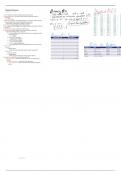
• Data- symbols that represent people, events, things, N Ideas.
• Data representation - the form in which the data is processed, stored, or
transmitted
○ Ie. Pdf, .dox, etc
• Digitization - process of converting information , such as text, numbers, photo or
music, into digital data, can be manipulated by elec. Devices
○ Digital data is represented in computers using 0s & 1s.
• Bit - a 0 or 1 used in the digital representation of data
• File - collection of data existing on a storage medium like a hard disk, CD, DVD, or
flash drive.
• Numeric Data- #s that can be used in arithmetic ops.
• Character data- letters, symbols, & numerals; not used in calc. (text)
○ Represented through ASCII, Unicode, etc
▪ ASCII (American Standard Code for Information Interchange); seven bits
for each character
□ A = 1000001
▪ Extended ASCII uses 8 bits
□ Upper case A = 01000001
▪ Unicode - 8, 16, 24, or 32 bits
□ Used for other languages
▪ ASCII text - unformatted text files
□ Formatting codes must be embedded into text to create such docs
I. Bits and Bytes
a. Bit = b
i. Network speed
1) Kbps: slow data rate; mbps: faster data rate; Gb super-fast
b. Byte = B
i. A group of 8 bets
ii. Storage capacity
1) MB: photos and videos; GB: storage capacity; KB: files
II. Compression - reduce file size and transmission time
a. Data compression - technique recodes data in a file so it has fewer bits
(zipping)
i. Lossless Compression - keeps data in its original form
ii. Lossy compression - reduces some data content during compression
process.
Digital Content Page 1
, Digital Sound Contents
Monday, January 29, 2024 1:03 PM
• Digital audio - music, speech, & other sounds represented in binary format
in digital devices
○ Most devices have a built-in microphone + audio software to record
external sounds
▪ Sample sound waves collected at periodic intervals - stored as
numeric data in a audio file.
▪ Sound waves r sampled many time/sec by an analog-to-digital
converter
□ " _" transforms digital bits into sound waves.
• Sampling rate - # of times/ sec that a sound is measured during the
recording process
○ High sampling rates ^ quality of recording, but require more storage
I. Digital Audio File Formats
a. Digital file can be identified by its type/extension
i. Pop formats: AAC, MP3, Ogg Vorbis, WAV, AAX, WMA
II. Ways to get digital audio on computers
a. Ripping - process of importing tracks from a CD to computer's hard
disk
i. Also known as digital audio extraction
b. Downloading - coping files from a private network or internet server
to a local device
c. Acquired as a live stream or on-demand stream in addition to
downloads
i. To play the file, having an audio software is nesseccary
1) i.e.) apple garage band, windows media player, and
audacity
III. MIDI
a. Digital audio - a recording of real analog sound signals vs. synthesized
sound - artificially created/ synthetic sound
b. MIDI (musical instrument digital interface) - specifies a standard way
to store music data for synthesizers, elec MIDI instruments, and
comps
c. these files contain MIDI messages, instructions specifiying pitch of a
note, beginning point of note, instrument that plays the note, volume
of note, and ending point of note.
d. Music composition software w/ MIDI makes it easier to place notes,
play back the composition on a MIDI keyboard or speakers.
IV. Digitized Speech
a. Speech synthesis - process where machines produce sound
resembling spoken words
b. Speech recognition- ability of machine to understand spoken words
i. Software analyzes sounds of voice then converts each word into
groups of phonemes (sound units)
1) Phoneme groups are then compared to words in a digital
dictionary to find a match
a) When match is found, software can display the
word on the screen or use to carry out a command
Digital Content Page 2
Friday, January 26, 2024 1:01 PM
• Data- symbols that represent people, events, things, N Ideas.
• Data representation - the form in which the data is processed, stored, or
transmitted
○ Ie. Pdf, .dox, etc
• Digitization - process of converting information , such as text, numbers, photo or
music, into digital data, can be manipulated by elec. Devices
○ Digital data is represented in computers using 0s & 1s.
• Bit - a 0 or 1 used in the digital representation of data
• File - collection of data existing on a storage medium like a hard disk, CD, DVD, or
flash drive.
• Numeric Data- #s that can be used in arithmetic ops.
• Character data- letters, symbols, & numerals; not used in calc. (text)
○ Represented through ASCII, Unicode, etc
▪ ASCII (American Standard Code for Information Interchange); seven bits
for each character
□ A = 1000001
▪ Extended ASCII uses 8 bits
□ Upper case A = 01000001
▪ Unicode - 8, 16, 24, or 32 bits
□ Used for other languages
▪ ASCII text - unformatted text files
□ Formatting codes must be embedded into text to create such docs
I. Bits and Bytes
a. Bit = b
i. Network speed
1) Kbps: slow data rate; mbps: faster data rate; Gb super-fast
b. Byte = B
i. A group of 8 bets
ii. Storage capacity
1) MB: photos and videos; GB: storage capacity; KB: files
II. Compression - reduce file size and transmission time
a. Data compression - technique recodes data in a file so it has fewer bits
(zipping)
i. Lossless Compression - keeps data in its original form
ii. Lossy compression - reduces some data content during compression
process.
Digital Content Page 1
, Digital Sound Contents
Monday, January 29, 2024 1:03 PM
• Digital audio - music, speech, & other sounds represented in binary format
in digital devices
○ Most devices have a built-in microphone + audio software to record
external sounds
▪ Sample sound waves collected at periodic intervals - stored as
numeric data in a audio file.
▪ Sound waves r sampled many time/sec by an analog-to-digital
converter
□ " _" transforms digital bits into sound waves.
• Sampling rate - # of times/ sec that a sound is measured during the
recording process
○ High sampling rates ^ quality of recording, but require more storage
I. Digital Audio File Formats
a. Digital file can be identified by its type/extension
i. Pop formats: AAC, MP3, Ogg Vorbis, WAV, AAX, WMA
II. Ways to get digital audio on computers
a. Ripping - process of importing tracks from a CD to computer's hard
disk
i. Also known as digital audio extraction
b. Downloading - coping files from a private network or internet server
to a local device
c. Acquired as a live stream or on-demand stream in addition to
downloads
i. To play the file, having an audio software is nesseccary
1) i.e.) apple garage band, windows media player, and
audacity
III. MIDI
a. Digital audio - a recording of real analog sound signals vs. synthesized
sound - artificially created/ synthetic sound
b. MIDI (musical instrument digital interface) - specifies a standard way
to store music data for synthesizers, elec MIDI instruments, and
comps
c. these files contain MIDI messages, instructions specifiying pitch of a
note, beginning point of note, instrument that plays the note, volume
of note, and ending point of note.
d. Music composition software w/ MIDI makes it easier to place notes,
play back the composition on a MIDI keyboard or speakers.
IV. Digitized Speech
a. Speech synthesis - process where machines produce sound
resembling spoken words
b. Speech recognition- ability of machine to understand spoken words
i. Software analyzes sounds of voice then converts each word into
groups of phonemes (sound units)
1) Phoneme groups are then compared to words in a digital
dictionary to find a match
a) When match is found, software can display the
word on the screen or use to carry out a command
Digital Content Page 2