Section 1: Mechanisms Of Disease 1
COMPLETE TEST BANK _
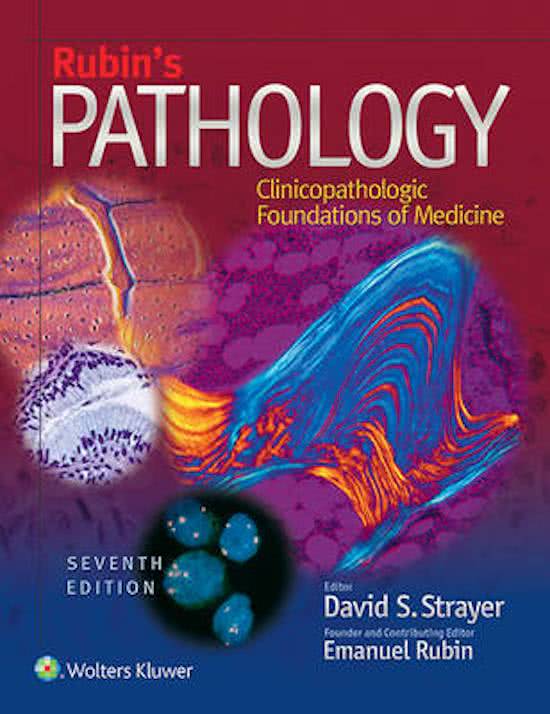
RUBIN'S PATHOLOGY: CLINICOPATHOLOGIC FOUNDATIONS OF MEDICINE (7TH) SEVENTH EDITION, UPDATED
BY DAVID S. STRAYER & EMANUEL RUBIN
ALL CHAPTERS 1-34| 3 UNITS| LATEST VERSION UPDATED WITH DETAILED ANSWERS
, Section 1: Mechanisms Of Disease 2
Section 1: Mechanisms Of Disease __________________________________________4
Chapter 1: Cell Adaptation, Injury And Death ______________________________________ 4
Chapter 2: Inflammation ________________________________________________________ 13
Chapter 3: Repair, Regeneration And Fibrosis ___________________________________ 28
Chapter 4: Immunopathology ___________________________________________________ 45
Chapter 5: Neoplasia ___________________________________________________________ 52
Chapter 6: Developmental And Genetic Diseases ________________________________ 60
Chapter 7: Hemodynamic Disorders _____________________________________________ 67
Chapter 8: Environmental And Nutritional Pathology _____________________________ 76
Chapter 9: Infectious And Parasitic Diseases ____________________________________ 81
Section 2: Pathogenesis Of Systemic Conditions ___________________________ 86
Chapter 10: Aging ______________________________________________________________ 86
Chapter 11: Systemic Autoimmune Diseases _____________________________________ 90
Chapter 12: Sepsis _____________________________________________________________ 97
Chapter 13: Obesity And Diabetes Mellitus ______________________________________ 106
Chapter 14: The Pathology Of Pregnancy _______________________________________ 113
Chapter 15: The Amyloidoses __________________________________________________ 117
Section 3: Diseases Of Individual Organ Systems__________________________ 120
Chapter 16: Blood Vessels _____________________________________________________ 120
Chapter 17: The Heart _________________________________________________________ 132
Chapter 18: The Respiratory System ___________________________________________ 145
Chapter 19: The Gastrointestinal Tract _________________________________________ 158
Chapter 20: The Liver And Biliary System _______________________________________ 176
Chapter 21: The Pancreas _____________________________________________________ 182
Chapter 22: The Kidney ________________________________________________________ 185
Chapter 23: The Lower Urinary Tract And Male Reproductive System ____________ 198
Chapter 24: The Female Reproductive System And Peritoneum __________________ 204
Chapter 25: The Breast ________________________________________________________ 211
, Section 1: Mechanisms Of Disease 3
Chapter 26: Hematopathology _________________________________________________ 218
Chapter 27: The Endocrine System _____________________________________________ 230
Chapter 28: The Skin __________________________________________________________ 243
Chapter 29: The Head And Neck _______________________________________________ 250
Chapter 30: Bones, Joints And Soft Tissue ______________________________________ 265
Chapter 31: Skeletal Muscle And Peripheral Nervous System ____________________ 277
Chapter 32: The Central Nervous System _______________________________________ 287
Chapter 33: The Eye ___________________________________________________________ 300
Chapter 34: Forensic Pathology ________________________________________________ 304
, Section 1: Mechanisms Of Disease 4
Section 1: Mechanisms Of Disease
Chapter 1: Cell Adaptation, Injury And Death
David S. Strayer: Rubin's Pathology: Clinicopathologic Foundations Of Medicine Seventh (7 th) Edition
Multiple Choice
1. Ischemia And Other Toxic Injuries Increase The Accumulation Of Intracellular Calcium As A
Result Of:
A) Release Of Stored Calcium From The Mitochondria.
B) Improved Intracellular Volume Regulation.
C) Decreased Influx Across The Cell Membrane.
D) Attraction Of Calcium To Fatty Infiltrates.
ANSWER:>A)
EXPLANATION
Ischemia And Toxic Injuries Lead To Impaired Cell Function, Causing The Release Of Calcium
Stored In The Mitochondria And Other Organelles. This Results In An Increase In Intracellular
Calcium Levels, Which Can Activate Enzymes That Damage Cell Structures, Contributing To Cell
Injury.
2. The Patient Is Found To Have Liver Disease, Resulting In The Removal Of A Lobe Of His Liver.
Adaptation To The Reduced Size Of The Liver Leads To _ Of The Remaining Liver Cells.
A) Metaplasia
B) Organ Atrophy
C) Compensatory Hyperplasia
D) Physiologic Hypertrophy
ANSWER:>C)
, Section 1: Mechanisms Of Disease 5
EXPLANATION
Compensatory Hyperplasia Refers To The Process Where The Remaining Cells Increase In Size Or
Number To Compensate For The Lost Tissue. This Is A Normal Response In Cases Where An Organ
Is Partially Removed Or Damaged.
3. A Person Eating Peanuts Starts Choking And Collapses. His Airway Obstruction Is Partially
Cleared, But He Remains Hypoxic Until He Reaches The Hospital. The Prolonged Cell Hypoxia
Caused A Cerebral Infarction And Resulting _ In The Brain.
A) Caspase Activation
B) Coagulation Necrosis
C) Rapid Phagocytosis
D) Protein P53 Deficiency
ANSWER:>B)
EXPLANATION
Coagulation Necrosis Is A Form Of Cell Death That Typically Results From Ischemic Injuries, Such
As Those Seen In Cerebral Infarctions. This Type Of Necrosis Is Characterized By The
Preservation Of The Tissue Structure, Even Though The Cells Within The Tissue Die.
4. Bacteria And Viruses Cause Cell Damage By _, Which Is Unique From The Intracellular Damage
Caused By Other Injurious Agents.
A) Disrupting The Sodium/Potassium Atpase Pump
B) Interrupting Oxidative Metabolism Processes
C) Replicating And Producing Continued Injury
D) Decreasing Protein Synthesis And Function
ANSWER:>C)
EXPLANATION
, Section 1: Mechanisms Of Disease 6
Unlike Other Injurious Agents, Bacteria And Viruses Damage Cells By Replicating Within Them,
Leading To Ongoing Harm As The Pathogen Reproduces And Spreads. This Continuous Damage Is
A Hallmark Of Infection-Related Cell Injury.
5. The Patient Has A Prolonged Interruption In Arterial Blood Flow To His Left Kidney, Causing
Hypoxic Cell Injury And The Release Of Free Radicals. Free Radicals Damage Cells By:
A) Destroying Phospholipids In The Cell Membrane.
B) Altering The Immune Response Of The Cell.
C) Disrupting Calcium Storage In The Cell.
D) Inactivation Of Enzymes And Mitochondria.
ANSWER:>A)
EXPLANATION
Free Radicals Can Damage Cell Membranes By Peroxidizing Phospholipids, Leading To Increased
Membrane Permeability And Loss Of Cellular Integrity. This Contributes To Cellular Injury,
Especially In Ischemic Conditions.
6. Injured Cells Have Impaired Flow Of Substances Through The Cell Membrane As A Result Of:
A) Increased Fat Load.
B) Altered Permeability.
C) Altered Glucose Utilization.
D) Increased Surface Receptors.
ANSWER:>B)
EXPLANATION
Cellular Injury Often Results In Changes To The Cell Membrane's Permeability, Impairing The Flow
Of Essential Substances Into And Out Of The Cell. This Can Lead To Swelling, Ion Imbalances, And
Further Damage.
COMPLETE TEST BANK _
RUBIN'S PATHOLOGY: CLINICOPATHOLOGIC FOUNDATIONS OF MEDICINE (7TH) SEVENTH EDITION, UPDATED
BY DAVID S. STRAYER & EMANUEL RUBIN
ALL CHAPTERS 1-34| 3 UNITS| LATEST VERSION UPDATED WITH DETAILED ANSWERS
, Section 1: Mechanisms Of Disease 2
Section 1: Mechanisms Of Disease __________________________________________4
Chapter 1: Cell Adaptation, Injury And Death ______________________________________ 4
Chapter 2: Inflammation ________________________________________________________ 13
Chapter 3: Repair, Regeneration And Fibrosis ___________________________________ 28
Chapter 4: Immunopathology ___________________________________________________ 45
Chapter 5: Neoplasia ___________________________________________________________ 52
Chapter 6: Developmental And Genetic Diseases ________________________________ 60
Chapter 7: Hemodynamic Disorders _____________________________________________ 67
Chapter 8: Environmental And Nutritional Pathology _____________________________ 76
Chapter 9: Infectious And Parasitic Diseases ____________________________________ 81
Section 2: Pathogenesis Of Systemic Conditions ___________________________ 86
Chapter 10: Aging ______________________________________________________________ 86
Chapter 11: Systemic Autoimmune Diseases _____________________________________ 90
Chapter 12: Sepsis _____________________________________________________________ 97
Chapter 13: Obesity And Diabetes Mellitus ______________________________________ 106
Chapter 14: The Pathology Of Pregnancy _______________________________________ 113
Chapter 15: The Amyloidoses __________________________________________________ 117
Section 3: Diseases Of Individual Organ Systems__________________________ 120
Chapter 16: Blood Vessels _____________________________________________________ 120
Chapter 17: The Heart _________________________________________________________ 132
Chapter 18: The Respiratory System ___________________________________________ 145
Chapter 19: The Gastrointestinal Tract _________________________________________ 158
Chapter 20: The Liver And Biliary System _______________________________________ 176
Chapter 21: The Pancreas _____________________________________________________ 182
Chapter 22: The Kidney ________________________________________________________ 185
Chapter 23: The Lower Urinary Tract And Male Reproductive System ____________ 198
Chapter 24: The Female Reproductive System And Peritoneum __________________ 204
Chapter 25: The Breast ________________________________________________________ 211
, Section 1: Mechanisms Of Disease 3
Chapter 26: Hematopathology _________________________________________________ 218
Chapter 27: The Endocrine System _____________________________________________ 230
Chapter 28: The Skin __________________________________________________________ 243
Chapter 29: The Head And Neck _______________________________________________ 250
Chapter 30: Bones, Joints And Soft Tissue ______________________________________ 265
Chapter 31: Skeletal Muscle And Peripheral Nervous System ____________________ 277
Chapter 32: The Central Nervous System _______________________________________ 287
Chapter 33: The Eye ___________________________________________________________ 300
Chapter 34: Forensic Pathology ________________________________________________ 304
, Section 1: Mechanisms Of Disease 4
Section 1: Mechanisms Of Disease
Chapter 1: Cell Adaptation, Injury And Death
David S. Strayer: Rubin's Pathology: Clinicopathologic Foundations Of Medicine Seventh (7 th) Edition
Multiple Choice
1. Ischemia And Other Toxic Injuries Increase The Accumulation Of Intracellular Calcium As A
Result Of:
A) Release Of Stored Calcium From The Mitochondria.
B) Improved Intracellular Volume Regulation.
C) Decreased Influx Across The Cell Membrane.
D) Attraction Of Calcium To Fatty Infiltrates.
ANSWER:>A)
EXPLANATION
Ischemia And Toxic Injuries Lead To Impaired Cell Function, Causing The Release Of Calcium
Stored In The Mitochondria And Other Organelles. This Results In An Increase In Intracellular
Calcium Levels, Which Can Activate Enzymes That Damage Cell Structures, Contributing To Cell
Injury.
2. The Patient Is Found To Have Liver Disease, Resulting In The Removal Of A Lobe Of His Liver.
Adaptation To The Reduced Size Of The Liver Leads To _ Of The Remaining Liver Cells.
A) Metaplasia
B) Organ Atrophy
C) Compensatory Hyperplasia
D) Physiologic Hypertrophy
ANSWER:>C)
, Section 1: Mechanisms Of Disease 5
EXPLANATION
Compensatory Hyperplasia Refers To The Process Where The Remaining Cells Increase In Size Or
Number To Compensate For The Lost Tissue. This Is A Normal Response In Cases Where An Organ
Is Partially Removed Or Damaged.
3. A Person Eating Peanuts Starts Choking And Collapses. His Airway Obstruction Is Partially
Cleared, But He Remains Hypoxic Until He Reaches The Hospital. The Prolonged Cell Hypoxia
Caused A Cerebral Infarction And Resulting _ In The Brain.
A) Caspase Activation
B) Coagulation Necrosis
C) Rapid Phagocytosis
D) Protein P53 Deficiency
ANSWER:>B)
EXPLANATION
Coagulation Necrosis Is A Form Of Cell Death That Typically Results From Ischemic Injuries, Such
As Those Seen In Cerebral Infarctions. This Type Of Necrosis Is Characterized By The
Preservation Of The Tissue Structure, Even Though The Cells Within The Tissue Die.
4. Bacteria And Viruses Cause Cell Damage By _, Which Is Unique From The Intracellular Damage
Caused By Other Injurious Agents.
A) Disrupting The Sodium/Potassium Atpase Pump
B) Interrupting Oxidative Metabolism Processes
C) Replicating And Producing Continued Injury
D) Decreasing Protein Synthesis And Function
ANSWER:>C)
EXPLANATION
, Section 1: Mechanisms Of Disease 6
Unlike Other Injurious Agents, Bacteria And Viruses Damage Cells By Replicating Within Them,
Leading To Ongoing Harm As The Pathogen Reproduces And Spreads. This Continuous Damage Is
A Hallmark Of Infection-Related Cell Injury.
5. The Patient Has A Prolonged Interruption In Arterial Blood Flow To His Left Kidney, Causing
Hypoxic Cell Injury And The Release Of Free Radicals. Free Radicals Damage Cells By:
A) Destroying Phospholipids In The Cell Membrane.
B) Altering The Immune Response Of The Cell.
C) Disrupting Calcium Storage In The Cell.
D) Inactivation Of Enzymes And Mitochondria.
ANSWER:>A)
EXPLANATION
Free Radicals Can Damage Cell Membranes By Peroxidizing Phospholipids, Leading To Increased
Membrane Permeability And Loss Of Cellular Integrity. This Contributes To Cellular Injury,
Especially In Ischemic Conditions.
6. Injured Cells Have Impaired Flow Of Substances Through The Cell Membrane As A Result Of:
A) Increased Fat Load.
B) Altered Permeability.
C) Altered Glucose Utilization.
D) Increased Surface Receptors.
ANSWER:>B)
EXPLANATION
Cellular Injury Often Results In Changes To The Cell Membrane's Permeability, Impairing The Flow
Of Essential Substances Into And Out Of The Cell. This Can Lead To Swelling, Ion Imbalances, And
Further Damage.