100% satisfaction guarantee Immediately available after payment Both online and in PDF No strings attached 4.2 TrustPilot
logo-home
Exam (elaborations)

(ANSWERED)Relias ED RN A, Complete Test 2025 Updated with 100% Correct and Verified Answers.

Rating
-
Sold
-
Pages
16
Grade
A+
Uploaded on
12-03-2025
Written in
2024/2025

Relias ED RN A, Complete Test Fall 2025 with correct answers What is the current recommended dose of intravenous or intraosseous epinephrine in adult patients with cardiac arrest? 10 mg every 10 minutes 1 mg every 3-5 minutes 1 mg every 7 minutes 0.1 mg every 2 minutes A patient with a traumatic brain injury (TBI) is MOST likely to suffer from what condition? Diabetes mellitus Cerebral palsy Diabetes Insipidus Myxedema coma A patient presents after sustaining a roll-over motor vehicle accident. They are complaining of pain around the mid-upper back. On your initial triage assessment, you find that patient has preserved motor function below L5 but is suffering from a loss of sensory function. The assessment findings are consistent with: Posterior cord syndrome Central cord syndrome Anterior cord syndrome Autonomic syndrome A patient arrives with acute onset of central chest pain. The patient is tachycardic and tachypneic and appears very anxious and restless. What would be the MOST important initial intervention for this patient? Obtain electrocardiogram Administer nitroglycerin Administer oxygen Obtain venous blood gas A patient who is 27 weeks pregnant presents with painless bright red vaginal bleeding. What condition correlates with the presenting symptoms? Abruptio placenta Placenta Previa Ectopic pregnancy Premature rupture of membranes (PROM) What is a common assessment finding in a patient with a tension pneumothorax? Petechial chest rash Distended neck veins Equal chest wall expansion Flattened neck veins A patient presents with a two-day history of fever, cough, mild shortness of breath (SOB), sore throat, myalgia, and new onset of loss of taste and smell. What is the patient MOST likely suffering from? Giardia Microsporidia COVID 19 Tuberculosis The deficiency of anti-diuretic hormone (ADH) can lead to what endocrine disorders? Diabetes Insipidus Diabetes Mellitus Adrenal Insufficiency Syndrome of inappropriate secretion of ADH (SIADH) A patient presents after an intentional overdose of propranolol approximately 2 hours ago. The patient has severe hypotension and bradycardia. IV fluids and vasopressors are initiated. What nursing assessment findings indicate the treatment has been effective? Decreasing pulse pressure Decreasing central venous pressure Increasing serum glucose Increasing serum cortisol A patient presents with acute onset of chest pain and goes into cardiac arrest immediately upon arrival. What is a possible reversible cause of cardiac arrest? Hypervolemia Alkalosis Hyperthermia Tension Pneumothorax Which of the following represent categories utilized to triage patients during a mass casualty incident (MCI)? Green, orange, black, purple Green, blue, red, black Red, black, pink, yellow Green, yellow, red, black A 22-year old female who is 8 weeks pregnant presents with a sudden onset of left lower abdominal pain and vaginal bleeding. The patient's family member stated that she had a syncopal episode shortly after that. What is the MOST likely diagnosis for her? Ruptured appendix Placenta previa Abruptio placenta Ruptured ectopic pregnancy A patient with a history of chronic alcohol use is brought in with possible esophageal varices. What medication is used to stop upper gastrointestinal (GI) bleeding in patients with this condition? Octreotide (Sandostatin®) Acetaminophen (Tylenol®) Warfarin (Jantoven®) Ibuprofen (Motrin®) A patient has sustained multiple traumatic injuries after a fall from a height. What is considered an important component of the primary survey assessment? Complete set of vital signs Neurological assessment Head to toe assessment Patients allergy history What do you anticipate is the BEST indicator of adequate hydration in an adult patient with 30% body surface area burn during initial fluid resuscitation? Blood pressure of 110/60 mm Hg Urine output of 0.5 mL/kg/hr Central venous pressure of 25 mm Hg Urine output of 0.2 mL/kg/hr What staff member would you ask to accompany you when transporting an intubated patient to imaging for a CT? Lift team Respiratory therapist Physician's assistant Nursing assistant An elderly patient is brought in with new onset of confusion and gradual onset of headache in the last 48hours. The patient states that they had a fall 3 days ago. Based on the history and presenting complaints, what diagnostic test do you anticipate the provider to order? MRI of the brain Complete Blood Count Finger stick blood sugar CT scan of the brain A patient arrives with suspected appendicitis. What action, if observed, would require additional training for the unlicensed assistive personnel (UAP)? The UAP offers the patient a ginger ale. The UAP allows the patient to move to a position of comfort. The UAP helps the patient with a bedpan. The UAP reminds the patient to stay in bed. What laboratory value would you monitor closely if your patient is vomiting coffee-ground emesis? White blood cells Serum potasgium Arterial Blood Gas Hemoglobin A patient who is 32 weeks pregnant presents with a three-day history of headache and significant swelling of the lower extremities and face. The patient's vital signs are BP: 160/90, HR: 105/min, RR:19/min, Spo2: 94% on RA, Temp: 97.3 F. What medication do you anticipate the provider to order FIRST? Furosemide (Lasix) Magnesium Sulfate Labetalol (Trandate) Acetaminophen (Tylenol) You are caring for a patient who has a history of alcohol use and seizures. You suddenly notice the patient becoming diaphoretic, anxious, tachycardic, and has clammy skin. What would you do NEXT? Check their blood glucose Turn them on their side Auscultate their lungs Administer propranolol A patient who is 24 weeks pregnant presents with fever and right upper quadrant pain. The patient states that the pain is radiating to the right shoulder blade, and started an hour after having a pizza for lunch. She is tachycardic, tachypneic, and diaphoretic on the initial triage assessment. What is the MOST likely diagnosis for this patient? Pericarditis Cholecystitis Diverticulitis Pancreatitis A patient presents after falling from a height and fracturing their right tibia and fibula. What symptom would be reported to the provider IMMEDIATELY? Bounding pulse Warm extremity Paresthesia of the foot Capillary refill pf toes <2 sec You are assisting a novice nurse with a blood draw. You observe the nurse draw the blood, place the specimen tubes in a biohazard bag, and leave the room with the unlabeled specimen tubes. What would you do NEXT? Don't confront the nurse, go redraw the labs and label at the bedside. Do nothing because they can label them anywhere. Report them to your supervisor. Re-educate the nurse, then redraw thexabs, use patient identifiers and label at the bedside. What is the critical goal time from arrival to the ED to CT brain scan based on the American Heart Association stroke recommendations? 10 minutes 25 minutes 45 minutes 60 minutes A patient presents with sudden onset of aphasia and left-sided weakness for the last 25 minutes. What action would be taken NEXT? Triage them to the screening area Complete a thorough triage evaluation, initiate the appropriate stroke resources Register the patient prior to triage, and collect smoking and drug use history Activate your department's code stroke protocol Your patient's chest tube dressing has accidentally come off and you are preparing to place a new one. You have a slit drain sponge, 4 x 4 gauzes, tape, scissors, and antiseptic swabs. What else do you need? Kelly clamp Petrolatum gauze Tube connector Chest drainage system What type of medication is used in the emergency care setting to help manage the symptoms of alcohol withdrawal? Benzodiazepines Valproic acid Electrolytes Thiamine A patient presents to the lobby stating she thinks she is in active labor. Your facility doesn't have a labor and delivery unit. What is the NEXT action you would take? Tell the patient she needs to go to the nearest hospital with a labor and delivery unit. Have an ED provider perform a medical screening exam to determine if she is in active labor. Call the nearest hospital with a labor and delivery unit to see if they will accept the patient. Get a wheelchair for the patient and inform her that there will be a 3 hour wait time. A patient is brought in with a history of a head-on motor vehicle accident. The patient was not wearing a seat belt and was traveling at 120 mph with the deployment of an airbag. They complain of severe lower abdominal and hip pain. A secondary trauma survey reveals an unstable hip on lateral compression. What would be a PRIORITY intervention in managing this patient? Application of pelvic blinder Initiation of massive transfusion protocol Administration of IV fluids Insertion of second IV line You exit your patient's room and as you walk away you hear a thud. Upon inspection, you find your patient on the floor. What would you do FIRST? Assess the patient for injury. Call the familv. Get assistance. Notify the charge nurse. A patient is brought in for a potential overdose of heroin. What is the PRIORITY nursing intervention? Administering normal saline fluids Maintaining airway and breathing Starting an IV line Administering naloxone You see a fellow nurse placing an opioid medication in their pocket rather than administering it as ordered. What would you do NEXT? Don't say anything. Tell another coworker. Confront your coworker. Tell your immediate supervisor. A patient is being treated in a hyperbaric oxygen chamber for carbon monoxide poisoning. What measurement is the BEST indicator of treatment success? Pulse oximetry Vital signs Pulse pressure O Arterial blood gas A patient presents with a facial burn with significant facial swelling and acute respiratory distress. Based on a 1-4 triage acuity scale with 1 being most critical, what is the appropriate category based on the patient presentation? 1 2 3 4 A patient presents with an episode of hypertensive crisis, a blood pressure of 220/118, and the provider has put in the order for nitroprusside. What demonstrates that the treatment has been effective? Systolic blood pressure reaches 160 mm Hg Systolic blood pressure reaches 210 mm Hg Patients states that he no longer has chest pain Oxygen saturation increased from 94% to 99% You want to implement the new evidence-based practice guidelines in managing patients to prevent falling on your unit. What provides the STRONGEST evidence for interventions? Systematic reviews Retrospective study Single randomized control trial Observational study A patient is brought in after being struck by lightning during a heavy thunderstorm. What would be the PRIORITY intervention for this patient upon arrival? Measuring urine output Monitoring cardiac rhythm Cleaning of the burn wounds Obtaining chest x-ray A patient presents with a history of acute urinary retention. An indwelling catheter is placed and the patient is sent for an ultrasound scan. The imaging confirms benign prostatic hyperplasia as the cause of urinary retention. What medication do you anticipate the provider to order? Tamsulosin (Flomax®) Vasopressin Phenylephrine (Omidria®) Methoxamine (Vasoxy|®) The life-threatening and rare complication of hypothyroidism is known as: Pheochromocytoma Adrenal crisis Thyroid storm Myxedema coma A new nurse observes their preceptor giving the incorrect dosage of a medication to a patient. Implementing the ethical principle veracity, what action would the new nurse take? Keep the information confidential to avoid repercussions from the preceptor. Inform the charge nurse about what happened and document it. Since the patient was not harmed, do not report the incident. Tell only the patient about the incident and have them decide what to do. Your patient has just had a paracentesis during which 5 liters of fluid were removed. Which assessment is the PRIORITY? Palpate for tenderness Blood pressure Observation of puncture site Signs of infection What symptom is commonly seen in patients with alcohol withdrawal? Tachycardia Hypotension Bradycardia Hypothermia A patient's family has decided to withdraw life-sustaining treatment. When communicating with the family of the patient, what reassurance would you provide? Life support is essential in the patient's quality of life. Efforts will be made to make the patient comfortable. That the patient lived a full and complete life. Substantial amounts of pain medication will be provided. During cardiogenic shock what temporary intervention might be ordered to improve perfusion until definitive treatment is provided? Coronary artery bypass notropic iffusion Percutaneous intervention Continuous renal replacement therapy You accidentally administered epinephrine 1:1000 intravenous push for a patient suffering from a severe anaphylactic reaction. You recognize this as a near-miss event and report this: Internally, per policy through the defined incident reporting system Externally, to the state board of nursing through the website Externally, to state board of pharmacy through the website Since it was a near miss reporting is not necessary You are administering haloperidol (Haldol®) to a patient with acute symptoms of Schizophrenia. What changes in the electrocardiogram (ECG) are possible as a result of this medication? Depressed T wave O Prolonged QT interval Prolonged PR interval Elevated ST segment A patient is brought in with possible foreign body obstruction and respiratory distress. The provider suctions the patient and unsuccessfully tries to insert an endotracheal tube (ETT). What type of procedure would you anticipate NEXT? Placement of laryngeal mask Tracheostomy Bronchoscopy Chest tube insertion A patient is complaining of a burning sensation in both eyes with pain, redness, swelling, and purulent discharge. The visual assessment using the Snellen chart reveals no changes in vision. You anticipate that the patient has signs and symptoms of: Iritis Conjuntivitis Retinal detachment Glaucoma A patient presents with possible organophosphate toxicity. What would you expect to find upon assessment? Diaphoresis Tachycardia Constipation Hot and dry skin What is the appropriate intervention for patients with Acute Respiratory Distress Syndrome (ARDS)? Increasing fluid volume Mechanical ventilation Bag mask valve (BMV) ventilation Administering sedatives A patient with a history of advanced-stage leukemia presents with a history of increasing shortness of breath in the last 4 days. The patient is anemic and has multiple bruises on their extremities. What is the MOST likely cause of bruising? Anemia Thrombocytopenia Lymphadenopathy Septicemia What are you MOST likely to see during your initial assessment of a patient with chronic obstructive pulmonary disease (COPD)? Pursed lip breathing Absent breath sounds on one side Fever Blood tinged sputum A patient presents with a 5-day history of runny nose, headache, and productive cough. The patient is unable to speak full sentences, reports having a history of moderate to severe COPD, and has a Sp02 reading of 89%. What intervention do you anticipate implementing FIRST for this patient? • Provide oxygen Obtain venous blood gas (VBG) Obtain vital signs Obtain ECG A

Show more Read less
Institution
ED RN A
Course
ED RN A


Whoops! We can’t load your doc right now. Try again or contact support.

Written for

Institution
ED RN A
Course
ED RN A

Document information

Uploaded on
March 12, 2025
Number of pages
16
Written in
2024/2025
Type
Exam (elaborations)
Contains
Questions & answers

Subjects

Content preview

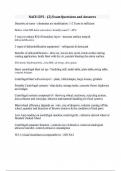
Relias ED RN A, Complete Test Fall 2025

What is the current recommended dose of intravenous or intraosseous epinephrine
in adult patients with cardiac arrest?
10 mg every 10 minutes
1 mg every 3-5 minutes
1 mg every 7 minutes
0.1 mg every 2 minutes - 1 mg every 3-5 minutes

A patient with a traumatic brain injury (TBI) is MOST likely to suffer from what
condition?
Diabetes mellitus
Cerebral palsy
Diabetes Insipidus
Myxedema coma - Diabetes Insipidus

A patient arrives with acute onset of central chest pain. The patient is tachycardic
and tachypneic and appears very anxious and restless. What would be the MOST
important initial intervention for this patient?
Obtain electrocardiogram
Administer nitroglycerin
Administer oxygen
Obtain venous blood gas - IDK, but its not administer nitroglycerin or obtain
electrocardiogram!!

A patient presents after sustaining a roll-over motor vehicle accident. They are
complaining of pain around the mid-upper back. On your initial triage assessment,
you find that patient has preserved motor function below L5 but is suffering from a
loss of sensory function. The assessment findings are consistent with:
Posterior cord syndrome
Central cord syndrome
Anterior cord syndrome
Autonomic syndrome - Posterior cord syndrome

,A patient who is 27 weeks pregnant presents with painless bright red vaginal
bleeding. What condition correlates with the presenting symptoms?
Abruptio placenta
Placenta Previa
Ectopic pregnancy
Premature rupture of membranes (PROM) - Placenta Previa

What is a common assessment finding in a patient with a tension pneumothorax?
Petechial chest rash
Distended neck veins
Equal chest wall expansion
Flattened neck veins - Distended Neck Veins

A patient presents with a two-day history of fever, cough, mild shortness of breath
(SOB), sore throat, myalgia, and new onset of loss of taste and smell. What is the
patient MOST likely suffering from?
Giardia
Microsporidia
COVID 19
Tuberculosis - COVID 19

The deficiency of anti-diuretic hormone (ADH) can lead to what endocrine
disorders?
Diabetes Insipidus
Diabetes Mellitus
Adrenal Insufficiency
Syndrome of inappropriate secretion of ADH (SIADH) - Diabetes Insipidus

A patient presents after an intentional overdose of propranolol approximately 2
hours ago. The patient has severe hypotension and bradycardia. IV fluids and
vasopressors are initiated. What nursing assessment findings indicate the treatment
has been effective?
Decreasing pulse pressure
Decreasing central venous pressure
Increasing serum glucose

, Increasing serum cortisol - Increasing serum glucose

A patient presents with acute onset of chest pain and goes into cardiac arrest
immediately upon arrival. What is a possible reversible cause of cardiac arrest?
Hypervolemia
Alkalosis
Hyperthermia
Tension Pneumothorax - Tension Pneumothorax

Which of the following represent categories utilized to triage patients during a
mass casualty incident (MCI)?
Green, orange, black, purple
Green, blue, red, black
Red, black, pink, yellow
Green, yellow, red, black - Green, yellow, red, black

A 22-year old female who is 8 weeks pregnant presents with a sudden onset of left
lower abdominal pain and vaginal bleeding. The patient's family member stated
that she had a syncopal episode shortly after that. What is the MOST likely
diagnosis for her?
Ruptured appendix
Placenta previa
Abruptio placenta
Ruptured ectopic pregnancy - Ruptured ectopic pregnancy

A patient with a history of chronic alcohol use is brought in with possible
esophageal varices. What medication is used to stop upper gastrointestinal (GI)
bleeding in patients with this condition?
Octreotide (Sandostatin®)
Acetaminophen (Tylenol®)
Warfarin (Jantoven®)
Ibuprofen (Motrin®) - Octreotide (Sandostatin)

A patient has sustained multiple traumatic injuries after a fall from a height. What
is considered an important component of the primary survey assessment?

$11.49
Get access to the full document:

100% satisfaction guarantee
Immediately available after payment
Both online and in PDF
No strings attached

Get to know the seller
Seller avatar
NurseSolution
5.0
(1)

Get to know the seller

Seller avatar
NurseSolution NURSING
View profile
Follow You need to be logged in order to follow users or courses
Sold
3
Member since
2 year
Number of followers
1
Documents
63
Last sold
2 months ago
[All In One Place]

On this page, you find all documents, packages deals and flashcards offered by seller NurseSolution.

5.0

1 reviews

5
1
4
0
3
0
2
0
1
0

Recently viewed by you

Why students choose Stuvia

Created by fellow students, verified by reviews

Quality you can trust: written by students who passed their tests and reviewed by others who've used these notes.

Didn't get what you expected? Choose another document

No worries! You can instantly pick a different document that better fits what you're looking for.

Pay as you like, start learning right away

No subscription, no commitments. Pay the way you're used to via credit card and download your PDF document instantly.

Student with book image

“Bought, downloaded, and aced it. It really can be that simple.”

Alisha Student

Frequently asked questions