100% satisfaction guarantee Immediately available after payment Both online and in PDF No strings attached 4.2 TrustPilot
logo-home
Exam (elaborations)

Bio 256 Exam 1 | Latest Update | Questions and Verified Elaborations (100 OUT OF 100).

Rating
-
Sold
-
Pages
9
Grade
A+
Uploaded on
08-03-2025
Written in
2024/2025

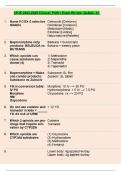
Bio 256 Exam 1 (Latest Update) Questions and Verified Elaborations (100 OUT OF 100). What are two plexus that are involved in the digestive system? Myenteric Plexus Submucosal Plexus What is the function of myenteric plexus? controls peristalsis and other contractions of muscularis externa What is the function of the submucosal plexus? Controls the movements of the muscularis and glandular secretion of the mucosa What is the physiology in chewing? Mastication Start making a chart of chief cells Gastric Lipase Pepsinogen Start making a chart of parietal cells secrete HCL Intrinsic Factor Gherlin What are the main organs? Mouth Pharynx Esophagus Stomach Small intestine Large intestine What are the accessory organs? Teeth Tongue Salivary glands liver gallbladder pancreas What are the ways for contractions for digestion called? Peristalsis Where is bile made and store? The liver makes bile, and the gallbladder stores it What does are the exocrine secretions of the pancrease? Sodium Bicarbonate- Neutralizes HCl Zymogens- Concerted to active digestive enzymes after secretion Trypsinogen- Becomes trypsin, which digests proteins Chymotrypsinogen - becomes chyrimotrypsin, which digests proteins Procaroxypeptidase - becomes carboxypeptidase, which hydrolyzes the terminal amino acid from the carbonyl (-COOH) end of small peptides What does the Enzymes in the pancreas secret? Pancreatic lipase -digests fats Amylas- Digests starch Ribonuclease _Digests RNA Deoxyribonuclease- Digests DNA Endocrine (hormones) Insulin -Regulate glucose levels in the blood Glucagon- Regulate glucose levels in the blood Somatostatin- Prevents the release of insulin and glucagon Where does most of your absorption occur? Small intestine Amphipathic molecule structures has particular charges, what amphipathic molecule aids in the digestion of lipids? Bile acids are steroid amphipaths used to digest dietary fats What sphincter is involved in pooping? Involuntary- Internal sphincter Voluntary- External sphincter What does amylase break down specifically? Starch What do goblet cells do? They secrete mucus to protect the barrier What is intrinsic factor? It is a protein that helps your intestines absorb vitamin b12 and is made up in the stomach lining What is lipase? A type of protein made by your pancreases that helps digest fats What type of bacteria can create peptic ulcers? Helicobacterpylori factor What are some function of the liver? Produce bile to help carry away waste and break down fats in the small intestine Produce certain proteins for blood plasma Produce cholesterol and special proteins to help carry fats through the body. What are some functions of stomach acids? Assists in the digestion of food by dissolving chemical bonds within food molecules. Activates stomach proteases pepsin is activated when pepsinogen is proteolytically cleaved in acid conditions and HCL Prevents pathogenic infections by destroying microorganisms in ingested food. What is secreted by salivary glands? Saliva what does your digestive tract involve? The mouth, pharynx (throat), esophagus, stomach, small intestine, large intestine, rectum, and anus. It also includes the salivary glands, liver, gallbladder, and pancreas, which make digestive juices and enzymes that help the body digest food and liquids . What is the function of the large intestine? To absorb water and salts from material that has not been digested in food get rid of any waste products left over producing and absorbing vitamins Label the glands associated with beginning digestion Salivary Glands Gastric Glands (Stomach Lining) Pancreas Liver Gallbladder Bile Ducts Label the "esophagus" on the digestive system Long tube in the middle Label the small intestine Duodenum Jejunum Ileum Label the "large intestine" on the digestive system Cecum Colon Rectum Anal canal Label the accessory organs of the digestion system Teeth tongue salivary glands pancreas liver gallbladder What are peritoneal folds? greater omentum, falciform ligament, lesser omentum, mesentery, mesocolon How does blood flow from your heart to the liver and back? 1. First the hepatic artery (Oxygenated blood) 2. Hepatic Portal Vein (deooxygenated blood) 3. Abdominal aorta feeds blood into the 4. Hepatic atery **What is the sphincter in the stomach? pyloric sphincter ** Each liver has 6 triad. What is a triad? What are the three vessels in it? A triad is a distinctive component of a hepatic lobule found in the hepatic artery proper. The three vessels in it are the bile duc portal vein hepatic artery **What are the three phases of deglutination (swallowing) in the order they occur? OPE Oral Phase: the tongue forms a food bolus and puses it into the laryngopharynx Pharyngeal Phase: the palate, tongue, vocal cords, and epiglottis block the oral and nasal cavities and airway while pharyngeal constrictors push the bolus into the esophagus Esophageal Phase: Peristalsis drives the bolus downward and relation of the lower esophageal sphincter admits it into the stomach. What are the three hormones that aid in the process of digestion? Gastrin Secretin CKK Gastrin Stimulated HCL, which aids in digestion proteins Secretin Stimulate secretion of HCO3 from the pancreas CKK Stimulate gallbladder contractions Trace the path of food from swallowed down to expulsion 1. Mouth: Chews food and mixes it with saliva 2. Salivary Glands: Produce Saliva which contains salivary amylase 3. Pharynx: swallows the chewed food and makes bolus 4. Esophagus: moves food into the stomach 5. Stomach: Pepsin enzymes make food into chyme 6. Liver: makes bile 7. Pancreas: Releases bicarbonate and produces enzymes that digest carbohydrates, protein, and fat 8. Gallbladder: Stores bile and releases it into the small intestine 9. Small intestine: Digestion of food and absorbs nutrients into blood or lymph 10. Large Intestine: Absorbs water and some vitamins and minerals passes waste material 11. Anus: allows waste to leave the body.

Show more Read less


Whoops! We can’t load your doc right now. Try again or contact support.

Document information

Uploaded on
March 8, 2025
Number of pages
9
Written in
2024/2025
Type
Exam (elaborations)
Contains
Questions & answers

Subjects

Content preview

Bio 256 Exam 1 (Latest Update) Questions and
Verified Elaborations (100 OUT OF 100).
What are two plexus that are involved in the digestive system?

Myenteric Plexus

Submucosal Plexus


What is the function of myenteric plexus?

controls peristalsis and other contractions of muscularis externa


What is the function of the submucosal plexus?

Controls the movements of the muscularis and glandular secretion of the mucosa


What is the physiology in chewing?

Mastication


Start making a chart of chief cells

Gastric Lipase

Pepsinogen


Start making a chart of parietal cells secrete

HCL

Intrinsic Factor

, Gherlin


What are the main organs?

Mouth

Pharynx

Esophagus

Stomach

Small intestine

Large intestine


What are the accessory organs?

Teeth

Tongue

Salivary glands liver

gallbladder pancreas


What are the ways for contractions for digestion called?

Peristalsis


Where is bile made and store?

The liver makes bile, and the gallbladder stores it


What does are the exocrine secretions of the pancrease?

Sodium Bicarbonate- Neutralizes HCl
Get to know the seller

Seller avatar
Reputation scores are based on the amount of documents a seller has sold for a fee and the reviews they have received for those documents. There are three levels: Bronze, Silver and Gold. The better the reputation, the more your can rely on the quality of the sellers work.
ProfGoodlucK Rasmussen College
View profile
Follow You need to be logged in order to follow users or courses
Sold
3474
Member since
4 year
Number of followers
2867
Documents
8655
Last sold
4 days ago
High Quality Exams, Study guides, Reviews, Notes, Case Studies

All study solutions.

4.0

704 reviews

5
379
4
131
3
83
2
39
1
72

Recently viewed by you

Why students choose Stuvia

Created by fellow students, verified by reviews

Quality you can trust: written by students who passed their tests and reviewed by others who've used these notes.

Didn't get what you expected? Choose another document

No worries! You can instantly pick a different document that better fits what you're looking for.

Pay as you like, start learning right away

No subscription, no commitments. Pay the way you're used to via credit card and download your PDF document instantly.

Student with book image

“Bought, downloaded, and aced it. It really can be that simple.”

Alisha Student

Frequently asked questions