

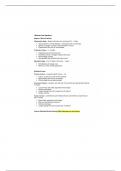
Wound Care Handout
Stages of Wound Healing
Inflammation Stage – Begins with injury and continues for 3 – 6 days
Vasoconstriction controls bleeding – hemostasis with clot formation
Delivery of oxygen, nutrients, and leukocytes to wound
Phagocytosis with actin of macrophages
Proliferation Stage – 3 – 24 days
Capillaries grow across the wound
Granulation tissue or collagen replaces lost tissue
Wound edges contract
New epithelial cells surface across the wound
Maturation Stage – from 21 days to 6 months – 1 year+
Strengthening of collagen scar
Return to a more normal appearance
Healing Process
Primary Intention – surgically closed incision – cut
Little or no tissue loss with minimal scarring
Rapid healing with low risk of infection
Wound edges are well approximated
Secondary Intention – pressure ulcer left open to heal (may have appropriate dressing
in place)
Loss of tissue with widely separated wound edges
Heals by granulation
Longer healing time with increased risk of infection
Greater scarring
Tertiary Intention – abdominal wound initially left open until infection is resolved and
then is closed
Deep widely separated wound edges
May have spontaneously opened
Extensive drainage
Longer healing time and increased risk of infection
Factors Affecting Wound Healing (Offer Rationales for each factor)
, Age
- As we get older, wounds heal much slower because the skin loses elasticity,
turgor, and circulation decreases
Overall wellness
-
Decreased leukocyte
Anti-inflammatory medications
Antineoplastic medications
Malnourished patients
Impaired tissue perfusion
Low hemoglobin level
Smoking
Prolonged antibiotic use
Wound stress
Tissue necrosis
Edema
Wound Assessment
Surgical incision
Length, location, closure (staples, sutures, liquid glue)
Wound edges – well approximated? Any visual separation?
Drainage – color, amount, consistency, odor (from either drain or dressing)
Stages of Wound Healing
Inflammation Stage – Begins with injury and continues for 3 – 6 days
Vasoconstriction controls bleeding – hemostasis with clot formation
Delivery of oxygen, nutrients, and leukocytes to wound
Phagocytosis with actin of macrophages
Proliferation Stage – 3 – 24 days
Capillaries grow across the wound
Granulation tissue or collagen replaces lost tissue
Wound edges contract
New epithelial cells surface across the wound
Maturation Stage – from 21 days to 6 months – 1 year+
Strengthening of collagen scar
Return to a more normal appearance
Healing Process
Primary Intention – surgically closed incision – cut
Little or no tissue loss with minimal scarring
Rapid healing with low risk of infection
Wound edges are well approximated
Secondary Intention – pressure ulcer left open to heal (may have appropriate dressing
in place)
Loss of tissue with widely separated wound edges
Heals by granulation
Longer healing time with increased risk of infection
Greater scarring
Tertiary Intention – abdominal wound initially left open until infection is resolved and
then is closed
Deep widely separated wound edges
May have spontaneously opened
Extensive drainage
Longer healing time and increased risk of infection
Factors Affecting Wound Healing (Offer Rationales for each factor)
, Age
- As we get older, wounds heal much slower because the skin loses elasticity,
turgor, and circulation decreases
Overall wellness
-
Decreased leukocyte
Anti-inflammatory medications
Antineoplastic medications
Malnourished patients
Impaired tissue perfusion
Low hemoglobin level
Smoking
Prolonged antibiotic use
Wound stress
Tissue necrosis
Edema
Wound Assessment
Surgical incision
Length, location, closure (staples, sutures, liquid glue)
Wound edges – well approximated? Any visual separation?
Drainage – color, amount, consistency, odor (from either drain or dressing)


