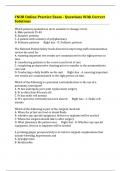
CNOR Online Practice Exam - Questions With Correct
Solutions
Which patient population is more sensitive to dosage errors
A. Male patients 25-40
B. Bariatric patients
C. A patient with a history of polypharmacy
D. Pediatric patients Right Ans - D. Pediatric patients
The National Patient Safety Goals directed at improving staff communication
review the need for
A. ensuring important test results are communicated to the right person on
time
B. transferring patients to the correct next level of care
C. completing perioperative charting prior to transfer to the postanesthesia
care unit
D. Conducting a daily huddle on the unit Right Ans - A, ensuring important
test results are communicated to the right person on time
Which of the following is a potential contraindication to the use of a
pneumatic tourniquet?
A. Pt has undergone prev joint replacement surgery
B. Pt is older than 80 years old
C. Pt has sickle cell anemia
D. Pt's operative extremity has been shaved Right Ans - C. Sickle cell
anemia
Which of the following is part of the surgical check list
A. When the pt last ate food or drank fluids
B. whether any special equipment, devices or implants will be needed
C. Whom the surgeon should talk to after surgery
D. What pharmacy the patient uses Right Ans - B. Whether any special
equipment, devices or implants will be needed
A pt taking ginger preoperatively is at risk for surgical complications that
include bleeding, hypotension and
A. hypoglycemia
B. Bradycardia
,C. hypokalemia
D. liver dysfunction Right Ans - B. Bradycardia
A patient is on long term acetyl salicylic acid therapy. Preoperatively, the pt
should be counselled to discontinue taking the medication _________ prior to
surgery
A. 1 week
B. 2 weeks
C. 3 weeks
D. 4 weeks Right Ans - B. 2 weeks
A pt-specific risk factor for venous thromboembolism (VTE) is
A. a prev hx of stroke
B. duration of surgery
C. intraoperative position
D. use of a pneumatic tourniquet Right Ans - A. previous history of stroke
Actively warming surgical patients with forced air to prevent hypothermia
should begin
A. as soon as the patient enters the OR or procedure room
B. In the recovery room
C. in the preoperative holding area
D. just before the surgeon makes the incision Right Ans - C. in the
preoperative holding area
Which of the following indicators demonstrates a patient who is at increased
risk of developing a pressure ulcer during a surgical procedure
A. Aged 50 or older
B. Hx of recent gallbladder surgery
C. Female
D. Poor preoperative nutritional status Right Ans - D. Poor preoperative
nutritional status
Based on data collected during the patient assessment, the perioperative RN
A. identifies an outcome
B. Formulates a nursing diagnosis
C. develops a plan of care
D. performs nursing interventions Right Ans - B. formulates a nursing
diagnosis
, Liquid peracetic acid low-temperature sterilant is used for devices that meet
all of the following criteria except:
A. Device must be approved for this process
B. Device must be heat sensitive
C. Device must be aerated
D. Device must be immersed Right Ans - C. Device must be aerated
During surgery the patients respirations become increasingly shallow, and the
pupils become smaller and smaller until they are pinpoint. How should this
situation be managed?
A. The patient should be extubated and bagged with 100% oxygen
B. This is normal and is not cause for alarm
C. The anesthetic should be discontinued, and a narcotic antagonist such as
naloxone (Narcan) should be administered
D. Oxygen should be increased while anesthetic is decreased Right Ans - C.
The anesthetic should be discontinued, and a narcotic antagonist such as
naloxone (Narcan) should be administered
NPO Guidelines:
Food and fluids as desired Right Ans - Up to 8 hours
NPO Guidelines
Light meal (toast, clear liquids, infant formula, non human milk) Right Ans
- Up to 6 hours
NPO Guidelines
Breast Milk Right Ans - Up to 4 hours
NPO Guidelines
Clear liquids only, NO solid food or foods with fat content Right Ans - Up to
2 hours
NPO Guidelines
No solids or liquids Right Ans - During the 2 hours until surgical times
After a person with an airborne disease has been cared for in the OR, the OR
should be closed and not cleaned until.. Right Ans - 99% of the airborne
Solutions
Which patient population is more sensitive to dosage errors
A. Male patients 25-40
B. Bariatric patients
C. A patient with a history of polypharmacy
D. Pediatric patients Right Ans - D. Pediatric patients
The National Patient Safety Goals directed at improving staff communication
review the need for
A. ensuring important test results are communicated to the right person on
time
B. transferring patients to the correct next level of care
C. completing perioperative charting prior to transfer to the postanesthesia
care unit
D. Conducting a daily huddle on the unit Right Ans - A, ensuring important
test results are communicated to the right person on time
Which of the following is a potential contraindication to the use of a
pneumatic tourniquet?
A. Pt has undergone prev joint replacement surgery
B. Pt is older than 80 years old
C. Pt has sickle cell anemia
D. Pt's operative extremity has been shaved Right Ans - C. Sickle cell
anemia
Which of the following is part of the surgical check list
A. When the pt last ate food or drank fluids
B. whether any special equipment, devices or implants will be needed
C. Whom the surgeon should talk to after surgery
D. What pharmacy the patient uses Right Ans - B. Whether any special
equipment, devices or implants will be needed
A pt taking ginger preoperatively is at risk for surgical complications that
include bleeding, hypotension and
A. hypoglycemia
B. Bradycardia
,C. hypokalemia
D. liver dysfunction Right Ans - B. Bradycardia
A patient is on long term acetyl salicylic acid therapy. Preoperatively, the pt
should be counselled to discontinue taking the medication _________ prior to
surgery
A. 1 week
B. 2 weeks
C. 3 weeks
D. 4 weeks Right Ans - B. 2 weeks
A pt-specific risk factor for venous thromboembolism (VTE) is
A. a prev hx of stroke
B. duration of surgery
C. intraoperative position
D. use of a pneumatic tourniquet Right Ans - A. previous history of stroke
Actively warming surgical patients with forced air to prevent hypothermia
should begin
A. as soon as the patient enters the OR or procedure room
B. In the recovery room
C. in the preoperative holding area
D. just before the surgeon makes the incision Right Ans - C. in the
preoperative holding area
Which of the following indicators demonstrates a patient who is at increased
risk of developing a pressure ulcer during a surgical procedure
A. Aged 50 or older
B. Hx of recent gallbladder surgery
C. Female
D. Poor preoperative nutritional status Right Ans - D. Poor preoperative
nutritional status
Based on data collected during the patient assessment, the perioperative RN
A. identifies an outcome
B. Formulates a nursing diagnosis
C. develops a plan of care
D. performs nursing interventions Right Ans - B. formulates a nursing
diagnosis
, Liquid peracetic acid low-temperature sterilant is used for devices that meet
all of the following criteria except:
A. Device must be approved for this process
B. Device must be heat sensitive
C. Device must be aerated
D. Device must be immersed Right Ans - C. Device must be aerated
During surgery the patients respirations become increasingly shallow, and the
pupils become smaller and smaller until they are pinpoint. How should this
situation be managed?
A. The patient should be extubated and bagged with 100% oxygen
B. This is normal and is not cause for alarm
C. The anesthetic should be discontinued, and a narcotic antagonist such as
naloxone (Narcan) should be administered
D. Oxygen should be increased while anesthetic is decreased Right Ans - C.
The anesthetic should be discontinued, and a narcotic antagonist such as
naloxone (Narcan) should be administered
NPO Guidelines:
Food and fluids as desired Right Ans - Up to 8 hours
NPO Guidelines
Light meal (toast, clear liquids, infant formula, non human milk) Right Ans
- Up to 6 hours
NPO Guidelines
Breast Milk Right Ans - Up to 4 hours
NPO Guidelines
Clear liquids only, NO solid food or foods with fat content Right Ans - Up to
2 hours
NPO Guidelines
No solids or liquids Right Ans - During the 2 hours until surgical times
After a person with an airborne disease has been cared for in the OR, the OR
should be closed and not cleaned until.. Right Ans - 99% of the airborne