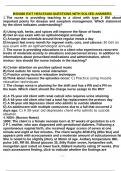
You are charged with identifying and recommending a new event reporting system
for your organization. Which of the following would be the best technique to use
when evaluating new software systems?
A. Invite senior leaders of the organization to a workshop to ask questions of the
software vendor. Review leader evaluations following the workshop.
B. Develop a "Request for Proposal" to submit to various software vendors. Evaluate
the best responses to make a recommendation.
C. Conduct an open vendor fair for all staff to review various options. Evaluate written
and verbal feedback on the systems from participants.
D. Survey your peers across the nation to determine the most popular vendor.
Recommend the vendor that is referenced most frequently.
,Give this one a try later!
C. Conduct an open vendor fair for all staff to review various options.
Evaluate written and verbal feedback on the systems from participants.
The most successful and sustainable changes to organizational structure
are developed through a grassroots approach to leadership and workflow
design. This has been demonstrated with multiple workplace changes, but
particularly with the implementation of new reporting systems.With regard
to the other possible answers: Senior leaders should be involved with the
decision-making process but should not necessarily provide exclusive
input on the decision. The "Request for Proposal" may be an important part
of an organization's evaluation process but should not be the sole input
into the recommendation process. Finally, conducting benchmark
evaluations can be helpful, but the simple tally described is too simplistic
to determine a software recommendation.
When evaluating the conduct of a healthcare worker in the aftermath of a harm event,
which of the following considerations demonstrate consistency with the principles of
a fair and just culture?
A. the severity of the injury that occurred
B. alignment with state health department regulations
C. the impact to the organization's reputation
D. the practice of similarly qualified individuals
Give this one a try later!
D. the practice of similarly qualified individuals
From a human factors engineering perspective, which of the following should
beknown about identifying and eliminating diagnostic errors?
A. Diagnostic errors are the result of cognitive biases and failures by clinicians.
B. Partnership with scientists in cognition, perception, and decision making is needed.
,C. An effective strategy to reduce diagnostic errors is the use of checklists.
D. Attribution of diagnostic errors is not subject to either hindsight or outcome biases.
Give this one a try later!
B. Partnership with scientists in cognition, perception, and decision making
is needed.
An organization has achieved 92% compliance with a process measure. The patient
safety professional believes that the processes in place are not reliable or that the
results are attributable to luck. Which of the following best describes this
characteristic?
A. appreciative inquiry
B. commitment to resilience
C. deference to expertise
D. preoccupation with failure
Give this one a try later!
D. preoccupation with failure
Your hospital implements patient safety WalkRounds as part of a series of changes to
improve safety. Six months after the implementation, informal staff feedback suggests
inconsistency in the WalkRounds' effectiveness.
As the patient safety professional charged with ensuring the success of the effort,
what is the best assessment technique to gain insight into current performance?
A. Gather data about the frequency and content of the WalkRounds to establish
current baseline performance.
B. Review information boards in the areas included in the WalkRounds to determine
the scope of issues raised.
C. Survey staff and leaders about their views on patient safety WalkRounds.
D. Discuss the informal feedback you have been receiving with the CEO.
, Give this one a try later!
C. Survey staff and leaders about their views on patient safety WalkRounds.
The concern that is being voiced informally needs validation through
formal data collection. Surveying a reasonable sample of staff and leaders
about WalkRounds would create a valid data perspective on the
deployment and impact of WalkRounds that could be used by the patient
safety professional to refine the deployment strategy.Reviewing
information boards and discussing the informal feedback could add to the
informal understanding of what is occurring with WalkRounds but is not
comprehensive enough to establish an objective assessment of the
situation. Gathering data about only the frequency and content of the
WalkRounds will not provide a comprehensive, data-driven answer to the
deployment effectiveness but questions about these topics should be
included in the survey.
Which of the following changes to operations would best highlight leadership's
commitment to patient safety?
A. Implementing quarterly town hall meetings to share organizational information
B. Executive leadership regularly participating in leadership rounds and daily safety
briefings
C. The hospital executive reporting on patient safety at every board meeting
D. Including an executive representative on all root cause analysis teams
Give this one a try later!
for your organization. Which of the following would be the best technique to use
when evaluating new software systems?
A. Invite senior leaders of the organization to a workshop to ask questions of the
software vendor. Review leader evaluations following the workshop.
B. Develop a "Request for Proposal" to submit to various software vendors. Evaluate
the best responses to make a recommendation.
C. Conduct an open vendor fair for all staff to review various options. Evaluate written
and verbal feedback on the systems from participants.
D. Survey your peers across the nation to determine the most popular vendor.
Recommend the vendor that is referenced most frequently.
,Give this one a try later!
C. Conduct an open vendor fair for all staff to review various options.
Evaluate written and verbal feedback on the systems from participants.
The most successful and sustainable changes to organizational structure
are developed through a grassroots approach to leadership and workflow
design. This has been demonstrated with multiple workplace changes, but
particularly with the implementation of new reporting systems.With regard
to the other possible answers: Senior leaders should be involved with the
decision-making process but should not necessarily provide exclusive
input on the decision. The "Request for Proposal" may be an important part
of an organization's evaluation process but should not be the sole input
into the recommendation process. Finally, conducting benchmark
evaluations can be helpful, but the simple tally described is too simplistic
to determine a software recommendation.
When evaluating the conduct of a healthcare worker in the aftermath of a harm event,
which of the following considerations demonstrate consistency with the principles of
a fair and just culture?
A. the severity of the injury that occurred
B. alignment with state health department regulations
C. the impact to the organization's reputation
D. the practice of similarly qualified individuals
Give this one a try later!
D. the practice of similarly qualified individuals
From a human factors engineering perspective, which of the following should
beknown about identifying and eliminating diagnostic errors?
A. Diagnostic errors are the result of cognitive biases and failures by clinicians.
B. Partnership with scientists in cognition, perception, and decision making is needed.
,C. An effective strategy to reduce diagnostic errors is the use of checklists.
D. Attribution of diagnostic errors is not subject to either hindsight or outcome biases.
Give this one a try later!
B. Partnership with scientists in cognition, perception, and decision making
is needed.
An organization has achieved 92% compliance with a process measure. The patient
safety professional believes that the processes in place are not reliable or that the
results are attributable to luck. Which of the following best describes this
characteristic?
A. appreciative inquiry
B. commitment to resilience
C. deference to expertise
D. preoccupation with failure
Give this one a try later!
D. preoccupation with failure
Your hospital implements patient safety WalkRounds as part of a series of changes to
improve safety. Six months after the implementation, informal staff feedback suggests
inconsistency in the WalkRounds' effectiveness.
As the patient safety professional charged with ensuring the success of the effort,
what is the best assessment technique to gain insight into current performance?
A. Gather data about the frequency and content of the WalkRounds to establish
current baseline performance.
B. Review information boards in the areas included in the WalkRounds to determine
the scope of issues raised.
C. Survey staff and leaders about their views on patient safety WalkRounds.
D. Discuss the informal feedback you have been receiving with the CEO.
, Give this one a try later!
C. Survey staff and leaders about their views on patient safety WalkRounds.
The concern that is being voiced informally needs validation through
formal data collection. Surveying a reasonable sample of staff and leaders
about WalkRounds would create a valid data perspective on the
deployment and impact of WalkRounds that could be used by the patient
safety professional to refine the deployment strategy.Reviewing
information boards and discussing the informal feedback could add to the
informal understanding of what is occurring with WalkRounds but is not
comprehensive enough to establish an objective assessment of the
situation. Gathering data about only the frequency and content of the
WalkRounds will not provide a comprehensive, data-driven answer to the
deployment effectiveness but questions about these topics should be
included in the survey.
Which of the following changes to operations would best highlight leadership's
commitment to patient safety?
A. Implementing quarterly town hall meetings to share organizational information
B. Executive leadership regularly participating in leadership rounds and daily safety
briefings
C. The hospital executive reporting on patient safety at every board meeting
D. Including an executive representative on all root cause analysis teams
Give this one a try later!