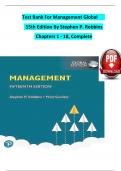
Test Bank For Management Global
f f f f f
f 15th Edition By Stephen P. Robbins
f f f f f
f Chapters 1 - 18, Complete
f f f f
,Contents
1. Managers fand fYou fin fthe fWorkplace
2. Making fDecisions
3. Influence fof fthe fExternal fEnvironment fand fthe fOrganization’s fCulture
4. Managing fin fa fGlobal fEnvironment
5. Managing fDiversity
6. Managing fSocial fResponsibility fand fEthics
7. Managing fChange fand fDisruptive fInnovation
8. Foundations fof fPlanning
9. Managing fStrategy
10. Entrepreneurial fVentures
11. Designing fOrganizational fStructure
12. Managing fHuman fResources
13. Managing fGroups fand fTeams
14. Managing fCommunication
15. Understanding fand fManaging fIndividual fBehavior
16. Motivating fEmployees
17. Being fan fEffective fLeader
18. Controlling fPeople fand fOperations
,Chapter f1 fManagers fand fYou fin fthe fWorkplace
1) Time fshould fbe fconsidered fa(n) resource.
A) abundant
B) diminishing
C) limited
D) renewabl
e f ANSWER:
fC fDiff: f2
AACSB: f Analytical fthinking
Learning fObj: fLO f1.1: fTell fwho fmanagers fare fand fwhere fthey fwork; fKnow fhow fto fmanage
fyour f time
Classification: f Concept
2) One fmethod fto fbecome fmore fefficient fin fmanaging fyour ftime fis fto .
A) classify feach factivity for ftask fas fA, fB, for fC
B) schedule fmore fin fone fday fthan fyou fcan freasonably fexpect fto ffinish
C) enlist fthe faid fof fa fmanagement fcoach fto fkeep fyou fon ftask
D) shorten fdeadlines fso fyou fwill fbe fpressed fto fcomplete ftasks
fearly f ANSWER: f A
Diff: f2
AACSB: f Application fof fknowledge
Learning fObj: fLO f1.1: fTell fwho fmanagers fare fand fwhere fthey fwork; fKnow fhow fto fmanage
fyour f time
Classification: f Concept
3) Technology fmakes fit feasier fto fstay fconnected fbut .
A) there fis falways fthe frisk fof fsecurity fbreaches fand fthe ftheft fof finformation fnecessary ffor
fgood f time fmanagement fpractices
B) it fraises fexpectations fon fthe fpart fof fthose fto fwhom fwe fare fconnected
C) technology ffails, fbatteries flose fpower, fand ftheir feffectiveness fwanes
D) it falso fpresents fconstant fdistractions, fmaking fit fdifficult fto fstay fon
ftask f ANSWER: f D
Diff: f2
AACSB: f Reflective fthinking
Learning fObj: fLO f1.1: fTell fwho fmanagers fare fand fwhere fthey fwork; fKnow fhow fto fmanage
fyour f time
Classification: f Critical fthinking
, 4) In ftoday's fworkplace, .
A) women fare fmore flikely fthan fmen fto fbe fpromoted finto fmanagement
B) many femployees fperform fwork fthat fin fthe fpast fwas fconsidered fmanagerial factivities
C) women ftend fto fbe fmore feffective fsupervisors fthan fmen
D) most forganizations fhave feliminated fthe ftitle fof
fmanager f ANSWER: f B
Diff: f2
AACSB: f Reflective fthinking
Learning fObj: fLO f1.1: fTell fwho fmanagers fare fand fwhere fthey fwork; fKnow fhow fto fmanage
fyour f time
Classification: f Concept
5) Because fthis fis fher ffirst fjob, fMelanie fwas funclear fabout fwhat fmanagers factually
fdo. f Fortunately fher ftraining fmaterials fexplained fthat fa fmanager's fjob ffocuses fon .
A) performing fclerical fduties
B) personal fachievement
C) helping fothers faccomplish ftheir fwork fgoals
D) supervising fgroups frather fthan findividual
femployees f ANSWER: f C
Diff: f2
AACSB: f Analytical fthinking; fApplication fof fknowledge
Learning fObj: fLO f1.1: fTell fwho fmanagers fare fand fwhere fthey fwork; fKnow fhow fto fmanage
fyour f time
Classification: f Application
6) An findividual fwho fworks fwith fand fthrough fother fpeople fby fcoordinating ftheir fwork
factivities f in forder fto faccomplish forganizational fgoals fis .
A) an fassembly fline fworker
B) a flaborer
C) a fmanager
D) a
fsalesperson
f ANSWER: f f fC
fDiff: f1
AACSB: f Reflective fthinking
Learning fObj: fLO f1.1: fTell fwho fmanagers fare fand fwhere fthey fwork; fKnow fhow fto fmanage
fyour f time
Classification: f Concept
f f f f f
f 15th Edition By Stephen P. Robbins
f f f f f
f Chapters 1 - 18, Complete
f f f f
,Contents
1. Managers fand fYou fin fthe fWorkplace
2. Making fDecisions
3. Influence fof fthe fExternal fEnvironment fand fthe fOrganization’s fCulture
4. Managing fin fa fGlobal fEnvironment
5. Managing fDiversity
6. Managing fSocial fResponsibility fand fEthics
7. Managing fChange fand fDisruptive fInnovation
8. Foundations fof fPlanning
9. Managing fStrategy
10. Entrepreneurial fVentures
11. Designing fOrganizational fStructure
12. Managing fHuman fResources
13. Managing fGroups fand fTeams
14. Managing fCommunication
15. Understanding fand fManaging fIndividual fBehavior
16. Motivating fEmployees
17. Being fan fEffective fLeader
18. Controlling fPeople fand fOperations
,Chapter f1 fManagers fand fYou fin fthe fWorkplace
1) Time fshould fbe fconsidered fa(n) resource.
A) abundant
B) diminishing
C) limited
D) renewabl
e f ANSWER:
fC fDiff: f2
AACSB: f Analytical fthinking
Learning fObj: fLO f1.1: fTell fwho fmanagers fare fand fwhere fthey fwork; fKnow fhow fto fmanage
fyour f time
Classification: f Concept
2) One fmethod fto fbecome fmore fefficient fin fmanaging fyour ftime fis fto .
A) classify feach factivity for ftask fas fA, fB, for fC
B) schedule fmore fin fone fday fthan fyou fcan freasonably fexpect fto ffinish
C) enlist fthe faid fof fa fmanagement fcoach fto fkeep fyou fon ftask
D) shorten fdeadlines fso fyou fwill fbe fpressed fto fcomplete ftasks
fearly f ANSWER: f A
Diff: f2
AACSB: f Application fof fknowledge
Learning fObj: fLO f1.1: fTell fwho fmanagers fare fand fwhere fthey fwork; fKnow fhow fto fmanage
fyour f time
Classification: f Concept
3) Technology fmakes fit feasier fto fstay fconnected fbut .
A) there fis falways fthe frisk fof fsecurity fbreaches fand fthe ftheft fof finformation fnecessary ffor
fgood f time fmanagement fpractices
B) it fraises fexpectations fon fthe fpart fof fthose fto fwhom fwe fare fconnected
C) technology ffails, fbatteries flose fpower, fand ftheir feffectiveness fwanes
D) it falso fpresents fconstant fdistractions, fmaking fit fdifficult fto fstay fon
ftask f ANSWER: f D
Diff: f2
AACSB: f Reflective fthinking
Learning fObj: fLO f1.1: fTell fwho fmanagers fare fand fwhere fthey fwork; fKnow fhow fto fmanage
fyour f time
Classification: f Critical fthinking
, 4) In ftoday's fworkplace, .
A) women fare fmore flikely fthan fmen fto fbe fpromoted finto fmanagement
B) many femployees fperform fwork fthat fin fthe fpast fwas fconsidered fmanagerial factivities
C) women ftend fto fbe fmore feffective fsupervisors fthan fmen
D) most forganizations fhave feliminated fthe ftitle fof
fmanager f ANSWER: f B
Diff: f2
AACSB: f Reflective fthinking
Learning fObj: fLO f1.1: fTell fwho fmanagers fare fand fwhere fthey fwork; fKnow fhow fto fmanage
fyour f time
Classification: f Concept
5) Because fthis fis fher ffirst fjob, fMelanie fwas funclear fabout fwhat fmanagers factually
fdo. f Fortunately fher ftraining fmaterials fexplained fthat fa fmanager's fjob ffocuses fon .
A) performing fclerical fduties
B) personal fachievement
C) helping fothers faccomplish ftheir fwork fgoals
D) supervising fgroups frather fthan findividual
femployees f ANSWER: f C
Diff: f2
AACSB: f Analytical fthinking; fApplication fof fknowledge
Learning fObj: fLO f1.1: fTell fwho fmanagers fare fand fwhere fthey fwork; fKnow fhow fto fmanage
fyour f time
Classification: f Application
6) An findividual fwho fworks fwith fand fthrough fother fpeople fby fcoordinating ftheir fwork
factivities f in forder fto faccomplish forganizational fgoals fis .
A) an fassembly fline fworker
B) a flaborer
C) a fmanager
D) a
fsalesperson
f ANSWER: f f fC
fDiff: f1
AACSB: f Reflective fthinking
Learning fObj: fLO f1.1: fTell fwho fmanagers fare fand fwhere fthey fwork; fKnow fhow fto fmanage
fyour f time
Classification: f Concept