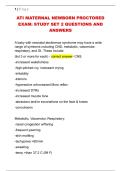
1. What are the indica.ons of Heparin: Prophylac.c Vs Therapeu.c.
a. Therapeu.c: management of acute thromboembolic disorders (DVT, PE, DIC)
b. Prophylac.cally: take low doses of heparin to PREVENT DVT and PE
2. How does Heparin work? Does it dissolve the existed clot?
a. Interferes with the ac.va.on of fibrin and fibrinogen from thrombin that keeps the clots from fo
ing
b. Prevents fibrin from forming a clot and helps prevent DVT and PE. It doesn’t break up a clot, ju
keeps it from coming together
3. What is the lab test you need to monitor for Heparin therapeu.c effec.veness? Do we need this test fo
prophylac.c dose?
a. aPTT
b. No
4. What is the an.dote of Heparin?
a. Protamine sulfate
5. What is the LMWH? What is the indica.on of LMWH? Do we need to monitor lab test? What is the con
traindica.on of LMWH?
a. Enoxaparin (Lovenox) and dalteparin (Fragmin)
b. Prevent and treatment of DVT, PE
c. No
d. Trauma, epidural half-life, hemorrhagic disorder
6. What is Warfarin? How does warfarin work?
a. Vitamin K antagonist
b. Inhibits vitamin K-dependent cloYng factors II, VII, IX, and X
7. What are the indica.ons of Warfarin?
a. Long-term preven.on or management of DVT, PE, and emboliza.on associated with A fib and p
the.c heart valves
8. What is the lab test do you need to check for warfarin therapeu.c effec.veness?
a. Prothrombin .me/interna.onal normalized ra.o (PT/INR)
9. What is the an.dote of warfarin? When do we decide to use this an.dote?
a. Vitamin K
b. If INR is above 3.0
10. What are the food sources you need to teach pa.ents with Warfarin to restrict use of? Why?
a. Foods high in Vitamin k (tomatoes, dark leafy greens, vegetables)
a. Therapeu.c: management of acute thromboembolic disorders (DVT, PE, DIC)
b. Prophylac.cally: take low doses of heparin to PREVENT DVT and PE
2. How does Heparin work? Does it dissolve the existed clot?
a. Interferes with the ac.va.on of fibrin and fibrinogen from thrombin that keeps the clots from fo
ing
b. Prevents fibrin from forming a clot and helps prevent DVT and PE. It doesn’t break up a clot, ju
keeps it from coming together
3. What is the lab test you need to monitor for Heparin therapeu.c effec.veness? Do we need this test fo
prophylac.c dose?
a. aPTT
b. No
4. What is the an.dote of Heparin?
a. Protamine sulfate
5. What is the LMWH? What is the indica.on of LMWH? Do we need to monitor lab test? What is the con
traindica.on of LMWH?
a. Enoxaparin (Lovenox) and dalteparin (Fragmin)
b. Prevent and treatment of DVT, PE
c. No
d. Trauma, epidural half-life, hemorrhagic disorder
6. What is Warfarin? How does warfarin work?
a. Vitamin K antagonist
b. Inhibits vitamin K-dependent cloYng factors II, VII, IX, and X
7. What are the indica.ons of Warfarin?
a. Long-term preven.on or management of DVT, PE, and emboliza.on associated with A fib and p
the.c heart valves
8. What is the lab test do you need to check for warfarin therapeu.c effec.veness?
a. Prothrombin .me/interna.onal normalized ra.o (PT/INR)
9. What is the an.dote of warfarin? When do we decide to use this an.dote?
a. Vitamin K
b. If INR is above 3.0
10. What are the food sources you need to teach pa.ents with Warfarin to restrict use of? Why?
a. Foods high in Vitamin k (tomatoes, dark leafy greens, vegetables)