Six topics identified
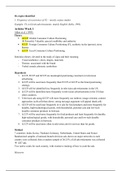
1. Frequency of occurrence of FL – mostly corpus studies
Example: FL in Greek advertisements, mainly English (Sella, 1993)
Articles Week 1
Alden et al. (1999)
Theory
GCCP: Global Consumer Culture Positioning
Powerful, Valuable, special credibility and authority
FCCP: Foreign Consumer Culture Positioning (FL, aesthetic styles (person), story
themes
LCCP: Local Consumer Culture Positioning
Semiotics theory: devoted to the study of signs and their meaning
- Visual aesthetics: colors, shapes, materials
- Themes: associated with the brand
- Verbal sounds: phonetic symbolism
Hypothesis
1. LCCP, FCCP and GCCP are meaningful positioning constructs in television
advertising
2. LCCP will be used more frequently than FCCP or GCCP as the brand positioning
strategy.
3. GCCP will be identified less frequently in television advertisements in the US.
4. LCCP will be identified more frequently in television advertisements in the US than
other countries.
5. Television ads using GCCP will more frequently use indirect, image oriented, content
approaches (soft-sell) than direct, strong message argument will appeal (hard-sell)
6. GCCP will be used least frequently in tv ads for food products and most frequently for
durable, high-technological goods, with households, personal care and low-tech
durable consumer products in between.
7. LCCP will be used more frequently for food products and least frequently for durable,
high-technological goods, with households, personal care and low-tech durable
consumer products in between.
8. LCCP will be used more often in television ads for services than for goods.
Method
7 countries: India, Korea, Thailand, Germany, Netherlands, United States and France
Randomized samples of national-brand television ads shown on major networks in each
country were collected, then a random sample of 20-25% of all advertisements was collected
1267 ads.
Two native codes for each country, with extensive training of how to code the ads.
Measures
, 1. pronunciation of the brand name
2. symbols used and/or spelling of visually displayed brand name
3. symbols used for brand logos
4. central themes
5. appearance of spokesperson(s)
coded as: local, foreign or global
Results
All the hypothesis were confirmed.
Limitations
- Coders may have interpreted the ads differently than ordinary consumers in their
countries
- Multinational brands that often use local brand names in each country further
research
- Did not model higher order interactions
Piller (2003) - Historical overview
Theory
Summarize early work on FL and advertising. Some other researcher realized that
people/brands use words that were not from their own language (e.g. words inspired by
Spanish words like). These are Loan words. A shift came when people were evaluating this
use, they took a normative stance towards other language i.e. it was bad to use other
languages than your own language.
- ‘The perfecto cigar’; ‘Excello shirts’ (Pound,1913)
- Normative perspective: Most deeply believe that a foreign word is always more
distinguished than the corresponding German word.
What happens when someone sees another language in an ad: they identify it with a particular
language, even though not knowing what the word means. They will have a certain
stereotype. English is a more social stereotype.
Elements of an ad/commercial:
- Headline
- Illustration
- Body copy
- Slogan
- Product name
- Standing details
Mock-language: l’eggs, by only adding le/la it becomes French.
1. Frequency of occurrence of FL – mostly corpus studies
Example: FL in Greek advertisements, mainly English (Sella, 1993)
Articles Week 1
Alden et al. (1999)
Theory
GCCP: Global Consumer Culture Positioning
Powerful, Valuable, special credibility and authority
FCCP: Foreign Consumer Culture Positioning (FL, aesthetic styles (person), story
themes
LCCP: Local Consumer Culture Positioning
Semiotics theory: devoted to the study of signs and their meaning
- Visual aesthetics: colors, shapes, materials
- Themes: associated with the brand
- Verbal sounds: phonetic symbolism
Hypothesis
1. LCCP, FCCP and GCCP are meaningful positioning constructs in television
advertising
2. LCCP will be used more frequently than FCCP or GCCP as the brand positioning
strategy.
3. GCCP will be identified less frequently in television advertisements in the US.
4. LCCP will be identified more frequently in television advertisements in the US than
other countries.
5. Television ads using GCCP will more frequently use indirect, image oriented, content
approaches (soft-sell) than direct, strong message argument will appeal (hard-sell)
6. GCCP will be used least frequently in tv ads for food products and most frequently for
durable, high-technological goods, with households, personal care and low-tech
durable consumer products in between.
7. LCCP will be used more frequently for food products and least frequently for durable,
high-technological goods, with households, personal care and low-tech durable
consumer products in between.
8. LCCP will be used more often in television ads for services than for goods.
Method
7 countries: India, Korea, Thailand, Germany, Netherlands, United States and France
Randomized samples of national-brand television ads shown on major networks in each
country were collected, then a random sample of 20-25% of all advertisements was collected
1267 ads.
Two native codes for each country, with extensive training of how to code the ads.
Measures
, 1. pronunciation of the brand name
2. symbols used and/or spelling of visually displayed brand name
3. symbols used for brand logos
4. central themes
5. appearance of spokesperson(s)
coded as: local, foreign or global
Results
All the hypothesis were confirmed.
Limitations
- Coders may have interpreted the ads differently than ordinary consumers in their
countries
- Multinational brands that often use local brand names in each country further
research
- Did not model higher order interactions
Piller (2003) - Historical overview
Theory
Summarize early work on FL and advertising. Some other researcher realized that
people/brands use words that were not from their own language (e.g. words inspired by
Spanish words like). These are Loan words. A shift came when people were evaluating this
use, they took a normative stance towards other language i.e. it was bad to use other
languages than your own language.
- ‘The perfecto cigar’; ‘Excello shirts’ (Pound,1913)
- Normative perspective: Most deeply believe that a foreign word is always more
distinguished than the corresponding German word.
What happens when someone sees another language in an ad: they identify it with a particular
language, even though not knowing what the word means. They will have a certain
stereotype. English is a more social stereotype.
Elements of an ad/commercial:
- Headline
- Illustration
- Body copy
- Slogan
- Product name
- Standing details
Mock-language: l’eggs, by only adding le/la it becomes French.