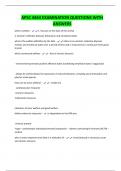
APSC 4464 EXAMINATION QUESTIONS WITH
ANSWERS
what is welfare - 1. focuses on the state of the animal
2. Animal's collective physical, behavioral, and emotional states
what is the welfare definition by the AZA - refers to an animal's collective physical,
mental, and emotional states over a period of time and is measured on a continuum from good
to poor
what is enhanced welfare - - free of chronic stressors
- environment promotes positive affective states (underlying emotional states: happy/sad)
- allows for and facilitates the expression of natural behaviors, including social interaction and
play for social species
how can we asses welfare? - - endocrine
- cardiovascular measures
-immune measures
-behavioral measures
indicators of poor welfare and good welfare
define endocrine measures - dependent on the HPA axis
-stressor present
-hypo-- corticotropin releasing hormone/vasopressin -- adreno-corticotropin hormone (ACTH) --
cortisol
why is stress important and what is it indicative of - -stress/arousal is necessary, acute
and chronic stressors
,-cortisol indicative of arousal
-- increases after arousing events, not just stressors
--learning, exercise, visiting dog park
what are influences on cortisol - 1. stressors
2. exercise
3. cold-temperature
4. diurnal fluctuations
5. individual differences
what are the complications of using cortisol as a measure of welfare - doesn't always tell
us the differences between eustress and distress
- use as one measure among many
-within-subject studies better than group studies
What are the different cortisol measures - salivary cortisol
urinary cortisol
fecal cortisol
hair/fur cortisol
What is the measure of salivary cortisol - - more invasive
- useful for acute stressors
- typical view that salivary cort levels 30 mins prior
what is the measure of urinary cortisol - - relatively non-invasive
-reflection period longer than salivary cortisol
- has to be corrected for dilution using creatine
what is the measure of fecal cortisol - -non-invasive
- less variability than saliva
,- longer reflection periods than saliva delay of 10-12 hours from a change in blood cort levels
what is the measure of hair/fur cortisol - -relatively non-invasive
-less variability than saliva
- useful for long-term assessment
- can vary by fur or pigmentation
-black hair sequestered less cortisol than yellow hairs
-agouti hair intermediate
what is the characteristic of shelter dog cortisol levels? - 1. higher than dogs living in their
home
2. dogs boarding for a time increased cortisol levels three-fold
3. large variation between average cortisol levels across shelters
habituation versus dysregulation -
B-endorphin - increased levels associated with analgesia, positive states
Dopamine - increased levels associated with pleasure
Oxytocin - -social bonding hormone
-measured when assessing social interactions
Serotonin (urinary) - new biomarker for dogs
-- diurnal fluctuations
-- differences decreases following regular social interaction
What are cardiovascular measures - blood pressure (can be taken near the base of the
tail)
heart rate variability (HRV)
- decreased HRV occurs during physically or psychologically stressful events
-increased HRV indicates better welfare
, what do secretory immunoglobulin A (S-IgA) do for immune functioning - - main function:
immune exclusion of pathogens
-- neutralizes viruses, and toxins, prevents microorganisms from penetrating mucosal epithelium
-collected from saliva or feces
-can reflect both stress levels and immune functioning
immune functioning is affected by - immune functioning is affected by the physiological
state of the animal including cortisol levels
-- Chronic stress decreases S-IgA
-- influenced by physical and psychosocial stress
immune functioning - highlights importance of welfare more generally
-- can increase an animal's chances of contracting disease and severity of disease
describe the disease prevalence in a shelter - the proportion of dogs showing signs of
illness across times
dogs that remain in the shelter longer are more likely to contract diseases
What are behaviors that predict illness - dogs that ranked higher on sociability seemed
more prone to illness
Why are behavioral measures important in shelters - in shelters not feasible to collect
physiological data
-- must rely on behavior to assess welfare and stress
--behaviors that are problematic whether or not they correlate with cortisol
what are activity monitors - can track activity, position, temperature
monitor for abnormalities or changes
Shelter vs owned dogs - owned and shelter dogs' activity patterns differ
- shelter dogs showed more activity
-shelter dogs showed less time resting
ANSWERS
what is welfare - 1. focuses on the state of the animal
2. Animal's collective physical, behavioral, and emotional states
what is the welfare definition by the AZA - refers to an animal's collective physical,
mental, and emotional states over a period of time and is measured on a continuum from good
to poor
what is enhanced welfare - - free of chronic stressors
- environment promotes positive affective states (underlying emotional states: happy/sad)
- allows for and facilitates the expression of natural behaviors, including social interaction and
play for social species
how can we asses welfare? - - endocrine
- cardiovascular measures
-immune measures
-behavioral measures
indicators of poor welfare and good welfare
define endocrine measures - dependent on the HPA axis
-stressor present
-hypo-- corticotropin releasing hormone/vasopressin -- adreno-corticotropin hormone (ACTH) --
cortisol
why is stress important and what is it indicative of - -stress/arousal is necessary, acute
and chronic stressors
,-cortisol indicative of arousal
-- increases after arousing events, not just stressors
--learning, exercise, visiting dog park
what are influences on cortisol - 1. stressors
2. exercise
3. cold-temperature
4. diurnal fluctuations
5. individual differences
what are the complications of using cortisol as a measure of welfare - doesn't always tell
us the differences between eustress and distress
- use as one measure among many
-within-subject studies better than group studies
What are the different cortisol measures - salivary cortisol
urinary cortisol
fecal cortisol
hair/fur cortisol
What is the measure of salivary cortisol - - more invasive
- useful for acute stressors
- typical view that salivary cort levels 30 mins prior
what is the measure of urinary cortisol - - relatively non-invasive
-reflection period longer than salivary cortisol
- has to be corrected for dilution using creatine
what is the measure of fecal cortisol - -non-invasive
- less variability than saliva
,- longer reflection periods than saliva delay of 10-12 hours from a change in blood cort levels
what is the measure of hair/fur cortisol - -relatively non-invasive
-less variability than saliva
- useful for long-term assessment
- can vary by fur or pigmentation
-black hair sequestered less cortisol than yellow hairs
-agouti hair intermediate
what is the characteristic of shelter dog cortisol levels? - 1. higher than dogs living in their
home
2. dogs boarding for a time increased cortisol levels three-fold
3. large variation between average cortisol levels across shelters
habituation versus dysregulation -
B-endorphin - increased levels associated with analgesia, positive states
Dopamine - increased levels associated with pleasure
Oxytocin - -social bonding hormone
-measured when assessing social interactions
Serotonin (urinary) - new biomarker for dogs
-- diurnal fluctuations
-- differences decreases following regular social interaction
What are cardiovascular measures - blood pressure (can be taken near the base of the
tail)
heart rate variability (HRV)
- decreased HRV occurs during physically or psychologically stressful events
-increased HRV indicates better welfare
, what do secretory immunoglobulin A (S-IgA) do for immune functioning - - main function:
immune exclusion of pathogens
-- neutralizes viruses, and toxins, prevents microorganisms from penetrating mucosal epithelium
-collected from saliva or feces
-can reflect both stress levels and immune functioning
immune functioning is affected by - immune functioning is affected by the physiological
state of the animal including cortisol levels
-- Chronic stress decreases S-IgA
-- influenced by physical and psychosocial stress
immune functioning - highlights importance of welfare more generally
-- can increase an animal's chances of contracting disease and severity of disease
describe the disease prevalence in a shelter - the proportion of dogs showing signs of
illness across times
dogs that remain in the shelter longer are more likely to contract diseases
What are behaviors that predict illness - dogs that ranked higher on sociability seemed
more prone to illness
Why are behavioral measures important in shelters - in shelters not feasible to collect
physiological data
-- must rely on behavior to assess welfare and stress
--behaviors that are problematic whether or not they correlate with cortisol
what are activity monitors - can track activity, position, temperature
monitor for abnormalities or changes
Shelter vs owned dogs - owned and shelter dogs' activity patterns differ
- shelter dogs showed more activity
-shelter dogs showed less time resting