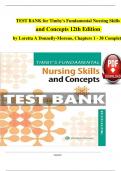
TEST BANK for Timby's Fundamental Nursing Skills
and Concepts 12th Edition
by Loretta A Donnelly-Moreno, Chapters 1 - 38 Complet
WWW.THENURSINGMASTERY.COM
wwwcom
,Table of contents
o Chapter 1 Nursing Foundations
o Chapter 2 Nursing Process
o Chapter 3 Laws and Ethics
o Chapter 4 Health and Illness
o Chapter 5 Homeostasis, Adaptation, and Stress
o Chapter 6 Culture and Ethnicity
o Chapter 7 The Nurse–Client Relationship
o Chapter 8 Client Teaching
o Chapter 9 Recording and Reporting
o Chapter 10 Asepsis
o Chapter 11 Admission, Discharge, Transfer, and Referrals
o Chapter 12 Vital Signs
o Chapter 13 Physical Assessment
o Chapter 14 Special Examinations and Tests
o Chapter 15 Nutrition
o Chapter 16 Fluid and Chemical Balance
o Chapter 17 Hygiene
o Chapter 18 Comfort, Rest, and Sleep
o Chapter 19 Safety
o Chapter 20 Pain Management
o Chapter 21 Oxygenation
o Chapter 22 Infection Control
o Chapter 23 Body Mechanics, Positioning, and Moving
o Chapter 24 Fitness and Therapeutic Exercise
o Chapter 25 Mechanical Immobilization
o Chapter 26 Ambulatory Aids
o Chapter 27 Perioperative Care
o Chapter 28 Wound Care
o Chapter 29 Gastrointestinal Intubation
o Chapter 30 Urinary Elimination
o Chapter 31 Bowel Elimination
o Chapter 32 Oral Medications
o Chapter 33 Topical and Inhalant Medications
o Chapter 34 Parenteral Medications
o Chapter 35 Intravenous Medications
o Chapter 36 Airway Management
o Chapter 37 Resuscitation
o Chapter 38 End-of-Life Care
WWW.THENURSINGMASTERY.COM
wwwcom
,Chapter 1 Nursing Foundations
MULTIPLE CHOICE
1. Florence Nightingales contributions to nursing practice and education:
a. are historically important but have no validity for nursing today.
b. were neither recognized nor appreciated in her own time.
c. were a major factor in reducing the death rate in the Crimean War.
d. were limited only to the care of severe traumatic wounds.
ANSWER: C
By improving sanitation, nutrition ventilation, and handwashing techniques, Florence
Nightingales nurses dramatically reduced the death rate from injuries in the Crimean War.
DIF: Cognitive Level: Knowledge REF: dm 2 OBJ: Theory #1
TOP: Nursing History KEY: Nursing Process Step: N/A
MSC: NCLEX: N/A
2. Early nursing education and care in the United States:
a. were directed at community health.
b. provided independence for women through education and employment.
c. were an educational model based in institutions of higher learning.
d. have continued to be entirely focused on hospital nursing.
ANSWER: B
Because of the influence of early nursing leaders, nursing education became more formalized
through apprenticeships in Nightingale schools that offered independence to women through
education and employment.
DIF: Cognitive Level: Knowledge REF: dm 2 OBJ: Theory #4
TOP: Nursing History KEY: Nursing Process Step: N/A
MSC: NCLEX: N/A
3. In order to fulfill the common goals defined by nursing theorists (promote wellness, prevent
illness, facilitate coping, and restore health), the LPN must take on the roles of:
a. caregiver, educator, and collaborator.
b. nursing assistant, delegator, and environmental specialist.
WWW.THENURSINGMASTERY.COM
wwwcom
, c. medication dispenser, collaborator, and transporter.
d. dietitian, manager, and housekeeper.
ANSWER: A
In order for the LPN to apply the common goals of nursing, he or she must assume the roles of
caregiver, educator, collaborator, manager, and advocate.
DIF: Cognitive Level: Comprehension REF: dm 4 OBJ: Theory #2
TOP: Art and Science of Nursing KEY: Nursing Process Step: N/A
MSC: NCLEX: N/A
4. Although nursing theories differ in their attempts to define nursing, all of them base their
beliefs on common concepts concerning:
a. self-actualization, fundamental needs, and belonging.
b. stress reduction, self-care, and a systems model.
c. curative care, restorative care, and terminal care.
d. human relationships, the environment, and health.
ANSWER: D
Although nursing theories differ, they all base their beliefs on human relationships, the
environment, and health.
DIF: Cognitive Level: Comprehension REF: dm 4 OBJ: Theory #2
TOP: Nursing Theories KEY: Nursing Process Step: N/A
MSC: NCLEX: N/A
5. Standards of care for the nursing practice of the LPN are established by the:
a. Boards of Nursing Examiners in each state.
b. National Council of States Boards of Nursing (NCSBN).
c. American Nurses Association (ANA).
d. National Federation of Licensed Practical Nurses.
ANSWER: D
The National Federation of Licensed Practical Nurses modified the standards published by the
ANA in 2004 to better fit the role of the LPN.
DIF: Cognitive Level: Comprehension REF: dm 5 OBJ: Theory #2
TOP: Standards of Care KEY: Nursing Process Step: N/A
MSC: NCLEX: N/A
WWW.THENURSINGMASTERY.COM
wwwcom
and Concepts 12th Edition
by Loretta A Donnelly-Moreno, Chapters 1 - 38 Complet
WWW.THENURSINGMASTERY.COM
wwwcom
,Table of contents
o Chapter 1 Nursing Foundations
o Chapter 2 Nursing Process
o Chapter 3 Laws and Ethics
o Chapter 4 Health and Illness
o Chapter 5 Homeostasis, Adaptation, and Stress
o Chapter 6 Culture and Ethnicity
o Chapter 7 The Nurse–Client Relationship
o Chapter 8 Client Teaching
o Chapter 9 Recording and Reporting
o Chapter 10 Asepsis
o Chapter 11 Admission, Discharge, Transfer, and Referrals
o Chapter 12 Vital Signs
o Chapter 13 Physical Assessment
o Chapter 14 Special Examinations and Tests
o Chapter 15 Nutrition
o Chapter 16 Fluid and Chemical Balance
o Chapter 17 Hygiene
o Chapter 18 Comfort, Rest, and Sleep
o Chapter 19 Safety
o Chapter 20 Pain Management
o Chapter 21 Oxygenation
o Chapter 22 Infection Control
o Chapter 23 Body Mechanics, Positioning, and Moving
o Chapter 24 Fitness and Therapeutic Exercise
o Chapter 25 Mechanical Immobilization
o Chapter 26 Ambulatory Aids
o Chapter 27 Perioperative Care
o Chapter 28 Wound Care
o Chapter 29 Gastrointestinal Intubation
o Chapter 30 Urinary Elimination
o Chapter 31 Bowel Elimination
o Chapter 32 Oral Medications
o Chapter 33 Topical and Inhalant Medications
o Chapter 34 Parenteral Medications
o Chapter 35 Intravenous Medications
o Chapter 36 Airway Management
o Chapter 37 Resuscitation
o Chapter 38 End-of-Life Care
WWW.THENURSINGMASTERY.COM
wwwcom
,Chapter 1 Nursing Foundations
MULTIPLE CHOICE
1. Florence Nightingales contributions to nursing practice and education:
a. are historically important but have no validity for nursing today.
b. were neither recognized nor appreciated in her own time.
c. were a major factor in reducing the death rate in the Crimean War.
d. were limited only to the care of severe traumatic wounds.
ANSWER: C
By improving sanitation, nutrition ventilation, and handwashing techniques, Florence
Nightingales nurses dramatically reduced the death rate from injuries in the Crimean War.
DIF: Cognitive Level: Knowledge REF: dm 2 OBJ: Theory #1
TOP: Nursing History KEY: Nursing Process Step: N/A
MSC: NCLEX: N/A
2. Early nursing education and care in the United States:
a. were directed at community health.
b. provided independence for women through education and employment.
c. were an educational model based in institutions of higher learning.
d. have continued to be entirely focused on hospital nursing.
ANSWER: B
Because of the influence of early nursing leaders, nursing education became more formalized
through apprenticeships in Nightingale schools that offered independence to women through
education and employment.
DIF: Cognitive Level: Knowledge REF: dm 2 OBJ: Theory #4
TOP: Nursing History KEY: Nursing Process Step: N/A
MSC: NCLEX: N/A
3. In order to fulfill the common goals defined by nursing theorists (promote wellness, prevent
illness, facilitate coping, and restore health), the LPN must take on the roles of:
a. caregiver, educator, and collaborator.
b. nursing assistant, delegator, and environmental specialist.
WWW.THENURSINGMASTERY.COM
wwwcom
, c. medication dispenser, collaborator, and transporter.
d. dietitian, manager, and housekeeper.
ANSWER: A
In order for the LPN to apply the common goals of nursing, he or she must assume the roles of
caregiver, educator, collaborator, manager, and advocate.
DIF: Cognitive Level: Comprehension REF: dm 4 OBJ: Theory #2
TOP: Art and Science of Nursing KEY: Nursing Process Step: N/A
MSC: NCLEX: N/A
4. Although nursing theories differ in their attempts to define nursing, all of them base their
beliefs on common concepts concerning:
a. self-actualization, fundamental needs, and belonging.
b. stress reduction, self-care, and a systems model.
c. curative care, restorative care, and terminal care.
d. human relationships, the environment, and health.
ANSWER: D
Although nursing theories differ, they all base their beliefs on human relationships, the
environment, and health.
DIF: Cognitive Level: Comprehension REF: dm 4 OBJ: Theory #2
TOP: Nursing Theories KEY: Nursing Process Step: N/A
MSC: NCLEX: N/A
5. Standards of care for the nursing practice of the LPN are established by the:
a. Boards of Nursing Examiners in each state.
b. National Council of States Boards of Nursing (NCSBN).
c. American Nurses Association (ANA).
d. National Federation of Licensed Practical Nurses.
ANSWER: D
The National Federation of Licensed Practical Nurses modified the standards published by the
ANA in 2004 to better fit the role of the LPN.
DIF: Cognitive Level: Comprehension REF: dm 5 OBJ: Theory #2
TOP: Standards of Care KEY: Nursing Process Step: N/A
MSC: NCLEX: N/A
WWW.THENURSINGMASTERY.COM
wwwcom