Developing Fuels
28 May 2024 14:46
DF1 Thermochemistry
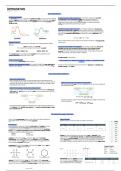
Enthalpy level diagrams:
Standard enthalpy change of combustion is the enthalpy change when one moles
An exothermic reaction is a reaction that gives out energy and heat to the surroundings
of a substance in burnt completely in oxygen under standard conditions in
and has a negative enthalpy change. An endothermic reaction is a reaction that takes in
standard states. This value is always negative as all combustion reactions are
energy and cools the surroundings and has a positive enthalpy change. Enthalpy is the
exothermic so heat is given out to the surroundings. It is shown by the symbol
energy per mole.
∆cHø298. Each substance has a decided ∆cHø298 value
Standard enthalpy change of formation is the enthalpy change when one mole of a
compound is formed from its elements under standard conditions in standard states.
This is shown by the symbol ∆fHø298 and in order to carry it out the balanced equation
must have the appropriate mole numbers of reactants to form a single mole of the
products.
e.g. H2(g) + 1/2 O2 (g) --> H2O(l)
Exothermic Endothermic
Many of these reactions may not happen under standard conditions, so enthalpy cycles
Standard conditions: must be used.
Standard conditions are set conditions that allow us to compare enthalpy changes,
these are:
298 K (25 degrees C) and 100 kPa Standard enthalpy change of neutralisation is the enthalpy change when one mole of
For a solution the standard concentration is 1 moldm-3 hydrogen ions react with one mole of hydroxide ions to form one mole of water
under standard conditions and in solutions of 1moldm -3. The symbol for this is
Kelvin = Celsius + 273 Celsius = kelvin - 273 ∆neutHø298. To be right it must form only 1 mole of water, if two moles are formed the
value must be halved. The value should be ≈-58kJmol-1
The standard state for a substance is the physical state of a substance under
standard conditions, either solid, liquid, or gas.
Enthalpy change is calculated by:
Types of enthalpy change: energy transferred, Q = specific heat capacity, c x mass, m x temperature change,
For all equations, state symbols should be shown.
T
Standard enthalpy change of reaction is the enthalpy change when molar quantities of
The value from this calculation must be converted into kilojoules and divided by the
reactants react together under standard conditions. It is shown by the symbol ∆rHø298.
number of moles to get kJmol-1.
DF2 Enthalpy cycles and Hess' law
Hess' law of enthalpy cycles:
Hess' law states that as long as you have the same start and finishing points, the
overall change will be the same. An enthalpy cycle is often used if a reaction does not
Using enthalpy changes of formation in enthalpy cycles:
take place naturally under standard conditions, so extra steps must be made to keep
The arrows both point away from the intermediate box, so they must be added and
comparable with other values.
subtracted accordingly.
Using enthalpy changes of combustion in enthalpy cycles:
Values of enthalpy change must be added/subtracted according to the direction of
their arrows, for ∆cHø298 both arrows point down to the intermediate box, therefore
∆H1 =∆H2 - ∆H3
For this cycle, ∆H1 = -∆H2 + ∆H3
For general enthalpy cycles of reaction including enthalpy changes in formation the
shortcut equation is:
∆rHø = Σ∆fHø(products) - ∆fHø(reactants)
The values for these changes are often given, if not, then they must be worked out
using Q=cm∆T where specific heat capacity is the amount of energy needed to raise 1
g of a substance by 1 K
DF3 Alkanes and shapes of molecules
Carbon forms strong covalent bonds to form chains and rings held together by Types of formula:
C-C covalent bonds, this property is called catenation. Different types of formula can give you different information:
n Prefix
1 .meth-
Hydrocarbons:
2 .eth-
Hydrocarbons are compounds containing only carbon and hydrogen atoms and
are represented by the formula CxHy. Some hydrocarbons have certain 3 .prop-
arrangements of atoms that contribute to its chemical properties, functional 4 .but-
groups are the modifiers responsible for the characteristic chemical reactions
5 .pent-
of molecules. Common hydrocarbons include:
- Alkanes - Arenes 6 .hex-
- Alkenes - Cycloalkanes Alkanes can have two different structures, either linear or branched. These 7 .hept-
molecules have the same molecular formula but different structural formulas which 8 .oct-
Alkanes have the formula CnH2n+2, the suffix '-ane', and are saturated means they are structural isomers. The added groups that make up the branches are
hydrocarbons, which means they contain the maximum number of hydrogen called alkyl groups and are named similarly to the alkane themselves, depending on 9 .non-
atoms possible with only single covalent bonds. Alkanes have no benzene ring the number of carbons, however overall they are still named with their longest chain. 10 .dec-
so are considered aliphatic compounds.
Cycloalkanes have the formula CnH2n , have the prefix 'cyclo-' and are rings of
Alkyl group Formula
carbon atoms all single bonded together.
Methyl- CH3
Butane Methylpropane
Ethyl- CH3CH2
Propyl- CH3CH2CH2
Butyl- CH3CH2CH2CH2
Ethane, C2H6 Ethene, C2H4 Cyclohexane, C6H12
Cycloalkanes exist with cyclical structures,
Alkenes also have the formula CnH2n, the suffix 'ene', and are unsaturated they are often shown in skeletal structure
hydrocarbons due to the double carbon covalent bond, which can be anywhere as it is visually the easiest. They have two
along a chain and are signalled with a position number in their name e.g. but-2- fewer hydrogen than the corresponding
alkane as there are no hydrogens at the end
Chemistry Page 1
28 May 2024 14:46
DF1 Thermochemistry
Enthalpy level diagrams:
Standard enthalpy change of combustion is the enthalpy change when one moles
An exothermic reaction is a reaction that gives out energy and heat to the surroundings
of a substance in burnt completely in oxygen under standard conditions in
and has a negative enthalpy change. An endothermic reaction is a reaction that takes in
standard states. This value is always negative as all combustion reactions are
energy and cools the surroundings and has a positive enthalpy change. Enthalpy is the
exothermic so heat is given out to the surroundings. It is shown by the symbol
energy per mole.
∆cHø298. Each substance has a decided ∆cHø298 value
Standard enthalpy change of formation is the enthalpy change when one mole of a
compound is formed from its elements under standard conditions in standard states.
This is shown by the symbol ∆fHø298 and in order to carry it out the balanced equation
must have the appropriate mole numbers of reactants to form a single mole of the
products.
e.g. H2(g) + 1/2 O2 (g) --> H2O(l)
Exothermic Endothermic
Many of these reactions may not happen under standard conditions, so enthalpy cycles
Standard conditions: must be used.
Standard conditions are set conditions that allow us to compare enthalpy changes,
these are:
298 K (25 degrees C) and 100 kPa Standard enthalpy change of neutralisation is the enthalpy change when one mole of
For a solution the standard concentration is 1 moldm-3 hydrogen ions react with one mole of hydroxide ions to form one mole of water
under standard conditions and in solutions of 1moldm -3. The symbol for this is
Kelvin = Celsius + 273 Celsius = kelvin - 273 ∆neutHø298. To be right it must form only 1 mole of water, if two moles are formed the
value must be halved. The value should be ≈-58kJmol-1
The standard state for a substance is the physical state of a substance under
standard conditions, either solid, liquid, or gas.
Enthalpy change is calculated by:
Types of enthalpy change: energy transferred, Q = specific heat capacity, c x mass, m x temperature change,
For all equations, state symbols should be shown.
T
Standard enthalpy change of reaction is the enthalpy change when molar quantities of
The value from this calculation must be converted into kilojoules and divided by the
reactants react together under standard conditions. It is shown by the symbol ∆rHø298.
number of moles to get kJmol-1.
DF2 Enthalpy cycles and Hess' law
Hess' law of enthalpy cycles:
Hess' law states that as long as you have the same start and finishing points, the
overall change will be the same. An enthalpy cycle is often used if a reaction does not
Using enthalpy changes of formation in enthalpy cycles:
take place naturally under standard conditions, so extra steps must be made to keep
The arrows both point away from the intermediate box, so they must be added and
comparable with other values.
subtracted accordingly.
Using enthalpy changes of combustion in enthalpy cycles:
Values of enthalpy change must be added/subtracted according to the direction of
their arrows, for ∆cHø298 both arrows point down to the intermediate box, therefore
∆H1 =∆H2 - ∆H3
For this cycle, ∆H1 = -∆H2 + ∆H3
For general enthalpy cycles of reaction including enthalpy changes in formation the
shortcut equation is:
∆rHø = Σ∆fHø(products) - ∆fHø(reactants)
The values for these changes are often given, if not, then they must be worked out
using Q=cm∆T where specific heat capacity is the amount of energy needed to raise 1
g of a substance by 1 K
DF3 Alkanes and shapes of molecules
Carbon forms strong covalent bonds to form chains and rings held together by Types of formula:
C-C covalent bonds, this property is called catenation. Different types of formula can give you different information:
n Prefix
1 .meth-
Hydrocarbons:
2 .eth-
Hydrocarbons are compounds containing only carbon and hydrogen atoms and
are represented by the formula CxHy. Some hydrocarbons have certain 3 .prop-
arrangements of atoms that contribute to its chemical properties, functional 4 .but-
groups are the modifiers responsible for the characteristic chemical reactions
5 .pent-
of molecules. Common hydrocarbons include:
- Alkanes - Arenes 6 .hex-
- Alkenes - Cycloalkanes Alkanes can have two different structures, either linear or branched. These 7 .hept-
molecules have the same molecular formula but different structural formulas which 8 .oct-
Alkanes have the formula CnH2n+2, the suffix '-ane', and are saturated means they are structural isomers. The added groups that make up the branches are
hydrocarbons, which means they contain the maximum number of hydrogen called alkyl groups and are named similarly to the alkane themselves, depending on 9 .non-
atoms possible with only single covalent bonds. Alkanes have no benzene ring the number of carbons, however overall they are still named with their longest chain. 10 .dec-
so are considered aliphatic compounds.
Cycloalkanes have the formula CnH2n , have the prefix 'cyclo-' and are rings of
Alkyl group Formula
carbon atoms all single bonded together.
Methyl- CH3
Butane Methylpropane
Ethyl- CH3CH2
Propyl- CH3CH2CH2
Butyl- CH3CH2CH2CH2
Ethane, C2H6 Ethene, C2H4 Cyclohexane, C6H12
Cycloalkanes exist with cyclical structures,
Alkenes also have the formula CnH2n, the suffix 'ene', and are unsaturated they are often shown in skeletal structure
hydrocarbons due to the double carbon covalent bond, which can be anywhere as it is visually the easiest. They have two
along a chain and are signalled with a position number in their name e.g. but-2- fewer hydrogen than the corresponding
alkane as there are no hydrogens at the end
Chemistry Page 1