Infection Control, TDLR WRITTEN
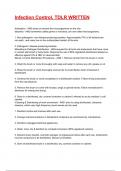
Antiseptics - ANS-arrest or prevent the microorganisms on the skin
\Bacteria - ANS-sometimes called germs or microbes, are one-celled microorganisms.
1. Non-pathogenic: non-disease-producing bacteria. Approximately 70% of all bacteria are
non-path.. and many live on the surface(dead matter) of the skin.
2. Pathogenic: disease-producing bacteria.
\Bloodborne Pathogen Disinfection - ANS-required for all tools and implements that have come
in contact with blood or body fluids. Requires the use of EPA-registered disinfectant labeled as
effective against HIV & HBV or tuberculocidal.
\Brush or Comb Disinfection Procedures - ANS-1. Remove all hair from the brush or comb.
2. Wash the brush or come thoroughly with soap and water to remove any dirt, grease or oil.
3. Rinse the brush or comb thoroughly and pat dry to avoid dilution when immersed in
disinfectant.
4. Immerse the brush or comb completely in a disinfectant solution. Follow timing instructions
from the manufacturer.
5. Remove the brush or comb with forceps, tongs or gloved hands. Follow manufacturer's
directions for rinsing and drying.
6. Store in a disinfected, dry, covered container or cabinet ( referred to as dry sanitizer ) until
needed.
\Cleaning & Disinfecting of work envoriment - ANS-*prior to using disinfectant, ultrasonic
cleaners, which uses high frequency sound waves,can be used
1. Disinfect combs and brushes after each use
2. Change chemical solutions in disinfectant containers as recommend by manufacture.
3. Disinfect unplugged electrical appliances.
4. Wash, rinse, dry & disinfect by complete immersion (EPA-registered solution)
5. Discard emery boards, cosmetic sponges, & organewood sticks after each use. Implements
must be nonporous to be disinfected. Discard or Disinfect.
6. Store all disinfected tools in a disinfected, dry, covered container or cabinet.
Antiseptics - ANS-arrest or prevent the microorganisms on the skin
\Bacteria - ANS-sometimes called germs or microbes, are one-celled microorganisms.
1. Non-pathogenic: non-disease-producing bacteria. Approximately 70% of all bacteria are
non-path.. and many live on the surface(dead matter) of the skin.
2. Pathogenic: disease-producing bacteria.
\Bloodborne Pathogen Disinfection - ANS-required for all tools and implements that have come
in contact with blood or body fluids. Requires the use of EPA-registered disinfectant labeled as
effective against HIV & HBV or tuberculocidal.
\Brush or Comb Disinfection Procedures - ANS-1. Remove all hair from the brush or comb.
2. Wash the brush or come thoroughly with soap and water to remove any dirt, grease or oil.
3. Rinse the brush or comb thoroughly and pat dry to avoid dilution when immersed in
disinfectant.
4. Immerse the brush or comb completely in a disinfectant solution. Follow timing instructions
from the manufacturer.
5. Remove the brush or comb with forceps, tongs or gloved hands. Follow manufacturer's
directions for rinsing and drying.
6. Store in a disinfected, dry, covered container or cabinet ( referred to as dry sanitizer ) until
needed.
\Cleaning & Disinfecting of work envoriment - ANS-*prior to using disinfectant, ultrasonic
cleaners, which uses high frequency sound waves,can be used
1. Disinfect combs and brushes after each use
2. Change chemical solutions in disinfectant containers as recommend by manufacture.
3. Disinfect unplugged electrical appliances.
4. Wash, rinse, dry & disinfect by complete immersion (EPA-registered solution)
5. Discard emery boards, cosmetic sponges, & organewood sticks after each use. Implements
must be nonporous to be disinfected. Discard or Disinfect.
6. Store all disinfected tools in a disinfected, dry, covered container or cabinet.