EXAM 3 FEEDBACK:
1. The PR interval on a normal electrocardiogram represents the onset of atrial activation to
onset of ventricular activity.
2. A client with a pleural effusion has a dry cough and not a productive cough, because the
fluid that has accumulated is in the pleural space (not in the airways), so it cannot be
expelled.
3. The brainstem is responsible for setting the automatic rate of breathing.
4. Deviation of the trachea toward the collapsed lung is seen in Tension Pneumothorax. The
tension is pulling the trachea toward the damaged area. Other symptoms often include
hypotension, hypoxemia, and evidence of injury to the outside of the chest wall.
5. Kussmaul breathing is seen in clients who are struggling to rid the body of high levels of
acid, and is commonly seen in those with Diabetic Ketoacidosis.
6. Patients who are confused are at risk for aspiration. Aspiration can lead to pneumonia
(aspiration pneumonia). When feeding a client who is at risk for aspiration, the bed
should be position in High Fowler’s (90degrees—aka Bolt Upright).
7. In children who have recently had an upper respiratory infection (or who currently do),
the signs and symptoms of tripod position (leaning forward), and elevating the chin occur
because the child is struggling to breathe. The child will often be irritable or anxious and
will drool. These are indicative signs of epiglottitis, which is a life-threatening
inflammation of the airway. Putting anything in the mouth will increase the swelling and
could kill the child. The nurse should gather a tracheostomy tray kit and notify the
provider STAT.
8. Bronchiectasis is caused by chronic inflammation of the bronchi that leads to a
destruction of the elastic and muscular parts of the bronchiole walls, obstruction of the
lumen, and traction from nearby scarring and ultimately causes permanent dilation of the
bronchi?
9. Left ventricular failure (left-sided heart failure) is the most common cause of pulmonary
edema.
10. There is a congenital condition (born with it) that results in a deficiency of α-1
antitrypsin, which will cause COPD (Chronic obstructive pulmonary disease) in young
adults even if they have no other risk factors for the disease (ie, smoking or
environmental pollutant exposure).
, 11. Deep vein thrombosis is the most common cause of Pulmonary embolism. Patients who
are at risk for developing a DVT are also at risk for PE. Immobility (bed rest) increases
the risk for DVT. Fat emboli also tend to cause PE. Surgery to a long bone or a break in
the long bone (like the femur) will cause fat to move into the blood stream. So, a client
who is on bedrest and recovering from hip replacement would be at a HUGE risk for
developing a PE.
12. Mononucleosis is caused by the Epstein-Barre virus and it results in an acute infection of
the B-lymphocytes within the immune system.
13. The symptoms of Hodgkin lymphoma include B symptoms (night sweats, weight loss)
and enlarged, nonpainful lymph nodes. The presence of Reed-Sternberg cells in the blood
are diagnostic of Hodgkin lymphoma.
14. Normal platelet counts range from 150,000 to 350,000. Anything below 100,000 is
Thrombocytopenia (risk for bleeding). Above 400,00 is Thrombocytosis, risk for clotting.
15. Right heart failure with increased tricuspid regurgitation will result in increased jugular
vein distention, pedal edema, and a palpable liver.
16. Alpha and beta receptors in the vasculature are responsible for controlling the diameter of
the blood vessel, which will impact the blood pressure.
17. In infective endocarditis, inflammatory cells have difficulty limiting the colonization of
the microorganisms because the microorganisms have become sequestered inside a fibrin
clot.
18. Clients with acute pericarditis often experience severe chest pain that radiates to the back
and is worse with respiratory movement or when they are lying down. The nurse will
often auscultate a grating sound at the 5th intercostal space at the mid clavicular line
(MCL).
19. Irreversible cardiac cell damage will occur if ischemia lasts for 20 minutes or more.
20. An ejection fraction of less than 40% leads to sever symptoms of heart failure and end-
organ damage will quickly ensue. Hypoxia causes fatigue and dyspnea. As the kidney
fails and fewer red blood cells are made, these symptoms get worse. The left-sided heart
failure leads to buildup of fluid in the lungs, which causes crackles.
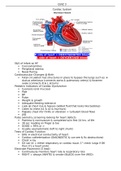
21. The left ventricle generates the highest pressure.
22. The sinoatrial node is the pacemaker of the electrical condution system in the heart.
1. The PR interval on a normal electrocardiogram represents the onset of atrial activation to
onset of ventricular activity.
2. A client with a pleural effusion has a dry cough and not a productive cough, because the
fluid that has accumulated is in the pleural space (not in the airways), so it cannot be
expelled.
3. The brainstem is responsible for setting the automatic rate of breathing.
4. Deviation of the trachea toward the collapsed lung is seen in Tension Pneumothorax. The
tension is pulling the trachea toward the damaged area. Other symptoms often include
hypotension, hypoxemia, and evidence of injury to the outside of the chest wall.
5. Kussmaul breathing is seen in clients who are struggling to rid the body of high levels of
acid, and is commonly seen in those with Diabetic Ketoacidosis.
6. Patients who are confused are at risk for aspiration. Aspiration can lead to pneumonia
(aspiration pneumonia). When feeding a client who is at risk for aspiration, the bed
should be position in High Fowler’s (90degrees—aka Bolt Upright).
7. In children who have recently had an upper respiratory infection (or who currently do),
the signs and symptoms of tripod position (leaning forward), and elevating the chin occur
because the child is struggling to breathe. The child will often be irritable or anxious and
will drool. These are indicative signs of epiglottitis, which is a life-threatening
inflammation of the airway. Putting anything in the mouth will increase the swelling and
could kill the child. The nurse should gather a tracheostomy tray kit and notify the
provider STAT.
8. Bronchiectasis is caused by chronic inflammation of the bronchi that leads to a
destruction of the elastic and muscular parts of the bronchiole walls, obstruction of the
lumen, and traction from nearby scarring and ultimately causes permanent dilation of the
bronchi?
9. Left ventricular failure (left-sided heart failure) is the most common cause of pulmonary
edema.
10. There is a congenital condition (born with it) that results in a deficiency of α-1
antitrypsin, which will cause COPD (Chronic obstructive pulmonary disease) in young
adults even if they have no other risk factors for the disease (ie, smoking or
environmental pollutant exposure).
, 11. Deep vein thrombosis is the most common cause of Pulmonary embolism. Patients who
are at risk for developing a DVT are also at risk for PE. Immobility (bed rest) increases
the risk for DVT. Fat emboli also tend to cause PE. Surgery to a long bone or a break in
the long bone (like the femur) will cause fat to move into the blood stream. So, a client
who is on bedrest and recovering from hip replacement would be at a HUGE risk for
developing a PE.
12. Mononucleosis is caused by the Epstein-Barre virus and it results in an acute infection of
the B-lymphocytes within the immune system.
13. The symptoms of Hodgkin lymphoma include B symptoms (night sweats, weight loss)
and enlarged, nonpainful lymph nodes. The presence of Reed-Sternberg cells in the blood
are diagnostic of Hodgkin lymphoma.
14. Normal platelet counts range from 150,000 to 350,000. Anything below 100,000 is
Thrombocytopenia (risk for bleeding). Above 400,00 is Thrombocytosis, risk for clotting.
15. Right heart failure with increased tricuspid regurgitation will result in increased jugular
vein distention, pedal edema, and a palpable liver.
16. Alpha and beta receptors in the vasculature are responsible for controlling the diameter of
the blood vessel, which will impact the blood pressure.
17. In infective endocarditis, inflammatory cells have difficulty limiting the colonization of
the microorganisms because the microorganisms have become sequestered inside a fibrin
clot.
18. Clients with acute pericarditis often experience severe chest pain that radiates to the back
and is worse with respiratory movement or when they are lying down. The nurse will
often auscultate a grating sound at the 5th intercostal space at the mid clavicular line
(MCL).
19. Irreversible cardiac cell damage will occur if ischemia lasts for 20 minutes or more.
20. An ejection fraction of less than 40% leads to sever symptoms of heart failure and end-
organ damage will quickly ensue. Hypoxia causes fatigue and dyspnea. As the kidney
fails and fewer red blood cells are made, these symptoms get worse. The left-sided heart
failure leads to buildup of fluid in the lungs, which causes crackles.
21. The left ventricle generates the highest pressure.
22. The sinoatrial node is the pacemaker of the electrical condution system in the heart.