NCOAE EMT ALREADY PASSED
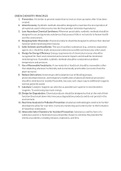
What is an EMS System? - =- Team of health care professionals
- Provides emergency care and transport
- Governed by state laws
Most states have four training and licensure levels - =EMR
EMT
Advanced EMT (AEMT)
Paramedic
NREMT - =a non-government agency that provides a national standard for EMS testing at all
levels
EMR - =Has very basic training; Automated External Defibrillator (AED); provides care before
ambulance arrives and may assist in ambulance
EMT - =Basic life support; AED, Airway adjuncts, assisting patients with certain medications,
and give some meds from EMS stock
AEMT - =has some training in advanced life support (ALS), including:
AED
Intravenous (IV/IO) therapy
Administration of limited emergency medications
Advanced airways
Paramedic - =Has extensive training in ALS including:
- Endotracheal intubation
- Emergency pharmacology
- AED and Cardiac monitoring and electrical therapy
,- Other advanced assessment and treatment skills
General requirements to be an EMT are - =- High school diploma or equivalent
- Proof of immunization
- Background check and drug screening
- Valid driver's license
- Successful completion of: CPR, state-approved EMT course, and written and practical
certification exam
Requirements differ from state to state
Americans With Disabilities Act of 1990 (ADA) - =- Prohibits employers from failing to provide
full and equal employment.
- Title I of the ADA
- Protects EMTs with disabilities who are seeking employment
- May require modifying the work environment or how the job is performed
1966 Accidental Death and Disability: The Neglected Disease of Modern Society (The White
Paper) - =established modern EMS
Congress enacted the Highway Safety Act, which put NHTSA of the DOT in charge of EMS
NHTSA's EMS Agenda for the Future (1990s) - =- EMS agenda for the future
- Federal makes the guidelines
- State regulates guidelines, can limit what the federal is allowed to do
Federal level of NHTSA's EMS - =National EMS Scope of Practice Model provides guidelines
intended to provide more consistent delivery of EMS care across the United States
State level of NHTSA's EMS - =Laws regulate EMS operations
Local level of NHTSA's EMS - =Medical director provides oversight and support
, EMS Agenda for the Future 14 Components of an EMS System by NHTSA - =Public Access,
Communication Systems, Clinical Care, Human Resources, Medical Direction, Legislation and
Regulation, Integration of Health Services, Mobile Integrated Healthcare, Evaluation,
Information Systems, System Finance, Education Systems, Prevention and public education, and
EMS Research
Public Access - =- Easy access to help in an emergency is essential.
- 9-1-1 system is PSAP (public safety access point)
- EMD (emergency medical dispatch) gives callers medical instructions until EMS arrival.
Communicating Systems - =- Dispatcher selects the appropriate parts of the emergency system to
activate. May use GPS map technology to locate available units.
- EMS may be:
- Local Government
- Fire or Police department
- Hospital
- Private
Clinical Systems - =- Describes the equipment and scope of practice for using that equipment
- Familiarizes EMTs with ambulance controls and with their primary service area (PSA) (main
area where agency operates
Human Resources - =- Focuses on people who deliver the care:
- Compensation
- Interaction with other members of medical community
- Well-being
- Efforts to allow EMS providers to move from state to state through national testing, licensing, a
national scope of practice.
Medical Direction - =Medical director; medical control, offline and online
What is an EMS System? - =- Team of health care professionals
- Provides emergency care and transport
- Governed by state laws
Most states have four training and licensure levels - =EMR
EMT
Advanced EMT (AEMT)
Paramedic
NREMT - =a non-government agency that provides a national standard for EMS testing at all
levels
EMR - =Has very basic training; Automated External Defibrillator (AED); provides care before
ambulance arrives and may assist in ambulance
EMT - =Basic life support; AED, Airway adjuncts, assisting patients with certain medications,
and give some meds from EMS stock
AEMT - =has some training in advanced life support (ALS), including:
AED
Intravenous (IV/IO) therapy
Administration of limited emergency medications
Advanced airways
Paramedic - =Has extensive training in ALS including:
- Endotracheal intubation
- Emergency pharmacology
- AED and Cardiac monitoring and electrical therapy
,- Other advanced assessment and treatment skills
General requirements to be an EMT are - =- High school diploma or equivalent
- Proof of immunization
- Background check and drug screening
- Valid driver's license
- Successful completion of: CPR, state-approved EMT course, and written and practical
certification exam
Requirements differ from state to state
Americans With Disabilities Act of 1990 (ADA) - =- Prohibits employers from failing to provide
full and equal employment.
- Title I of the ADA
- Protects EMTs with disabilities who are seeking employment
- May require modifying the work environment or how the job is performed
1966 Accidental Death and Disability: The Neglected Disease of Modern Society (The White
Paper) - =established modern EMS
Congress enacted the Highway Safety Act, which put NHTSA of the DOT in charge of EMS
NHTSA's EMS Agenda for the Future (1990s) - =- EMS agenda for the future
- Federal makes the guidelines
- State regulates guidelines, can limit what the federal is allowed to do
Federal level of NHTSA's EMS - =National EMS Scope of Practice Model provides guidelines
intended to provide more consistent delivery of EMS care across the United States
State level of NHTSA's EMS - =Laws regulate EMS operations
Local level of NHTSA's EMS - =Medical director provides oversight and support
, EMS Agenda for the Future 14 Components of an EMS System by NHTSA - =Public Access,
Communication Systems, Clinical Care, Human Resources, Medical Direction, Legislation and
Regulation, Integration of Health Services, Mobile Integrated Healthcare, Evaluation,
Information Systems, System Finance, Education Systems, Prevention and public education, and
EMS Research
Public Access - =- Easy access to help in an emergency is essential.
- 9-1-1 system is PSAP (public safety access point)
- EMD (emergency medical dispatch) gives callers medical instructions until EMS arrival.
Communicating Systems - =- Dispatcher selects the appropriate parts of the emergency system to
activate. May use GPS map technology to locate available units.
- EMS may be:
- Local Government
- Fire or Police department
- Hospital
- Private
Clinical Systems - =- Describes the equipment and scope of practice for using that equipment
- Familiarizes EMTs with ambulance controls and with their primary service area (PSA) (main
area where agency operates
Human Resources - =- Focuses on people who deliver the care:
- Compensation
- Interaction with other members of medical community
- Well-being
- Efforts to allow EMS providers to move from state to state through national testing, licensing, a
national scope of practice.
Medical Direction - =Medical director; medical control, offline and online