CHAPTER - 5 [ LIFE PROCESSES ]
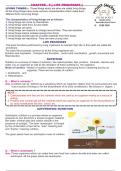
LIVING THINGS :- Those things which are alive are called living things.
All the living things have some common characteristics which make them
different from non-living things.
The characteristics of living things are as follows :
1. living things can move by themselves.
2. living things need food ,air and water.
3. living things can grow.
4. living things can respond to change around them. They are sensitive.
5. living things respire (release energy from food).
6. living things excrete (get rid of waste materials from their body).
7. living things can reproduce. They can have young ones.
LIFE PROCESSES
The basic functions performed by living organisms to maintain their life on this earth are called life
processes.
The basic life processes common to all the living organisms are :
Nutrition and respiration , Transport and Excretion , control and coordination , growth ,movement and
Reproduction.
NUTRITION
Nutrition is a process of intake of nutrients ( like carbohydrates, fats, proteins, minerals, vitamins and
water ) by an organism as well as the utilisation of these nutrients by the organism.
Mode of nutrition - Modes of nutrition means methods of procuring food or obtaining food by an
organism. There are two modes of nutrition :
1. Autotrophic , and
2. Heterotrophic.
Q. :- What is nutrients ?
Ans. A nutrient can be defined as a substance which an organism obtains from its surrounding and use
it as a source of energy or for the biosynthesis of its body constituents ( like tissues or organs. )
NOTE :-
1. Carbohydrates and fats are the nutrients which are used by an organism mainly as a source of
energy.
2. Proteins and mineral salt are the nutrients which are used by an organism for the biosynthesis of
its body constituents like skin , blood, etc.
AUTOTROPHIC NUTRITION
Autotrophic nutrition is a process where an organism
prepares its own food from a simple inorganic material
like water, mineral salts and carbon dioxide in the
presence of sunlight.” The term “autotrophic” is formed
by the combination of two terms, “auto” meaning self,
and “trophic” meaning nutrition.
The green plants have an autotrophic mode of nutrition.
Q. :- What is autotrophs ?
Ans. Those organisms which can make their own food from carbon dioxide and water are called
autotrophs. All the green plants are autotrophs.
, HETEROTROPHIC MODE OF NUTRITION
Heterotrophic nutrition is that mode of nutrition in which an organism cannot
make its own food from simple inorganic materials like carbon dioxide and
water, and depends on other organisms for its food.
Types of heterotrophic nutrition
A heterotrophic organism can obtain its food from other organisms in three
ways. So, the heterotrophic mode of nutrition is of three types :
1. Saprotrophic Nutrition 2. Parasitic Nutrition 3. Holozoic Nutrition
Saprotrophic nutrition is the mode The parasitic nutrition is that The holozoic nutrition is that
of nutrition in which organisms nutrition in which an organism nutrition in which an organism
obtains its food from decaying derives its food from the body takes the complex organic food
organic matter of dead plants ,and of another living organism materials into its body by the
rotten bread etc. without killing it. process of ingestion, the ingested
1. Example :- food is digested and then absorbed
into the body cell of the organism.
Example :-
2.
Q. :- What is heterotrophs ?
Ans. Those organisms which cannot make their own food from inorganic substances like carbon
dioxide and water, and depend on the other organisms for their food are called heterotrophs.
NUTRITION IN PLANTS
PHOTOSYNTHESIS :- The process by which green plants make their own food ( like glucose ) from
carbon dioxide and water by using sunlight energy in the presence of chlorophyll
is called photosynthesis.
The process of photosynthesis can be represented as :
Condition Necessary For Photosynthesis :
It has been found experiments that the presence
of sunlight, chlorophyll, carbon dioxide and water
is necessary for the process of photosynthesis.
Raw Materials For Photosynthesis :-
The preparation of carbohydrates (food) by plants
by the process of photosynthesis require two
materials : carbon dioxide, and water. Thus, the
raw materials for photosynthesis are :
(I) carbon dioxide, and
(ii) water.
, Q. :- Why The Leaves Of Plants Green ?
Ans. The leaves of plants are green because they contain tiny green
coloured organelles called chloroplasts which contain chlorophyll.
Q. :- What Is Starch ?
Ans. The food prepared by the green leaves of a plant is in the form
of simple sugar called glucose. Thisglucose food made in the leaves is
then sent to the different parts of the plant. The extra glucose is changed
into another food called starch. This starch is stored in the leaves of the
plant.
Q. :- Describe What Actually Happens During The Process Of Photosynthesis ?
Ans. The photosynthesis takes place in the following three steps :
1. absorption of sunlight energy by chlorophyll.
2. conversion of light energy into chemical energy, and splitting of water into hydrogen and oxygen by
light energy.
3. reduction of carbon dioxide by hydrogen to form carbohydrate like glucose by utilising the chemical
energy.
NOTE :-
The three steps involved in photosynthesis need not take place one after the other immediately. they
can take place at different times.
STOMATA
These are tiny pores present in the epidermis of
leaf or stem through which gaseous exchange
and transpiration occur.
Functions of stomata :
1. Exchange of gases, oxygen and carbon dioxide.
2. Loses a large amount of water (water vapour)
during transpiration.
OPENING AND CLOSING OF STOMATAL PORES
The opening and closing of stomatal pores is controlled by
the guard cells. when water flows into guard cells, they swell,
become curved and cause the pore to open. On the other
hand, when the guard cells lose water, they shrink, become
straight and close the stomatal pore.
Q. :- Why Does Plant Leave Carry Out The Process Of Opening And Closing The Stomata ?
Ans. A large amount of water is lost from the cells of the plant leave through the open stomatal pore.
So, when the plant does not need carbon dioxide and wants to conserve water, the stomatal
pore are closed.
Q. :- How Does Carbon Dioxide From The Air Enter The Leaves Of A Plant To Used In Photo
- synthesis?
Ans. There are a large number of tiny pores called stomata on the surface of the leaves of plants.
The carbon dioxide gas enters the leaves of the plants through the stomata present on their
surface.
Q. How Does The Water From Soil Reach The Leaves of A Plant To Be Used In Photosynthesis?
Ans. The water required by the plants for photosynthesis is absorbed by the plants from the soil
Through the process of osmosis. The water absorbed by the roots of the plants is transported
Upward through the xylem vessels to the leaves where it reaches the photosynthetic cell
And utilised in photosynthesis.
LIVING THINGS :- Those things which are alive are called living things.
All the living things have some common characteristics which make them
different from non-living things.
The characteristics of living things are as follows :
1. living things can move by themselves.
2. living things need food ,air and water.
3. living things can grow.
4. living things can respond to change around them. They are sensitive.
5. living things respire (release energy from food).
6. living things excrete (get rid of waste materials from their body).
7. living things can reproduce. They can have young ones.
LIFE PROCESSES
The basic functions performed by living organisms to maintain their life on this earth are called life
processes.
The basic life processes common to all the living organisms are :
Nutrition and respiration , Transport and Excretion , control and coordination , growth ,movement and
Reproduction.
NUTRITION
Nutrition is a process of intake of nutrients ( like carbohydrates, fats, proteins, minerals, vitamins and
water ) by an organism as well as the utilisation of these nutrients by the organism.
Mode of nutrition - Modes of nutrition means methods of procuring food or obtaining food by an
organism. There are two modes of nutrition :
1. Autotrophic , and
2. Heterotrophic.
Q. :- What is nutrients ?
Ans. A nutrient can be defined as a substance which an organism obtains from its surrounding and use
it as a source of energy or for the biosynthesis of its body constituents ( like tissues or organs. )
NOTE :-
1. Carbohydrates and fats are the nutrients which are used by an organism mainly as a source of
energy.
2. Proteins and mineral salt are the nutrients which are used by an organism for the biosynthesis of
its body constituents like skin , blood, etc.
AUTOTROPHIC NUTRITION
Autotrophic nutrition is a process where an organism
prepares its own food from a simple inorganic material
like water, mineral salts and carbon dioxide in the
presence of sunlight.” The term “autotrophic” is formed
by the combination of two terms, “auto” meaning self,
and “trophic” meaning nutrition.
The green plants have an autotrophic mode of nutrition.
Q. :- What is autotrophs ?
Ans. Those organisms which can make their own food from carbon dioxide and water are called
autotrophs. All the green plants are autotrophs.
, HETEROTROPHIC MODE OF NUTRITION
Heterotrophic nutrition is that mode of nutrition in which an organism cannot
make its own food from simple inorganic materials like carbon dioxide and
water, and depends on other organisms for its food.
Types of heterotrophic nutrition
A heterotrophic organism can obtain its food from other organisms in three
ways. So, the heterotrophic mode of nutrition is of three types :
1. Saprotrophic Nutrition 2. Parasitic Nutrition 3. Holozoic Nutrition
Saprotrophic nutrition is the mode The parasitic nutrition is that The holozoic nutrition is that
of nutrition in which organisms nutrition in which an organism nutrition in which an organism
obtains its food from decaying derives its food from the body takes the complex organic food
organic matter of dead plants ,and of another living organism materials into its body by the
rotten bread etc. without killing it. process of ingestion, the ingested
1. Example :- food is digested and then absorbed
into the body cell of the organism.
Example :-
2.
Q. :- What is heterotrophs ?
Ans. Those organisms which cannot make their own food from inorganic substances like carbon
dioxide and water, and depend on the other organisms for their food are called heterotrophs.
NUTRITION IN PLANTS
PHOTOSYNTHESIS :- The process by which green plants make their own food ( like glucose ) from
carbon dioxide and water by using sunlight energy in the presence of chlorophyll
is called photosynthesis.
The process of photosynthesis can be represented as :
Condition Necessary For Photosynthesis :
It has been found experiments that the presence
of sunlight, chlorophyll, carbon dioxide and water
is necessary for the process of photosynthesis.
Raw Materials For Photosynthesis :-
The preparation of carbohydrates (food) by plants
by the process of photosynthesis require two
materials : carbon dioxide, and water. Thus, the
raw materials for photosynthesis are :
(I) carbon dioxide, and
(ii) water.
, Q. :- Why The Leaves Of Plants Green ?
Ans. The leaves of plants are green because they contain tiny green
coloured organelles called chloroplasts which contain chlorophyll.
Q. :- What Is Starch ?
Ans. The food prepared by the green leaves of a plant is in the form
of simple sugar called glucose. Thisglucose food made in the leaves is
then sent to the different parts of the plant. The extra glucose is changed
into another food called starch. This starch is stored in the leaves of the
plant.
Q. :- Describe What Actually Happens During The Process Of Photosynthesis ?
Ans. The photosynthesis takes place in the following three steps :
1. absorption of sunlight energy by chlorophyll.
2. conversion of light energy into chemical energy, and splitting of water into hydrogen and oxygen by
light energy.
3. reduction of carbon dioxide by hydrogen to form carbohydrate like glucose by utilising the chemical
energy.
NOTE :-
The three steps involved in photosynthesis need not take place one after the other immediately. they
can take place at different times.
STOMATA
These are tiny pores present in the epidermis of
leaf or stem through which gaseous exchange
and transpiration occur.
Functions of stomata :
1. Exchange of gases, oxygen and carbon dioxide.
2. Loses a large amount of water (water vapour)
during transpiration.
OPENING AND CLOSING OF STOMATAL PORES
The opening and closing of stomatal pores is controlled by
the guard cells. when water flows into guard cells, they swell,
become curved and cause the pore to open. On the other
hand, when the guard cells lose water, they shrink, become
straight and close the stomatal pore.
Q. :- Why Does Plant Leave Carry Out The Process Of Opening And Closing The Stomata ?
Ans. A large amount of water is lost from the cells of the plant leave through the open stomatal pore.
So, when the plant does not need carbon dioxide and wants to conserve water, the stomatal
pore are closed.
Q. :- How Does Carbon Dioxide From The Air Enter The Leaves Of A Plant To Used In Photo
- synthesis?
Ans. There are a large number of tiny pores called stomata on the surface of the leaves of plants.
The carbon dioxide gas enters the leaves of the plants through the stomata present on their
surface.
Q. How Does The Water From Soil Reach The Leaves of A Plant To Be Used In Photosynthesis?
Ans. The water required by the plants for photosynthesis is absorbed by the plants from the soil
Through the process of osmosis. The water absorbed by the roots of the plants is transported
Upward through the xylem vessels to the leaves where it reaches the photosynthetic cell
And utilised in photosynthesis.