NESA EXAM UPDATED ACTUAL
Questions and CORRECT Answers
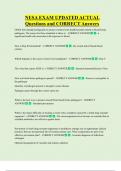
OSHA lists standard safeguards to protect workers from health hazards related to blood-borne
pathogens. The reason for these standards is there is: - CORRECT ANSWER -a
significant health risk associated with exposure to blood.
How is Hep B transmitted? - CORRECT ANSWER - By sexual and/or blood-blood
contact.
Which hepatitis is the cause of most liver transplants? - CORRECT ANSWER - Hep C
The virus that causes AIDS is - CORRECT ANSWER - Human Immunodeficiency Virus
How are blood borne pathogens spread? - CORRECT ANSWER - Person is susceptible to
the pathogen
Quantity of pathogen present is enough to cause disease
Pathogen enters through the correct entry site
What is the best way to protect oneself from blood borne pathogens? - CORRECT
ANSWER - Standard precautions
What is the major difficulty in treating a client with a condition caused by a multi drug resistant
organism? - CORRECT ANSWER - The microorganisms have become so resistant that no
available antibiotics are effective against them.
Prevention of multi drug resistant organisms in healthcare settings rely on appropriate clinical
practices that are incorporated into all routine patient care. What components are part of an
effective prevention plan? - CORRECT ANSWER - Accurate diagnosis of infectious
etiologies
Optimal management of vascular and urinary catheters
, Prevention of lower respiratory tract infections in intubated patients
Report all contamination errors that occur during any procedure
Common multi drug resistant organisms include (MRSA) and vancomycin-resistant enterococci
(VRE) - CORRECT ANSWER - TRUE
Antibiotic resistance occurs when bacteria change in some way that reduces or eliminates the
effectiveness of substances designed to cure/prevent infections - CORRECT ANSWER -
TRUE
Repeated and improper use of antibiotics are primarily causes of the increase in drug resistant
bacteria - CORRECT ANSWER - TRUE
According to the Morse Fall Scale Assessment a patient has a high risk of falling. The patient fell
while being toileted by the nursing staff. By definition how would this fall be classified? -
CORRECT ANSWER - Anticipated physiological fall.
The nurse is completing in-patient admission assessments on a group of new patients. Based on
the intrinsic factors present, which patient should the nurse identify as being at the highest risk
for a fall? The patient who has: - CORRECT ANSWER - A history of diabetes for 25
years, has fallen at home occasionally, wears shoes anytime he is out of bed, and understands the
sensations in his feet are limited.
The nurse is determining steps that could be taken to reduce the patient's extrinsic risk for falls.
Which nursing intervention could the nurse plan to reduce the patient's fall risk? - CORRECT
ANSWER - Availability of needed assistive devices
Condition of the flooring surfaces
Bathroom support equipment for the toilet and shower
Lighting in the patient's room
When developing a risk management plan take into account that there is no single risk factor or
single approach solution. The plan must be multidisciplinary and multi-factorial in approach and
Questions and CORRECT Answers
OSHA lists standard safeguards to protect workers from health hazards related to blood-borne
pathogens. The reason for these standards is there is: - CORRECT ANSWER -a
significant health risk associated with exposure to blood.
How is Hep B transmitted? - CORRECT ANSWER - By sexual and/or blood-blood
contact.
Which hepatitis is the cause of most liver transplants? - CORRECT ANSWER - Hep C
The virus that causes AIDS is - CORRECT ANSWER - Human Immunodeficiency Virus
How are blood borne pathogens spread? - CORRECT ANSWER - Person is susceptible to
the pathogen
Quantity of pathogen present is enough to cause disease
Pathogen enters through the correct entry site
What is the best way to protect oneself from blood borne pathogens? - CORRECT
ANSWER - Standard precautions
What is the major difficulty in treating a client with a condition caused by a multi drug resistant
organism? - CORRECT ANSWER - The microorganisms have become so resistant that no
available antibiotics are effective against them.
Prevention of multi drug resistant organisms in healthcare settings rely on appropriate clinical
practices that are incorporated into all routine patient care. What components are part of an
effective prevention plan? - CORRECT ANSWER - Accurate diagnosis of infectious
etiologies
Optimal management of vascular and urinary catheters
, Prevention of lower respiratory tract infections in intubated patients
Report all contamination errors that occur during any procedure
Common multi drug resistant organisms include (MRSA) and vancomycin-resistant enterococci
(VRE) - CORRECT ANSWER - TRUE
Antibiotic resistance occurs when bacteria change in some way that reduces or eliminates the
effectiveness of substances designed to cure/prevent infections - CORRECT ANSWER -
TRUE
Repeated and improper use of antibiotics are primarily causes of the increase in drug resistant
bacteria - CORRECT ANSWER - TRUE
According to the Morse Fall Scale Assessment a patient has a high risk of falling. The patient fell
while being toileted by the nursing staff. By definition how would this fall be classified? -
CORRECT ANSWER - Anticipated physiological fall.
The nurse is completing in-patient admission assessments on a group of new patients. Based on
the intrinsic factors present, which patient should the nurse identify as being at the highest risk
for a fall? The patient who has: - CORRECT ANSWER - A history of diabetes for 25
years, has fallen at home occasionally, wears shoes anytime he is out of bed, and understands the
sensations in his feet are limited.
The nurse is determining steps that could be taken to reduce the patient's extrinsic risk for falls.
Which nursing intervention could the nurse plan to reduce the patient's fall risk? - CORRECT
ANSWER - Availability of needed assistive devices
Condition of the flooring surfaces
Bathroom support equipment for the toilet and shower
Lighting in the patient's room
When developing a risk management plan take into account that there is no single risk factor or
single approach solution. The plan must be multidisciplinary and multi-factorial in approach and