1
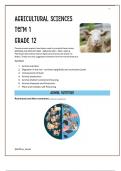
AGRICULTURAL SCIENCES
Term 1
GRADE 12
Previous exam papers have been used to compile these notes,
@IMPAQ JUN 2022,SC/NSC_ DBE/JUN 2021, 2022, 2023 &
Mambane Secondary School Agricultural Sciences Grade 12
Notes. These are only suggested answers from the memorandums.
INHOUD
1. Animal nutrition
2. Digestion in the non- ruminant (pig/fowl) and ruminants (cow)
3. Components of feed
4. Animal production
5. Animal shelter/ protection/housing
6. Animal diseases and Protection
7. Plant and metallic salt Poisoning
Animal nutrition
Ruminants and Non-ruminants @ DBE/2021 & @DBE/2023
@Juffrou_Ansie
, 2
Comparison of external structure of the alimentary canal of ruminants and non -
ruminants @DBE/2023
Ruminants Non -ruminants
➢ Polygastric ➢ Monogastric
➢ Complex stomach ➢ Simple stomach
➢ Digest food with high quality fibre ➢ Cannot digest food with high quality
and cellulose
fibre and cellulose
➢ Chew their food partially, regurgitate
later and re-chew ➢ Chew their food properly and
swallow it once
Peristalsis is the involuntary contraction and relaxation of muscles that pushes food
through the alimentary canal.
➢ Peristalsis occur in the oesophagus, stomach and intestines
➢ If the rate of peristalsis increases, food will move faster along the alimentary canal
and less fluid will be absorbed leading to Diarrhoea
➢ If the rate of peristalsis decreases, food will move slower along the alimentary canal
and more fluid will be absorbed leading to Constipation
Retro-peristalsis
Retro-peristalsis is the involuntary contraction and relaxation of muscles that pushes food
back to the mouth in the alimentary canal
______________________________________________
PHARYNX
Pharynx is the funnel-shaped muscular tube connecting the mouth cavity to the digestive
and respiratory systems. It is enclosed by the epiglottis to prevent food from entering the
trachea during swallowing.
↘ Functions of the pharynx
↘ Exchange of gases
↘ Allows for the passage of food from the mouth to the oesophagus
↘ Connects the mouth to the oesophagus
The alimentary canal of a pig @ DBE/2021 & @DBE/2023
@Juffrou_Ansie
, 3
The animal has a simple/single/monogastric stomach.
B: Soluble food
A: Bile is produced particles move into the
blood
D: Soluble
caseinogen in
milk is changed
into insoluble
casein
Physical and chemical digestion in the alimentary canal of this farm animal takes
place in the mouth.
Physical - Food is broken down by the teeth into smaller particles
Chemical - Salivary amylase in the mouth breaks down starch in food into maltose
Abomasum = Indication of the part in ruminant animals corresponding to part D in terms of
functioning.
Name of the farm animal above = Chicken/fowl/poultry
@Juffrou_Ansie
, 4
Reasons visible in the diagram, that it is a chicken/fowl/poultry’s digestive system.
Presence of a crop
↘ Presence of proventriculus/glandular stomach
↘ Simple stomach/monogastric
↘ Presence of ventriculus/gizzard/muscular stomach
↘ Presence of caeca/two blind guts
The pH of the contents of each of the following parts @DBE/2023
B - Acidic
E - Alkaline/basic
The importance of the substance/gastric juice in digestion
↘ It is antiseptic and destroys bacteria/prevent rotting of the stomach content
↘ Changes the pH of the stomach from alkaline to acidic
↘ Changes disaccharides into monosaccharide
↘ Activates pepsinogen to form pepsin
↘ Pepsin changes proteins to peptones
____________________________________________________________
Ruminants produce large amounts of saliva per day. The saliva of ruminants does not
contain the enzyme amylase and therefore no chemical digestion takes place in the
mouth. @ IMPAQ June Exam 2022
Glands in the mouth that secrete saliva and give a description of each.@ IMPAQ June Exam 2022
The parotid glands produce a watery, whey-like secretion. The mandibular glands produce
a mixed secretion of whey and mucus. The sublingual glands secrete saliva which is
predominantly slimy in nature.
The function of saliva@ IMPAQ June Exam 2022
Saliva acts as an alkaline buffer that neutralizes the acid produced in the rumen and
reticulum during fermentation.
RUMEN
Rumen is the largest compartment of the forestomach. Found on the
left half of the abdominal cavity. The rumen contains large amounts
of microbes; Bacteria, Fungi and Protozoa.
@Juffrou_Ansie
, 5
The walls of the rumen is covered with finger-like projections called Papillae that increase
the absorption area and act as heating rods for fermentation of crude fibre. No digestive
juices or enzymes are secreted in the rumen
Functions of the rumen
↘ Stores food temporarily for digestion
↘ Contains micro-organisms to break down high fibre and cellulose
↘ Provides suitable PH for functioning of rumen micro-organisms
↘ Microbial fermentation
The structure of the ruminant's stomach. @ IMPAQ June Exam 2022
D: Omasum
The temporary storage organ of the ruminant's
stomach. Adaptation feature of omasum: It
has folds/leaves that squeeze water from the
feed
E: Abomasum. The real stomach.
Enzymatic digestion takes place there.
The development stage of the ruminant farm animal in a young ruminant farm animal: @
DBE/2022
@Juffrou_Ansie
AGRICULTURAL SCIENCES
Term 1
GRADE 12
Previous exam papers have been used to compile these notes,
@IMPAQ JUN 2022,SC/NSC_ DBE/JUN 2021, 2022, 2023 &
Mambane Secondary School Agricultural Sciences Grade 12
Notes. These are only suggested answers from the memorandums.
INHOUD
1. Animal nutrition
2. Digestion in the non- ruminant (pig/fowl) and ruminants (cow)
3. Components of feed
4. Animal production
5. Animal shelter/ protection/housing
6. Animal diseases and Protection
7. Plant and metallic salt Poisoning
Animal nutrition
Ruminants and Non-ruminants @ DBE/2021 & @DBE/2023
@Juffrou_Ansie
, 2
Comparison of external structure of the alimentary canal of ruminants and non -
ruminants @DBE/2023
Ruminants Non -ruminants
➢ Polygastric ➢ Monogastric
➢ Complex stomach ➢ Simple stomach
➢ Digest food with high quality fibre ➢ Cannot digest food with high quality
and cellulose
fibre and cellulose
➢ Chew their food partially, regurgitate
later and re-chew ➢ Chew their food properly and
swallow it once
Peristalsis is the involuntary contraction and relaxation of muscles that pushes food
through the alimentary canal.
➢ Peristalsis occur in the oesophagus, stomach and intestines
➢ If the rate of peristalsis increases, food will move faster along the alimentary canal
and less fluid will be absorbed leading to Diarrhoea
➢ If the rate of peristalsis decreases, food will move slower along the alimentary canal
and more fluid will be absorbed leading to Constipation
Retro-peristalsis
Retro-peristalsis is the involuntary contraction and relaxation of muscles that pushes food
back to the mouth in the alimentary canal
______________________________________________
PHARYNX
Pharynx is the funnel-shaped muscular tube connecting the mouth cavity to the digestive
and respiratory systems. It is enclosed by the epiglottis to prevent food from entering the
trachea during swallowing.
↘ Functions of the pharynx
↘ Exchange of gases
↘ Allows for the passage of food from the mouth to the oesophagus
↘ Connects the mouth to the oesophagus
The alimentary canal of a pig @ DBE/2021 & @DBE/2023
@Juffrou_Ansie
, 3
The animal has a simple/single/monogastric stomach.
B: Soluble food
A: Bile is produced particles move into the
blood
D: Soluble
caseinogen in
milk is changed
into insoluble
casein
Physical and chemical digestion in the alimentary canal of this farm animal takes
place in the mouth.
Physical - Food is broken down by the teeth into smaller particles
Chemical - Salivary amylase in the mouth breaks down starch in food into maltose
Abomasum = Indication of the part in ruminant animals corresponding to part D in terms of
functioning.
Name of the farm animal above = Chicken/fowl/poultry
@Juffrou_Ansie
, 4
Reasons visible in the diagram, that it is a chicken/fowl/poultry’s digestive system.
Presence of a crop
↘ Presence of proventriculus/glandular stomach
↘ Simple stomach/monogastric
↘ Presence of ventriculus/gizzard/muscular stomach
↘ Presence of caeca/two blind guts
The pH of the contents of each of the following parts @DBE/2023
B - Acidic
E - Alkaline/basic
The importance of the substance/gastric juice in digestion
↘ It is antiseptic and destroys bacteria/prevent rotting of the stomach content
↘ Changes the pH of the stomach from alkaline to acidic
↘ Changes disaccharides into monosaccharide
↘ Activates pepsinogen to form pepsin
↘ Pepsin changes proteins to peptones
____________________________________________________________
Ruminants produce large amounts of saliva per day. The saliva of ruminants does not
contain the enzyme amylase and therefore no chemical digestion takes place in the
mouth. @ IMPAQ June Exam 2022
Glands in the mouth that secrete saliva and give a description of each.@ IMPAQ June Exam 2022
The parotid glands produce a watery, whey-like secretion. The mandibular glands produce
a mixed secretion of whey and mucus. The sublingual glands secrete saliva which is
predominantly slimy in nature.
The function of saliva@ IMPAQ June Exam 2022
Saliva acts as an alkaline buffer that neutralizes the acid produced in the rumen and
reticulum during fermentation.
RUMEN
Rumen is the largest compartment of the forestomach. Found on the
left half of the abdominal cavity. The rumen contains large amounts
of microbes; Bacteria, Fungi and Protozoa.
@Juffrou_Ansie
, 5
The walls of the rumen is covered with finger-like projections called Papillae that increase
the absorption area and act as heating rods for fermentation of crude fibre. No digestive
juices or enzymes are secreted in the rumen
Functions of the rumen
↘ Stores food temporarily for digestion
↘ Contains micro-organisms to break down high fibre and cellulose
↘ Provides suitable PH for functioning of rumen micro-organisms
↘ Microbial fermentation
The structure of the ruminant's stomach. @ IMPAQ June Exam 2022
D: Omasum
The temporary storage organ of the ruminant's
stomach. Adaptation feature of omasum: It
has folds/leaves that squeeze water from the
feed
E: Abomasum. The real stomach.
Enzymatic digestion takes place there.
The development stage of the ruminant farm animal in a young ruminant farm animal: @
DBE/2022
@Juffrou_Ansie