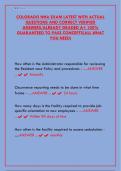
NCCHC CCHP LATEST EXAM 2025 ACTUAL TEST
COMPLETE 70 REAL QUESTIONS AND CORRECT
VERIFIED ANSWERS (A NEW UPDATED VERSION)
|ALREADY GRADED A+.
The following individuals, in the absence of any written
authorization from the adult inmate-patient, may have
access to that patient's medical records:
A. Inmate's attorney
B. Private physician
C. U.S. congressman
D. None of the above
Answer- D. None of the above
5. Which statement below best describes universal
precautions?
A. Adhering to advisories published by the Centers for
Disease Control and Prevention for disposing of
infectious waste
,B. Taking protective steps with patients known to have
infectious diseases so as to minimize exposure of workers
and others to contagious disease
C. Assuming all patients present a potential for
transmission of infectious disease and adopting the same
protective techniques with every patient
D. Using masks, gowns and gloves for protection from
infectious disease
Answer- C. Assuming all patients present a potential for
transmission of infectious disease and adopting the same
protective techniques with every patient
What is the Access to Care standard?
Answer- Inmates have access to care for their serious
medical, dental, and mental health needs.
Define "access to care" (three criteria)
Answer- 1. In a timely manner, a patient is seen by a
qualified health care professional,
2. is rendered a clinical judgment,
, 3. and receives care that is ordered
What is the basic principle established by the U.S.
Supreme Court landmark case in 1976 Estelle v. Gamble?
Answer- Inmates must have access to care to meet their
serious health needs.
What is the fundamental principle on which all National
Commission on Correctional Health Care standards
based?
Answer- Inmates must have access to care to meet their
serious health needs.
List five examples of unreasonable barriers to inmates'
access to health services.
Answer- 1. punishing inmates for seeking care for their
health needs
COMPLETE 70 REAL QUESTIONS AND CORRECT
VERIFIED ANSWERS (A NEW UPDATED VERSION)
|ALREADY GRADED A+.
The following individuals, in the absence of any written
authorization from the adult inmate-patient, may have
access to that patient's medical records:
A. Inmate's attorney
B. Private physician
C. U.S. congressman
D. None of the above
Answer- D. None of the above
5. Which statement below best describes universal
precautions?
A. Adhering to advisories published by the Centers for
Disease Control and Prevention for disposing of
infectious waste
,B. Taking protective steps with patients known to have
infectious diseases so as to minimize exposure of workers
and others to contagious disease
C. Assuming all patients present a potential for
transmission of infectious disease and adopting the same
protective techniques with every patient
D. Using masks, gowns and gloves for protection from
infectious disease
Answer- C. Assuming all patients present a potential for
transmission of infectious disease and adopting the same
protective techniques with every patient
What is the Access to Care standard?
Answer- Inmates have access to care for their serious
medical, dental, and mental health needs.
Define "access to care" (three criteria)
Answer- 1. In a timely manner, a patient is seen by a
qualified health care professional,
2. is rendered a clinical judgment,
, 3. and receives care that is ordered
What is the basic principle established by the U.S.
Supreme Court landmark case in 1976 Estelle v. Gamble?
Answer- Inmates must have access to care to meet their
serious health needs.
What is the fundamental principle on which all National
Commission on Correctional Health Care standards
based?
Answer- Inmates must have access to care to meet their
serious health needs.
List five examples of unreasonable barriers to inmates'
access to health services.
Answer- 1. punishing inmates for seeking care for their
health needs