1: Introduction
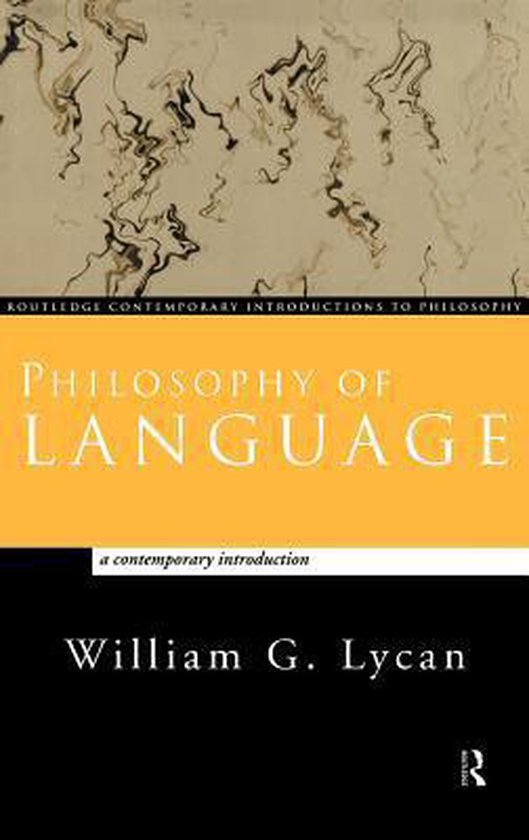
Philosophy of Language starts with following data:
1. Some strings of marks or noises are meaningful sentences
2. Meaningful sentences have meaningful parts
3. Meaningful sentences mean something particular
4. Meaningful sentences are understood and produced without effort and almost
simultaneously
Explanandum (EXM): human ability to produce and understand speech
Referential Theory: linguistic expressions have the meanings they do because they stand for things
Words are like labels
Words refer to / denote / name / represent / designate things in the world
Understanding a sentence = knowing what the sentence’s components refer to
3 objections:
1) Not every word does name or denote any actual object:
a. I saw nobody
b. Ralph is fat
c. On someone’s behalf
d. Hello, yes, very
2) According to RT, a sentence is a list full of names. But a mere list of names doesn’t say
anything
a. Gerrie catlike
3) There is more to meaning than reference, two terms can share their referent but differ in
meaning
a. Pope - Benedictus
Exam questions:
1) What are the four data which – according to Lycan – need explaining in our philosophical
study of language? Use one or more examples of your own to illustrate these explananda.
2) What is the Referential Theory of Meaning (RTM)? What are the main objections which it
faces?* Explain these objections using examples of your own.
,Part 1. Reference and Referring: 2: Definite descriptions
Definite description: description which picks out one particular thing/person/place/time/ via its
attributes
4 puzzles:
1. The problem of apparent reference to nonexistents
2. The problem of negative existentials
3. Frege’s puzzle about identity
4. The problem of substitutivity
Russel’s Theory of Descriptions:
Apparent singular term disappears on analysis (conjunction of three quantified general
statements)
“nobody” not singular term, but quantifier
1. Present King of France is bald
a. At least one person is presently King of France
b. At most one person is presently King of France
c. Whoever is presently King of France is bald
2. Present King of France does not exist
a. At least one person is presently King of France
b. At most one person is presently King of France
c. Whoever is presently King of France does not exist
3. Present queen of England is Elizabeth Windsor
a. At least one person is presently Queen of England
b. At most one person is presently Queen of England
c. Whoever is presently Queen of England is Elizabeth Windsor
4. Albert believes that the author of Nothing and Beingness is a profound thinker
a. At least one person authored Nothing and Beingness
b. At most one person authored Nothing and Beingness
c. Whoever authored Nothing and Beingness is a profound thinker
Objections:
1) According to Russel 1. is false, but Strawson claims it is not incorrect, but abortive, it does
not even get a chance to be false in the given context. Sentences are not the things that can
be true or false. Only statements made by speakers (in a context) can be true or false
2) Strawson: many descriptions are context-bound (restricted quantifier: secondary sense in
which expressions do refer)
a. eat anything on pizza
3) Donnellan’s distinction: 2 uses of a definite description
a. Referential use (overlooked by Russel, who claims that “all descriptions pick out
individuals via their attributes”)
b. Attributive use (overlooked by Strawson, who “writes as if all descriptions are used
referentially, in a context, to draw somebody’s attention to a particular person,
place or thing”)
Meinong’s solution to The Problem of Negative Existentials:
Difference between being [subsistence] and existence (simplifying); something can have being and
be referred to even though it lacks existence
Near-miss case (Donellan): difference between meaning or reference of linguistic expression and
what a speaker means or refers to in using the expression (cf. the guy drinking Martini/Water at the
party)
, MacKay: Even if one misspeaks, one’s actual referent may be the semantic referent rather than the
speaker referent
4) Anaphora: an anaphoric expression which inherits its meaning from another expression, its
antecedent, usually though not always occurring earlier in the sentence or in a previous
sentence. Causes a problem with the conjunction of three quantified general statements.
a. cf. ‘’Just one woman was invited for the job interview. She knows a lot about
property rights’’ does not mean the same as ‘’Just one woman was invited for the
job interview. Just one woman knows a lot about property rights’’
Exam questions:
1) Lycan discusses four puzzles which show that the Referential Theory of Meaning (RTM) is not
true of definite descriptions.* Explain each puzzle and illustrate them with examples of your
own.
2) How does Russell’s Theory of Descriptions (RTD) solve each of the four puzzles* which show
that the Referential Theory of Meaning (RTM) is not true of definite descriptions?
3) What are objections 1, 3 and 4 to Russell’s Theory of Descriptions (RTD)?* Explain each of
these objections and illustrate them with examples of your own.
Philosophy of Language starts with following data:
1. Some strings of marks or noises are meaningful sentences
2. Meaningful sentences have meaningful parts
3. Meaningful sentences mean something particular
4. Meaningful sentences are understood and produced without effort and almost
simultaneously
Explanandum (EXM): human ability to produce and understand speech
Referential Theory: linguistic expressions have the meanings they do because they stand for things
Words are like labels
Words refer to / denote / name / represent / designate things in the world
Understanding a sentence = knowing what the sentence’s components refer to
3 objections:
1) Not every word does name or denote any actual object:
a. I saw nobody
b. Ralph is fat
c. On someone’s behalf
d. Hello, yes, very
2) According to RT, a sentence is a list full of names. But a mere list of names doesn’t say
anything
a. Gerrie catlike
3) There is more to meaning than reference, two terms can share their referent but differ in
meaning
a. Pope - Benedictus
Exam questions:
1) What are the four data which – according to Lycan – need explaining in our philosophical
study of language? Use one or more examples of your own to illustrate these explananda.
2) What is the Referential Theory of Meaning (RTM)? What are the main objections which it
faces?* Explain these objections using examples of your own.
,Part 1. Reference and Referring: 2: Definite descriptions
Definite description: description which picks out one particular thing/person/place/time/ via its
attributes
4 puzzles:
1. The problem of apparent reference to nonexistents
2. The problem of negative existentials
3. Frege’s puzzle about identity
4. The problem of substitutivity
Russel’s Theory of Descriptions:
Apparent singular term disappears on analysis (conjunction of three quantified general
statements)
“nobody” not singular term, but quantifier
1. Present King of France is bald
a. At least one person is presently King of France
b. At most one person is presently King of France
c. Whoever is presently King of France is bald
2. Present King of France does not exist
a. At least one person is presently King of France
b. At most one person is presently King of France
c. Whoever is presently King of France does not exist
3. Present queen of England is Elizabeth Windsor
a. At least one person is presently Queen of England
b. At most one person is presently Queen of England
c. Whoever is presently Queen of England is Elizabeth Windsor
4. Albert believes that the author of Nothing and Beingness is a profound thinker
a. At least one person authored Nothing and Beingness
b. At most one person authored Nothing and Beingness
c. Whoever authored Nothing and Beingness is a profound thinker
Objections:
1) According to Russel 1. is false, but Strawson claims it is not incorrect, but abortive, it does
not even get a chance to be false in the given context. Sentences are not the things that can
be true or false. Only statements made by speakers (in a context) can be true or false
2) Strawson: many descriptions are context-bound (restricted quantifier: secondary sense in
which expressions do refer)
a. eat anything on pizza
3) Donnellan’s distinction: 2 uses of a definite description
a. Referential use (overlooked by Russel, who claims that “all descriptions pick out
individuals via their attributes”)
b. Attributive use (overlooked by Strawson, who “writes as if all descriptions are used
referentially, in a context, to draw somebody’s attention to a particular person,
place or thing”)
Meinong’s solution to The Problem of Negative Existentials:
Difference between being [subsistence] and existence (simplifying); something can have being and
be referred to even though it lacks existence
Near-miss case (Donellan): difference between meaning or reference of linguistic expression and
what a speaker means or refers to in using the expression (cf. the guy drinking Martini/Water at the
party)
, MacKay: Even if one misspeaks, one’s actual referent may be the semantic referent rather than the
speaker referent
4) Anaphora: an anaphoric expression which inherits its meaning from another expression, its
antecedent, usually though not always occurring earlier in the sentence or in a previous
sentence. Causes a problem with the conjunction of three quantified general statements.
a. cf. ‘’Just one woman was invited for the job interview. She knows a lot about
property rights’’ does not mean the same as ‘’Just one woman was invited for the
job interview. Just one woman knows a lot about property rights’’
Exam questions:
1) Lycan discusses four puzzles which show that the Referential Theory of Meaning (RTM) is not
true of definite descriptions.* Explain each puzzle and illustrate them with examples of your
own.
2) How does Russell’s Theory of Descriptions (RTD) solve each of the four puzzles* which show
that the Referential Theory of Meaning (RTM) is not true of definite descriptions?
3) What are objections 1, 3 and 4 to Russell’s Theory of Descriptions (RTD)?* Explain each of
these objections and illustrate them with examples of your own.