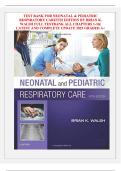
TESTBANK i
2
NEONATAL & PEDIATRIC RESPIR
2i 2i 2i
ATORY CARE 2i
5th Edition, Walsh
2 i
2i
TESTBANK i
2
,Neonatal and Pediatric Respiratory Care, 5th Edition, Brian K. Walsh Test Bank
2i 2i 2i 2i 2i 2i 2i 2i 2i 2i 2i
Table of Contents
2i 2i
Chapter 1. Fetal Lung Development
2i 2i 2i 2i
Chapter 2. Fetal Gas Exchange and Circulation
2i 2i 2i 2i 2i 2i
Chapter 3. Antenatal Assessment and High-Risk Delivery
2i 2i 2i 2i 2i 2i
Chapter 4. Examination and Assessment of the Neonatal and Pediatric Patient
2i 2i 2i 2i 2i 2i 2i 2i 2i 2i
Chapter 5. Pulmonary Function Testing and Bedside Pulmonary Mechanics
2i 2i 2i 2i 2i 2i 2i 2i
Chapter 6. Radiographic Assessment
2i 2i 2i
Chapter 7. Pediatric Flexible Bronchoscopy
2i 2i 2i 2i
Chapter 8. Invasive Blood Gas Analysis and Cardiovascular Monitoring
2i 2i 2i 2i 2i 2i 2i 2i
Chapter 9. Noninvasive Monitoring in Neonatal and Pediatric Care
2i 2i 2i 2i 2i 2i 2i 2i
Chapter 10. Oxygen Administration
2i 2i 2i
Chapter 11. Aerosols and Administration of Inhaled Medications
2i 2i 2i 2i 2i 2i 2i
Chapter 12. Airway Clearance Techniques and Hyperinflation Therapy
2i 2i 2i 2i 2i 2i 2i
Chapter 13. Airway Management
2i 2i 2i
Chapter 14. Surfactant Replacement Therapy
2i 2i 2i 2i
Chapter 15. Noninvasive Mechanical Ventilation and Continuous Positive Pressure of the Neonate
2i 2i 2i 2i 2i 2i 2i 2i 2i 2i 2i
Chapter 16. Noninvasive Mechanical Ventilation of the Infant and Child
2i 2i 2i 2i 2i 2i 2i 2i 2i
Chapter 17. Invasive Mechanical Ventilation of the Neonate and Pediatric Patient
2i 2i 2i 2i 2i 2i 2i 2i 2i 2i
Chapter 18. Administration of Gas Mixtures
2i 2i 2i 2i 2i
Chapter 19. Extracorporeal Membrane Oxygenation
2i 2i 2i 2i
Chapter 20. Pharmacology
2i 2i
Chapter 21. Thoracic Organ Transplantation
2i 2i 2i 2i
Chapter 22. Neonatal Pulmonary Disorders
2i 2i 2i 2i
Chapter 23. Surgical Disorders in Childhood that Affect Respiratory Care
2i 2i 2i 2i 2i 2i 2i 2i 2i
Chapter 24. Congenital Cardiac Defects
2i 2i 2i 2i
Chapter 25. Pediatric Sleep-Disordered Breathing
2i 2i 2i 2i
Chapter 26. Pediatric Airway Disorders and Parenchymal Lung Diseases
2i 2i 2i 2i 2i 2i 2i 2i
Chapter 27. Asthma
2i 2i
Chapter 28. Cystic Fibrosis
2i 2i 2i
Chapter 29. Acute Respiratory Distress Syndrome
2i 2i 2i 2i 2i
Chapter 30. Shock
2i 2i
Chapter 31. Pediatric Trauma
2i 2i 2i
Chapter 32. Disorders of the Pleura
2i 2i 2i 2i 2i
Chapter 33. Neurological and Neuromuscular Disorders
2i 2i 2i 2i 2i
Chapter 34. Pediatric Emergencies
2i 2i 2i
Chapter 35. Home Care of the Postpartum Family
2i 2i 2i 2i 2i 2i 2i
Chapter 36. Quality and Safety
2i 2i 2i 2i
,Chapter 1: Fetal Lung Development
2i 2i 2i 2i
Walsh: Neonatal & Pediatric Respiratory Care 5th Edition Test Bank (2020)
2i 2i 2i 2i 2i 2i 2i 2i 2i 2i
MULTIPLE CHOICE 2i
1. Which of the following phases of human lung development is characterized by the formation
2i 2i 2i 2i 2i 2i 2i 2i 2i 2i 2i 2i 2i 2i
of a capillary network around airway passages?
2i 2i 2i 2i 2i 2i
a. Pseudoglandular
b. Saccular
c. Alveolar
d. Canalicular
ANS: D 2i
The canalicular phase follows the pseudoglandular phase, lasting from approximately 17 we
2i 2i 2i 2i 2i 2i 2i 2i 2i 2i 2i
eks to 26 weeks of gestation. This phase is so named because of the appearance of vascular cha
2i 2i 2i 2i 2i 2i 2i 2i 2i 2i 2i 2i 2i 2i 2i 2i 2i
nnels, or capillaries, which begin to grow by forming a capillary network around the air pass
2i 2i 2i 2i 2i 2i 2i 2i 2i 2i 2i 2i 2i 2i 2i
ages. During the pseudoglandular stage, which begins at day 52 and extends to week 16 of g
2i 2i 2i 2i 2i 2i 2i 2i 2i 2i 2i 2i 2i 2i 2i 2i
estation, the airway system subdivides extensively and the conducting airway system develo
2i 2i 2i 2i 2i 2i 2i 2i 2i 2i 2i
ps, ending with the terminal bronchioles. The saccular stage of development, which takes pla
2i 2i 2i 2i 2i 2i 2i 2i 2i 2i 2i 2i 2i
ce from weeks 29 to 36 of gestation, is characterized by the development of sacs that later bec
2i 2i 2i 2i 2i 2i 2i 2i 2i 2i 2i 2i 2i 2i 2i 2i 2i
ome alveoli. During the saccular phase, a tremendous increase in the potential gas-
2i 2i 2i 2i 2i 2i 2i 2i 2i 2i 2i 2i
exchanging surface area occurs. The distinction between the saccular stage and the alveolar
2i 2i 2i 2i 2i 2i 2i 2i 2i 2i 2i 2i 2i 2i
stage is arbitrary. The alveolar stage stretches from 39 weeks of gestation to term. This stage
2i 2i 2i 2i 2i 2i 2i 2i 2i 2i 2i 2i 2i 2i 2i 2
is represented by the establishment of alveoli.
i 2i 2i 2i 2i 2i 2i
REF: pp. 3-5 2i 2 i
2. Regarding postnatal lung growth, by approximately what age do most of the alveoli that will
2i 2i 2i 2i 2i 2i 2i 2i 2i 2i 2i 2i 2i 2i 2i
be present in the lungs for life develop?
2i 2i 2i 2i 2i 2i 2i
a. 6 months 2i
b. 1 year 2i
c. 1.5 years 2i
d. 2 years 2i
ANS: C 2i
Most of the postnatal formation of alveoli in the infant occurs over the first 1.5 years of life.
2i 2i 2i 2i 2i 2i 2i 2i 2i 2i 2i 2i 2i 2i 2i 2i 2i 2i
At 2 years of age, the number of alveoli varies substantially among individuals. After 2 years o
2i 2i 2i 2i 2i 2i 2i 2i 2i 2i 2i 2i 2i 2i 2i 2i
f age, males have more alveoli than do females. After alveolar multiplication ends, the alveol
2i 2i 2i 2i 2i 2i 2i 2i 2i 2i 2i 2i 2i 2i
i continue to increase in size until thoracic growth is completed.
2i 2i 2i 2i 2i 2i 2i 2i 2i 2i
REF: p. 6 2i 2i
3. The respiratory therapist is evaluating a newborn with mild respiratory distress due to tracheal
2i 2i 2i 2i 2i 2i 2i 2i 2i 2i 2i 2i 2i 2i
stenosis. During which period of lung development did this problem develop?
2i 2i 2i 2i 2i 2i 2i 2i 2i 2i
, a. Embryonal
b. Saccular
c. Canalicular
d. Alveolar
ANS: A 2i
The initial structures of the pulmonary tree develop during the embryonal stage. Errors in de
2i 2i 2i 2i 2i 2i 2i 2i 2i 2i 2i 2i 2i 2i
velopment during this time may result in laryngeal, tracheal, or esophageal atresia or stenosi
2i 2i 2i 2i 2i 2i 2i 2i 2i 2i 2i 2i 2i
s. Pulmonary hypoplasia, an incomplete development of the lungs characterized by an abnorma
2i 2i 2i 2i 2i 2i 2i 2i 2i 2i 2i 2i
lly low number and/or size of bronchopulmonary segments and/or alveoli, can develop durin
2i 2i 2i 2i 2i 2i 2i 2i 2i 2i 2i 2i
g the pseudoglandular phase. If the fetus is born during the canalicular phase (i.e., premature
2i 2i 2i 2i 2i 2i 2i 2i 2i 2i 2i 2i 2i 2i
ly), severe respiratory distress can be expected because the inadequately developed airways,
2i 2i 2i 2i 2i 2i 2i 2i 2i 2i 2i 2i
along with insufficient and immature surfactant production by alveolar type II cells, gives ris
2i 2i 2i 2i 2i 2i 2i 2i 2i 2i 2i 2i 2i
e to the constellation of problems known as infant respiratory distress syndrome.
2i 2i 2i 2i 2i 2i 2i 2i 2i 2i 2i
REF: 2i2i p. 6 2i
4. Which of the following mechanisms is (are) responsible for the possible association between
2i 2i 2i 2i 2i 2i 2i 2i 2i 2i 2i 2i 2i
oligohydramnios and lung hypoplasia? 2i 2i 2i
I. Abnormal carbohydrate metabolism 2i 2i
II. Mechanical restriction of the chest wall 2i 2i 2i 2i 2i
III. Interference with fetal breathing 2i 2i 2i
IV. Failure to produce fetal lung liquid 2i 2i 2i 2i 2i
a. I and III only 2i 2i 2i
b. II and III only 2i 2i 2i
c. I, II, and IV only 2i 2i 2i 2i
d. II, III, and IV only 2i 2i 2i 2i
ANS: D 2i
Oligohydramnios, a reduced quantity of amniotic fluid present for an extended period of time, 2i 2i 2i 2i 2i 2i 2i 2i 2i 2i 2i 2i 2i 2i
with or without renal anomalies, is associated with lung hypoplasia. The mechanisms by whic
2i 2i 2i 2i 2i 2i 2i 2i 2i 2i 2i 2i 2i
h amniotic fluid volume influences lung growth remain unclear. Possible explanations for reduc
2i 2i 2i 2i 2i 2i 2i 2i 2i 2i 2i 2i
ed quantity of amniotic fluid include mechanical restriction of the chest wall, interference wit
2i 2i 2i 2i 2i 2i 2i 2i 2i 2i 2i 2i 2i
h fetal breathing, or failure to produce fetal lung liquid. These clinical and experimental obser
2i 2i 2i 2i 2i 2i 2i 2i 2i 2i 2i 2i 2i 2i
vations possibly point to a common denominator, lung stretch, as being a major growth stimu
2i 2i 2i 2i 2i 2i 2i 2i 2i 2i 2i 2i 2i 2i
lant.
REF: pp. 6-7 2i 2i
5. What is the purpose of the substance secreted by the type II pneumocyte?
2i 2i 2i 2i 2i 2i 2i 2i 2i 2i 2i 2i
a. To increase the gas exchange surface area
2i 2i 2i 2i 2i 2i
b. To reduce surface tension 2i 2i 2i
c. To maintain lung elasticity 2i 2i 2i
d. To preserve the volume of the amniotic fluid
2i 2i 2i 2i 2i 2i 2i
2
NEONATAL & PEDIATRIC RESPIR
2i 2i 2i
ATORY CARE 2i
5th Edition, Walsh
2 i
2i
TESTBANK i
2
,Neonatal and Pediatric Respiratory Care, 5th Edition, Brian K. Walsh Test Bank
2i 2i 2i 2i 2i 2i 2i 2i 2i 2i 2i
Table of Contents
2i 2i
Chapter 1. Fetal Lung Development
2i 2i 2i 2i
Chapter 2. Fetal Gas Exchange and Circulation
2i 2i 2i 2i 2i 2i
Chapter 3. Antenatal Assessment and High-Risk Delivery
2i 2i 2i 2i 2i 2i
Chapter 4. Examination and Assessment of the Neonatal and Pediatric Patient
2i 2i 2i 2i 2i 2i 2i 2i 2i 2i
Chapter 5. Pulmonary Function Testing and Bedside Pulmonary Mechanics
2i 2i 2i 2i 2i 2i 2i 2i
Chapter 6. Radiographic Assessment
2i 2i 2i
Chapter 7. Pediatric Flexible Bronchoscopy
2i 2i 2i 2i
Chapter 8. Invasive Blood Gas Analysis and Cardiovascular Monitoring
2i 2i 2i 2i 2i 2i 2i 2i
Chapter 9. Noninvasive Monitoring in Neonatal and Pediatric Care
2i 2i 2i 2i 2i 2i 2i 2i
Chapter 10. Oxygen Administration
2i 2i 2i
Chapter 11. Aerosols and Administration of Inhaled Medications
2i 2i 2i 2i 2i 2i 2i
Chapter 12. Airway Clearance Techniques and Hyperinflation Therapy
2i 2i 2i 2i 2i 2i 2i
Chapter 13. Airway Management
2i 2i 2i
Chapter 14. Surfactant Replacement Therapy
2i 2i 2i 2i
Chapter 15. Noninvasive Mechanical Ventilation and Continuous Positive Pressure of the Neonate
2i 2i 2i 2i 2i 2i 2i 2i 2i 2i 2i
Chapter 16. Noninvasive Mechanical Ventilation of the Infant and Child
2i 2i 2i 2i 2i 2i 2i 2i 2i
Chapter 17. Invasive Mechanical Ventilation of the Neonate and Pediatric Patient
2i 2i 2i 2i 2i 2i 2i 2i 2i 2i
Chapter 18. Administration of Gas Mixtures
2i 2i 2i 2i 2i
Chapter 19. Extracorporeal Membrane Oxygenation
2i 2i 2i 2i
Chapter 20. Pharmacology
2i 2i
Chapter 21. Thoracic Organ Transplantation
2i 2i 2i 2i
Chapter 22. Neonatal Pulmonary Disorders
2i 2i 2i 2i
Chapter 23. Surgical Disorders in Childhood that Affect Respiratory Care
2i 2i 2i 2i 2i 2i 2i 2i 2i
Chapter 24. Congenital Cardiac Defects
2i 2i 2i 2i
Chapter 25. Pediatric Sleep-Disordered Breathing
2i 2i 2i 2i
Chapter 26. Pediatric Airway Disorders and Parenchymal Lung Diseases
2i 2i 2i 2i 2i 2i 2i 2i
Chapter 27. Asthma
2i 2i
Chapter 28. Cystic Fibrosis
2i 2i 2i
Chapter 29. Acute Respiratory Distress Syndrome
2i 2i 2i 2i 2i
Chapter 30. Shock
2i 2i
Chapter 31. Pediatric Trauma
2i 2i 2i
Chapter 32. Disorders of the Pleura
2i 2i 2i 2i 2i
Chapter 33. Neurological and Neuromuscular Disorders
2i 2i 2i 2i 2i
Chapter 34. Pediatric Emergencies
2i 2i 2i
Chapter 35. Home Care of the Postpartum Family
2i 2i 2i 2i 2i 2i 2i
Chapter 36. Quality and Safety
2i 2i 2i 2i
,Chapter 1: Fetal Lung Development
2i 2i 2i 2i
Walsh: Neonatal & Pediatric Respiratory Care 5th Edition Test Bank (2020)
2i 2i 2i 2i 2i 2i 2i 2i 2i 2i
MULTIPLE CHOICE 2i
1. Which of the following phases of human lung development is characterized by the formation
2i 2i 2i 2i 2i 2i 2i 2i 2i 2i 2i 2i 2i 2i
of a capillary network around airway passages?
2i 2i 2i 2i 2i 2i
a. Pseudoglandular
b. Saccular
c. Alveolar
d. Canalicular
ANS: D 2i
The canalicular phase follows the pseudoglandular phase, lasting from approximately 17 we
2i 2i 2i 2i 2i 2i 2i 2i 2i 2i 2i
eks to 26 weeks of gestation. This phase is so named because of the appearance of vascular cha
2i 2i 2i 2i 2i 2i 2i 2i 2i 2i 2i 2i 2i 2i 2i 2i 2i
nnels, or capillaries, which begin to grow by forming a capillary network around the air pass
2i 2i 2i 2i 2i 2i 2i 2i 2i 2i 2i 2i 2i 2i 2i
ages. During the pseudoglandular stage, which begins at day 52 and extends to week 16 of g
2i 2i 2i 2i 2i 2i 2i 2i 2i 2i 2i 2i 2i 2i 2i 2i
estation, the airway system subdivides extensively and the conducting airway system develo
2i 2i 2i 2i 2i 2i 2i 2i 2i 2i 2i
ps, ending with the terminal bronchioles. The saccular stage of development, which takes pla
2i 2i 2i 2i 2i 2i 2i 2i 2i 2i 2i 2i 2i
ce from weeks 29 to 36 of gestation, is characterized by the development of sacs that later bec
2i 2i 2i 2i 2i 2i 2i 2i 2i 2i 2i 2i 2i 2i 2i 2i 2i
ome alveoli. During the saccular phase, a tremendous increase in the potential gas-
2i 2i 2i 2i 2i 2i 2i 2i 2i 2i 2i 2i
exchanging surface area occurs. The distinction between the saccular stage and the alveolar
2i 2i 2i 2i 2i 2i 2i 2i 2i 2i 2i 2i 2i 2i
stage is arbitrary. The alveolar stage stretches from 39 weeks of gestation to term. This stage
2i 2i 2i 2i 2i 2i 2i 2i 2i 2i 2i 2i 2i 2i 2i 2
is represented by the establishment of alveoli.
i 2i 2i 2i 2i 2i 2i
REF: pp. 3-5 2i 2 i
2. Regarding postnatal lung growth, by approximately what age do most of the alveoli that will
2i 2i 2i 2i 2i 2i 2i 2i 2i 2i 2i 2i 2i 2i 2i
be present in the lungs for life develop?
2i 2i 2i 2i 2i 2i 2i
a. 6 months 2i
b. 1 year 2i
c. 1.5 years 2i
d. 2 years 2i
ANS: C 2i
Most of the postnatal formation of alveoli in the infant occurs over the first 1.5 years of life.
2i 2i 2i 2i 2i 2i 2i 2i 2i 2i 2i 2i 2i 2i 2i 2i 2i 2i
At 2 years of age, the number of alveoli varies substantially among individuals. After 2 years o
2i 2i 2i 2i 2i 2i 2i 2i 2i 2i 2i 2i 2i 2i 2i 2i
f age, males have more alveoli than do females. After alveolar multiplication ends, the alveol
2i 2i 2i 2i 2i 2i 2i 2i 2i 2i 2i 2i 2i 2i
i continue to increase in size until thoracic growth is completed.
2i 2i 2i 2i 2i 2i 2i 2i 2i 2i
REF: p. 6 2i 2i
3. The respiratory therapist is evaluating a newborn with mild respiratory distress due to tracheal
2i 2i 2i 2i 2i 2i 2i 2i 2i 2i 2i 2i 2i 2i
stenosis. During which period of lung development did this problem develop?
2i 2i 2i 2i 2i 2i 2i 2i 2i 2i
, a. Embryonal
b. Saccular
c. Canalicular
d. Alveolar
ANS: A 2i
The initial structures of the pulmonary tree develop during the embryonal stage. Errors in de
2i 2i 2i 2i 2i 2i 2i 2i 2i 2i 2i 2i 2i 2i
velopment during this time may result in laryngeal, tracheal, or esophageal atresia or stenosi
2i 2i 2i 2i 2i 2i 2i 2i 2i 2i 2i 2i 2i
s. Pulmonary hypoplasia, an incomplete development of the lungs characterized by an abnorma
2i 2i 2i 2i 2i 2i 2i 2i 2i 2i 2i 2i
lly low number and/or size of bronchopulmonary segments and/or alveoli, can develop durin
2i 2i 2i 2i 2i 2i 2i 2i 2i 2i 2i 2i
g the pseudoglandular phase. If the fetus is born during the canalicular phase (i.e., premature
2i 2i 2i 2i 2i 2i 2i 2i 2i 2i 2i 2i 2i 2i
ly), severe respiratory distress can be expected because the inadequately developed airways,
2i 2i 2i 2i 2i 2i 2i 2i 2i 2i 2i 2i
along with insufficient and immature surfactant production by alveolar type II cells, gives ris
2i 2i 2i 2i 2i 2i 2i 2i 2i 2i 2i 2i 2i
e to the constellation of problems known as infant respiratory distress syndrome.
2i 2i 2i 2i 2i 2i 2i 2i 2i 2i 2i
REF: 2i2i p. 6 2i
4. Which of the following mechanisms is (are) responsible for the possible association between
2i 2i 2i 2i 2i 2i 2i 2i 2i 2i 2i 2i 2i
oligohydramnios and lung hypoplasia? 2i 2i 2i
I. Abnormal carbohydrate metabolism 2i 2i
II. Mechanical restriction of the chest wall 2i 2i 2i 2i 2i
III. Interference with fetal breathing 2i 2i 2i
IV. Failure to produce fetal lung liquid 2i 2i 2i 2i 2i
a. I and III only 2i 2i 2i
b. II and III only 2i 2i 2i
c. I, II, and IV only 2i 2i 2i 2i
d. II, III, and IV only 2i 2i 2i 2i
ANS: D 2i
Oligohydramnios, a reduced quantity of amniotic fluid present for an extended period of time, 2i 2i 2i 2i 2i 2i 2i 2i 2i 2i 2i 2i 2i 2i
with or without renal anomalies, is associated with lung hypoplasia. The mechanisms by whic
2i 2i 2i 2i 2i 2i 2i 2i 2i 2i 2i 2i 2i
h amniotic fluid volume influences lung growth remain unclear. Possible explanations for reduc
2i 2i 2i 2i 2i 2i 2i 2i 2i 2i 2i 2i
ed quantity of amniotic fluid include mechanical restriction of the chest wall, interference wit
2i 2i 2i 2i 2i 2i 2i 2i 2i 2i 2i 2i 2i
h fetal breathing, or failure to produce fetal lung liquid. These clinical and experimental obser
2i 2i 2i 2i 2i 2i 2i 2i 2i 2i 2i 2i 2i 2i
vations possibly point to a common denominator, lung stretch, as being a major growth stimu
2i 2i 2i 2i 2i 2i 2i 2i 2i 2i 2i 2i 2i 2i
lant.
REF: pp. 6-7 2i 2i
5. What is the purpose of the substance secreted by the type II pneumocyte?
2i 2i 2i 2i 2i 2i 2i 2i 2i 2i 2i 2i
a. To increase the gas exchange surface area
2i 2i 2i 2i 2i 2i
b. To reduce surface tension 2i 2i 2i
c. To maintain lung elasticity 2i 2i 2i
d. To preserve the volume of the amniotic fluid
2i 2i 2i 2i 2i 2i 2i