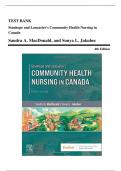
Gynecologic Health Care: With an Introduction to Prenatal and Postpartum Care 4th Edition Test Bank
Select the one correct answer to each of the following questions. • Which of the following best defines the term “gender” as used in this text? • A person’s sex • A person’s sex as defined by society • A societal response to a person’s self-representation as a man or woman • A person’s biological presentation as defined by himself or herself • Which factor bears most on women’s health care today? • The complexity of women’s health • Women’s status and position in society • Population growth • The economy • Why is acknowledging the oppression of women more difficult within Western societies? • The multiplicity of minority groups complicates the issue. • The availability of health care makes acknowledgment more difficult. • The diversity of the news media clouds the issue. • Affluence and increased opportunities mask oppression. • Which of the following most accurately defines “oppression” as used in the text? • Not having a choice • Not having a voice • An act of tyranny • A feeling of being burdened • In what way does a model of care based on a feminist perspective contrast sharply with a biomedical model? • It provides a forum for the exploration of gender issues. • It seeks equal distribution of power within the healthcare interaction. • It emphasizes women’s rights. • It opens new avenues for women’s health care. • Gender is rooted in and shaped by . • society, biology • self-representation, societal expectations • biology, environment and experience • biology, hormones • Women’s health risks, treatments, and approaches are not always based in science and biology because • they are often based on outdated treatments and approaches. • they are determined by social expectations and gender assumptions. • they often rely on alternative treatments and approaches. • scientific research often fails to take women into consideration. • Reproductive rights were added to the World Health Organization’s human rights framework in the last ? • 5 years • 10 years • 20 years • 40 years • “Safe Motherhood” was added to the human rights framework in order to • address maternal morbidity and mortality on a global level • meet a legal obligation • correct an injustice • correct an oversight • What is a chief failing of the biomedical model in regards to women’s health care? • Its reliance on studies comprised exclusively of males • Its consideration of women as central the model • Its emphasis on science and medicine • Its limited definition of “health” as “the absence of disease” • The social model of health places the focus of health on • the community. • the individual. • environmental conditions. • scientific research. • Which question below supports the strategy: “Identify women’s agency in the midst of social constraint and the biomedical paradigm.”? • “Are ‘all women’ the same?” • “Why do you care about the issue?” • “Are women really victims or are they acting with agency?” • “Who has a choice within the context of health?” • What had been a significant problem in medical research well into the 1990s? • The focus on randomized clinical trials over epidemiological investigations • The lack of representation of women in research trials • The lack of research related to gynecology • The focus on randomized clinical trials over observational research • Gender differences in heart disease can be found in • diagnosis. • treatment. • identification of symptoms. • all of the above. • What opportunities are created by applying feminist strategies to gynecologic health? • Better insight into research methods related to gynecology • Better access to the populations affected by gynecologic health • Better understandings from a wellness-oriented, women-centered framework • Better understandings of the social construction of gender ANSWER KEY MULTIPLE-CHOICE QUESTIONS • c • b • d • a • b • c • b • c • a • d • a • c • b • d • c CHAPTER 2 Women's Growth and Development Across the Life Span MULTIPLE-CHOICE QUESTIONS Select the one correct answer to each of the following questions. • How does Erick Erikson’s grand theory of human development differ for females? • It recognizes achieving autonomy as a primary focus. • It assumes only men desire autonomy. • It assumes female dependence on another in order to achieve a sense of self. • It assumes females desire dependence on others. • What is true about human development theories published before the 1970s? • They are based on interviews conducted only with men. • They assume androcentric models can be applied correctly to women. • They frame women’s development as flawed in comparison to the standard. • All of the above. • What is the intention of the newer feminist models of development? • To offer a new model within the traditional biomedical focus. • To offer alternatives to the constrained and previously misapplied models. • To replace male generalist models with female generalist models. • To present a contrast to privileged, white male-based models. • What is a key limitation of prevailing developmental models for women? • Gender differences assumed to be biologically determined are more often socially constructed. • They present conflicting and misapplied models. • Gender differences are assumed to be socially prescribed. • Similarities between male and female are emphasized over differences. • What event in female development marks the beginning of a tension between biologic changes and the social context? • Turning 18 years old • The onset of menses • The accumulation of adipose tissue with the onset of puberty • Pregnancy • How many stages does the Tanner scale use to stage sexual maturity? • 3 stages • 5 stages • 6 stages • 8 stages • What is the median age for the onset of menstruation for adolescent girls in the United States? a. 9.8 b. 10.8 c. 12.8 d. 13.8 • What factor limits an individual’s ability to function productively as an adult? • Failure to take into account social and cultural norms • The inability to move through the world with credibility and respect • Poverty • Failure to negotiate the developmental tasks of adolescence successfully • The type of thinking that influences the risk-taking behaviors of adolescence • involves the use of symbols, advanced reasoning and expanded possibilities. • works proactively to achieve autonomy. • encourages experimentation and foresight. • is rooted in the immediate and concrete. • What narrow term is often used to refer to the period of Early Adulthood? • Productive years • Reproductive years • Young Adulthood • Adolescence • Why have women’s changing roles come at a cost to their health? • Increases in caregiving expectations compromise health • Balancing competing demands increases stress • Less attention is being placed on health care • Men’s roles have not changed in relation to the change in women’s roles • How do Franz and White (1985) expand Erikson’s theory of development? • By proposing a two-pathway process that includes both individuation and capacity for attachment • By refining Erikson’s single pathway to include capacity for attachment • By expanding issues around career and lifestyle • By expanding issues around identity • What factors affect the mood changes many women in midlife suffer? • Deficiencies of estrogen • Psychological transitions • Cultural beliefs and expectations • All of the above • What is the primary reason many older women live in poverty and have health problems? • They outnumber older men. • They have outlived their support systems. • Their cognitive abilities decline. • They must contend with ageism and sexism. ANSWER KEY MULTIPLE-CHOICE QUESTIONS • c • d • b • a • c • b • c • d • a • b • b • a • d • b Chapter 3 Women's Growth and Development Across the Life Span MULTIPLE-CHOICE QUESTIONS Select the one correct answer to each of the following questions. • According to Wuest (1994), the major goal of feminist research is • to change the design and evaluation of research. • to liberate women from societal expectations. • to emancipate the world from systemic bias based on gender and class. • to expand notions of gender beyond stereotypes. • What concern prompted the initiation of the modern EBP movement in health care? • That clinicians often failed to evaluate the effectiveness of their own care • That expert opinion was valued over scientific evidence • That scientific evidence was valued over expert opinion • That patients were demanding more evidence to support care decisions • Quine’s (1952) concept of a web of interconnecting beliefs and knowledge supports • the inferiority of quantitative research. • a multiple-method approach to examining phenomena. • the superiority of qualitative research. • the difficulties of establishing best practices. • Why are multiple approaches needed to identify best clinical practices? • To reflect the multiple variables within clinical settings • To offer alternatives to poorly functioning practices • To address the complexity of the human condition • To ensure that no single approach dominates • What is the third part of the clinical decision-making triad that includes clinical experience and patient preference? • An investigation of treatment pathways • A consultation with clinical management • An evaluation of current clinical research • Establishing research methodology • How many classifications are used by the U.S. Preventative Service Task Force to gauge the strength of recommendations for using research evidence in clinical practice? • 3 • 5 • 6 • 8 • What are the corresponding clinical terms for Type I and Type II errors in quantitative research? • “false positive” and “false negative” • “negativity” and “positivity” • “bias I” and “bias II” • “evidence flaw” and “process flaw” • What key factor shapes the methodology of qualitative research? • A person’s view of the world • The ability to establish control over variables • The ability to establish cause and effect • A well-conducted meta-analysis • What is a difference between quantitative and qualitative research? • One follows strict protocols while the other does not. • One deduces the reason why something happens and the other induces why it happens. • One places greater emphasizes on the expansion of knowledge. • All of the above. • What field of study informs qualitative research? • Anthropology • Ecological psychology • Sociolinguistics • All of the above • Which research question most closely exemplifies a qualitative approach? • Why do some women experience postpartum depression? • How does physical exercise affect menopause? • How does Kegel exercise affect a woman’s perinatal outcomes? • Does a specific method of contraception cause weight gain? • What is a recognized limitation of EBP? • Emphasis on the routinization of practice • Over-reliance on RCT-derived results • The challenge of staying abreast of current research • All of the above • What is the purpose of the Stetler (2001) model of research utilization? • To weigh the risks and benefits of EBP • To supply methods for critiquing evidence • To encourage a synthesis of all research methods • To help move best evidence into the clinical practice setting • One common barrier to using EBP in clinical settings is the lack of confidence in critiquing research studies. The second is • the lack of time to find studies. • the lack of willing colleagues. • the lack of support from management. • the lack of protocol in using EBP. • What is the single most important action a clinician can take to advance EBP in the clinical setting? • Employ quantitative research methods • Employ qualitative research methods • Question everything • Consult with management ANSWER KEY MULTIPLE-CHOICE QUESTIONS • c • a • b • c • c • b • a • a • b • d • a • d • d • a • c Chapter 4 Using Evidence to Support Quality Clinical Practice MULTIPLE CHOICE 1. In evaluating the level of a pregnant womans risk of having a low-birth-weight (LBW) infant, which factor is the most important for the nurse to consider? a. African-American race b. Cigarette smoking c. Poor nutritional status d. Limited maternal education ANS: A For African-American births, the incidence of LBW infants is twice that of Caucasian births. Race is a nonmodifiable risk factor. Cigarette smoking is an important factor in potential infant mortality rates, but it is not the most important. Additionally, smoking is a modifiable risk factor. Poor nutrition is an important factor in potential infant mortality rates, but it is not the most important. Additionally, nutritional status is a modifiable risk factor. Maternal education is an important factor in potential infant mortality rates, but it is not the most important. Additionally, maternal education is a modifiable risk factor. 2. What is the primary role of practicing nurses in the research process? a. Designing research studies b. Collecting data for other researchers c. Identifying researchable problems d. Seeking funding to support research studies ANS: C When problems are identified, research can be properly conducted. Research of health care issues leads to evidence-based practice guidelines. Designing research studies is only one factor of the research process. Data collection is another factor of research. Financial support is necessary to conduct research, but it is not the primary role of the nurse in the research process. 3. A 23-year-old African-American woman is pregnant with her first child. Based on the statistics for infant mortality, which plan is most important for the nurse to implement? a. Perform a nutrition assessment. b. Refer the woman to a social worker. c. Advise the woman to see an obstetrician, not a midwife. d. Explain to the woman the importance of keeping her prenatal care appointments. ANS: D Consistent prenatal care is the best method of preventing or controlling risk factors associated with infant mortality. Nutritional status is an important modifiable risk factor, but it is not the most important action a nurse should take in this situation. The client may need assistance from a social worker at some time during her pregnancy, but a referral to a social worker is not the most important aspect the nurse should address at this time. If the woman has identifiable high-risk problems, then her health care may need to be provided by a physician. However, it cannot be assumed that all African-American women have high-risk issues. In addition, advising the woman to see an obstetrician is not the most important aspect on which the nurse should focus at this time, and it is not appropriate for a nurse to advise or manage the type of care a client is to receive. 4. During a prenatal intake interview, the nurse is in the process of obtaining an initial assessment of a 21-year-old Hispanic client with limited English proficiency. Which action is the most important for the nurse to perform? a. Use maternity jargon to enable the client to become familiar with these terms. b. Speak quickly and efficiently to expedite the visit. c. Provide the client with handouts. d. Assess whether the client understands the discussion. ANS: D Nurses contribute to health literacy by using simple, common words, avoiding jargon, and evaluating whether the client understands the discussion. Speaking slowly and clearly and focusing on what is important will increase understanding. Most client education materials are written at a level too high for the average adult and may not be useful for a client with limited English proficiency. 5. The nurses working at a newly established birthing center have begun to compare their performance in providing maternal-newborn care against clinical standards. This comparison process is most commonly known as what? a. Best practices network b. Clinical benchmarking c. Outcomes-oriented practice d. Evidencebased practice ANS: C Outcomes-oriented practice measures the effectiveness of the interventions and quality of care against benchmarks or standards. The term best practice refers to a program or service that has been recognized for its excellence. Clinical benchmarking is a process used to compare ones own performance against the performance of the best in an area of service. The term evidence-based practice refers to the provision of care based on evidence gained through research and clinical trials. 6. Which statement best exemplifies contemporary maternity nursing? a. Use of midwives for all vaginal deliveries b. Family-centered care c. Free-standing birth clinics d. Physician-driven care ANS: B Contemporary maternity nursing focuses on the familys needs and desires. Fathers, partners, grandparents, and siblings may be present for the birth and participate in activities such as cutting the babys umbilical cord. Both midwives and physicians perform vaginal deliveries. Free-standing clinics are an example of alternative birth options. Contemporary maternity nursing is driven by the relationship between nurses and their clients. 7. A 38-year-old Hispanic woman vaginally delivered a 9-pound, 6-ounce baby girl after being in labor for 43 hours. The baby died 3 days later from sepsis. On what grounds could the woman have a legitimate legal case for negligence? a. Inexperienced maternity nurse was assigned to care for the client. b. Client was past her due date by 3 days. c. Standard of care was not met. d. Client refused electronic fetal monitoring. ANS: C Not meeting the standard of care is a legitimate factor for a case of negligence. An inexperienced maternity nurse would need to display competency before being assigned to care for clients on his or her own. This client may have been past her due date; however, a term pregnancy often goes beyond 40 weeks of gestation. Although fetal monitoring is the standard of care, the client has the right to refuse treatment. This refusal is not a case for negligence, but informed consent should be properly obtained, and the client should have signed an against medical advice form when refusing any treatment that is within the standard of care. 8. When the nurse is unsure how to perform a client care procedure that is high risk and low volume, his or her best action in this situation would be what? a. Ask another nurse. b. Discuss the procedure with the clients physician. c. Look up the procedure in a nursing textbook. d. Consult the agency procedure manual, and follow the guidelines for the procedure. ANS: D Following the agencys policies and procedures manual is always best when seeking information on correct client procedures. These policies should reflect the current standards of care and the individual states guidelines. Each nurse is responsible for his or her own practice. Relying on another nurse may not always be a safe practice. Each nurse is obligated to follow the standards of care for safe client care delivery. Physicians are responsible for their own client care activity. Nurses may follow safe orders from physicians, but they are also responsible for the activities that they, as nurses, are to carry out. Information provided in a nursing textbook is basic information for general knowledge. Furthermore, the information in a textbook may not reflect the current standard of care or the individual state or hospital policies. 9. The National Quality Forum has issued a list of never events specifically pertaining to maternal and child health. These include all of the following except: a. infant discharged to the wrong person. b. kernicterus associated with the failure to identify and treat hyperbilirubinemia. c. artificial insemination with the wrong donor sperm or egg. d. foreign object retained after surgery. ANS: D Although a foreign object retained after surgery is a never event, it does not specifically pertain to obstetric clients. A client undergoing any type of surgery may be at risk for this event. An infant discharged to the wrong person specifically pertains to postpartum care. Death or serious disability as a result of kernicterus pertains to newborn assessment and care. Artificial insemination affects families seeking care for infertility. 10. A nurse caring for a pregnant client should be aware that the U.S. birth rate shows what trend? a. Births to unmarried women are more likely to have less favorable outcomes. b. Birth rates for women 40 to 44 years of age are declining. c. Cigarette smoking among pregnant women continues to increase. d. Rates of pregnancy and abortion among teenagers are lower in the United States than in any other industrialized country. ANS: A LBW infants and preterm births are more likely because of the large number of teenagers in the unmarried group. Birth rates for women in their early 40s continue to increase. Fewer pregnant women smoke. Teen pregnancy and abortion rates are higher in the United States than in any other industrial country. 11. A recently graduated nurse is attempting to understand the reason for increasing health care spending in the United States. Which information gathered from her research best explains the rationale for these higher costs compared with other developed countries? a. Higher rate of obesity among pregnant women b. Limited access to technology c. Increased use of health care services along with lower prices d. Homogeneity of the population ANS: A Health care is one of the fastest growing sectors of the U.S. economy. Currently, 17.4% of the gross domestic product is spent on health care. Higher spending in the United States, as compared with 12 other industrialized countries, is related to higher prices and readily accessible technology along with greater obesity rates among women. More than one third of women in the United States are obese. In the population in the United States, 16% are uninsured and have limited access to health care. Maternal morbidity and mortality are directly related to racial disparities. 12. Which statement best describes maternity nursing care that is based on knowledge gained through research and clinical trials? a. Maternity nursing care is derived from the Nursing Intervention Classification. b. Maternity nursing care is known as evidence-based practice. c. Maternity nursing care is at odds with the Cochrane School of traditional nursing. d. Maternity nursing care is an outgrowth of telemedicine. ANS: B Evidence-based practice is based on knowledge gained from research and clinical trials. The Nursing Intervention Classification is a method of standardizing language and categorizing care. Dr. Cochrane systematically reviewed research trials and is part of the evidence-based practice movement. Telemedicine uses communication technologies to support health care. 13. What is the minimum level of practice that a reasonably prudent nurse is expected to provide? a. Standard of care b. Risk management c. Sentinel event d. Failure to rescue ANS: A Guidelines for standards of care are published by various professional nursing organizations. Risk management identifies risks and establishes preventive practices, but it does not define the standard of care. Sentinel events are unexpected negative occurrences. They do not establish the standard of care. Failure to rescue is an evaluative process for nursing, but it does not define the standard of care. 14. Through the use of social media technology, nurses can link with other nurses who may share similar interests, insights about practice, and advocate for clients. Which factor is the most concerning pitfall for nurses using this technology? a. Violation of client privacy and confidentiality b. Institutions and colleagues who may be cast in an unfavorable light c. Unintended negative consequences for using social media d. Lack of institutional policy governing online contact ANS: A The most significant pitfall for nurses using this technology is the violation of client privacy and confidentiality. Furthermore, institutions and colleagues can be cast in an unfavorable light with negative consequences for those posting information. Nursing students have been expelled from school and nurses have been fired or reprimanded by their Board of Nursing for injudicious posts. The American Nurses Association has published six principles for social networking and the nurse. All institutions should have policies guiding the use of social media, and the nurse should be familiar with these guidelines. 15. During a prenatal intake interview, the client informs the nurse that she would prefer a midwife to provide both her care during pregnancy and deliver her infant. Which information is most appropriate for the nurse to share with this client? a. Midwifery care is only available to clients who are uninsured because their services are less expensive than an obstetrician. b. She will receive fewer interventions during the birth process. c. She should be aware that midwives are not certified. d. Her delivery can take place only at home or in a birth center. ANS: B This client will be able to participate actively in all decisions related to the birth process and is likely to receive fewer interventions during the birth process. Midwifery services are available to all low-risk pregnant women, regardless of the type of insurance they have. Midwifery care in all developed countries is strictly regulated by a governing body to ensure that core competencies are met. In the United States, this body is the American College of Nurse-Midwives (ACNM). Midwives can provide care and delivery at home, in freestanding birth centers, and in community and teaching hospitals. CHAPTER 5 Health Promotion MULTIPLE-CHOICE QUESTIONS Select the one correct answer to each of the following questions. • What is the annual medical expenditure nationwide, approximately, due to smoking and being overweight? • $60 billion • $100 billion • $160 billion • $260 billion • What approach does Health People 2020 use to achieve its goals and objectives? • Social determinants of health • Evidence-based determinants of health • Quality-of-life determinants of health • Longevity promotion determinants of health • What percentage of the nation’s gross domestic product was spent on health care in 2005? • 0.6 percent • 6 percent • 16 percent • 26 percent • Which of the following is a new focus area added for Healthy People 2020? • Lesbian, gay, bisexual and transgender health • Maternal, infant and child health • Nutrition and weight status • Family planning • Why must definitions of health and prevention be clarified? • To provide clinicians with a standard point of view • To shift from an illness-centered focus toward wellness • To establish clarity and protocol • To streamline health counseling and education • According to the World Health Organization (WHO), the presence of a disease state • necessitates prompt medical attention. • excludes a person from being considered healthy. • does not exclude a person from being considered healthy. • classifies a person as in poor health. • Which approach to health promotion comes closest to that advocated by the text? • Is determined primarily by the clinician • Pays close attention to cost effectiveness • Focuses on the absence of disease • Considers the patient and his or her cultural perceptions • Which of the following is considered primary prevention? • Targeted immunization • Serves that limit an existing disability • Routine laboratory screening • Rehabilitation • What ratio of ambulatory visits most closely represents those due to chronic or acute problems versus preventative care? a. 2/1 b. 1/1 c. 3/1 d. 5/1 • What area of injury prevention is a focus of the USPSTF’s guidelines for counseling all healthy, asymptomatic women? • motor vehicle accidents • falls • domestic violence • All of the above • What is the USPSTF recommendation regarding firearms? • Removed from homes with children under the age of ten • Stored in locked compartments • Removed from home or stored, unloaded, in locked compartments • Removed from private homes • Which type of counseling results in a statistically significant reduction in STIs? • Abstinence-only education • Counseling delivered in multiple individual or group sessions totaling more than 3 hours • Remote counseling via Internet or phone • Brief, individual sessions in the primary care setting • What is the leading preventable cause of death across all populations in the U.S.? • Motor vehicle accidents • Tobacco • Obesity • Alcoholism • What percentage of older women does NOT receive the recommended immunizations for their age group, according to a recent study? • 10 percent • 25 percent • 50 percent • 75 percent ANSWER KEY MULTIPLE-CHOICE QUESTIONS • c • a • c • a • b • c • d • a • c • a • c • b • b • c CHAPTER 6 Gynecologic Anatomy and Physiology MULTIPLE-CHOICE QUESTIONS Select the one correct answer to each of the following questions. • A major contributor to pelvic stability is • the coccyx. • the pubis. • the ilium and its ligaments. • the sacrum. • The sheet made up of dense fibrous tissue that spans the opening of the anterior pelvic outlet is/are the • sphinter muscles. • deep perineal space. • perineal membrane. • distal vagina. • How many different fiber sections subdivide the levator ani muscular sheet? • 2 • 3 • 4 • 6 • What is the function of the Bartholin’s gland? • To help prevent infection of the introitus • To secrete lubricating mucus into the introitus during sexual excitement • To assist in keeping the vaginal introitus closed • To secrete estrogen and regulate its levels • Which arteries supply blood to the clitoris? • Arcuate arteries • Dorsal and clitoral cavernosal arteries • Two ovarian arteries • Coiled arteries • What is the approximate number of ovarian follicles at the initiation of puberty? a. 100,000 b. 200,000 c. 400,000 d. 600,000 • The four segments of a fallopian tube are the pars interstitialis, the isthus, the ampulla, and the • infundibulum. • medulla. • hilum. • myometrium. • What causes the epithelium to thicken, differentiate, and accumulate glycogen? • Progesterone • Pudendal nerve • Estrogen • Vagus nerves • About how many openings are in the nipple? • 1 to 5 • 5 to 10 c. 10 - 15 d. 15 - 20 • What is one of the most frequent reasons women visit their clinician? • Changes in menstruation • Family planning • Pregnancy • Prevention and wellness • What is the objective of the endometrial cycle? • To emulate the activities of the ovaries • To produce an ovum • To reach the menstruation phase • To prepare a site to nourish and maintain the ovum • Ovulation is dependent on an increased level of _ • enzyme activity. • progesterone. • prostaglandins. • estrogen and the LH surge. • What initiates contractions of the uterine muscle leading to menstruation? • Lysosomal enzymes • Vascular thrombosis • Rupture of the basal arterioles • Prostaglandins • Why does the cervical mucus become thick, viscous and opaque after ovulation? • To make an hospitable environment for the sperm • To promote stromal vascularization • To relax the myometrial fibers that supply the cervix • To reduce the risk of ascending infection at the time of implantation ANSWER KEY MULTIPLE-CHOICE QUESTIONS • c • a • c • a • b • c • a • c • d • a • d • d • d • d CHAPTER 7 Gynecologic History and Physical Examination MULTIPLE-CHOICE QUESTIONS Select the one correct answer to each of the following questions. • What does the Greek term “gyne” mean from which “gynecology” is derived? • Speculum • Gender • Woman — more as queen • To reproduce • What is the primary purpose of taking a health history? • To learn about a woman’s health concerns • To establish a relationship with a woman while learning about her health • To identify any unresolved/latent health issues • To ensure that a woman’s health care records are up to date • Which skills are valued in a clinician taking a health history? • Respectful attention • Empathy • Trust-building • All of the above • What should be the clinician’s first objective after learning the chief reason the woman desires care? • To give the reason or problem a structural and chronological framework • To probe for any additional concerns missed • To take a family history related to the presenting concern • To gain insight into the woman’s cultural and social influences • Which of the following should NOT be a part of taking a health history? • Taking a family health history • Seeking information on stressors or personal problems • Asking about exercise and sleep patterns • Counseling for tobacco-use cessation • In the GTPAL system for recording pregnancy history, the “T” stands for: • Term births. • Terminal pregnancies. • Total number of pregnancies. • Type of birth (spontaneous, assisted, or cesarean). • In a complete physical examination in the ambulatory gynecology setting, it is customary to • evaluate major organ systems briefly and carefully, but not exhaustively. • ask the woman which physical examination maneuvers should be performed. • evaluate major organ systems thoroughly. • palpate the precordium. • How should the order of examination proceed? • Head to toe • Toe to head • By major organ system • By concern presented • Where may supernumerary occur? • Anywhere from the neck to the ankle unilaterally • Anywhere on the torso • Anywhere along a vertical line from the axilla to the inner thigh • Anywhere on the breast tissue, including the tall of Spence • Where in the breast do most malignancies develop? • Upper inner quadrant • Upper outer quadrant • Lower outer quadrant • Lower inner quadrant • Which type of speculum is best used to examine nulliparous women? • Small Graves • Pederson • Large Graves • Pediatric • What is the preferred maneuver order of the pelvic examination? • Bimanual, external inspection and palpation, speculum • External inspection and palpation, bimanual, speculum • External inspection and palpation, speculum, bimanual • Speculum, bimanual, external inspection and palpation • Under what conditions is a rectovaginal examination most useful? • Under all conditions • If screening for colorectal cancer is indicated • If the uterus is anteverted or anteflexed • If the uterus is retroflexed or retroverted finding. • A clinician should present a therapeutic plan to the patient based on • the individual woman’s desire for information and the degree of severity of the • c • the examining clinician’s findings and assessments. o n • the individual woman’s cultural sensitivities and level of education. s u l t a t i o n w i t h a n o t h e r h e a l t h p r o f e s s i o n a l . ANSWER KEY MULTIPLE-CHOICE QUESTIONS • c • b • d • a • d • a • a • a • c • b • b • c • d • a Chapter 8 Male Sexual and Reproductive Health MULTIPLE CHOICE 1. To determine the severity of the symptoms for a 68-year-old patient with benign prostatic hyperplasia (BPH) the nurse will ask the patient about a. blood in the urine. b. lower back or hip pain. c. erectile dysfunction (ED). d. force of the urinary stream. ANS: D The American Urological Association (AUA) Symptom Index for a patient with BPH asks questions about the force and frequency of urination, nocturia, etc. Blood in the urine, ED, and back or hip pain are not typical symptoms of BPH. 2. A 58-year-old patient who has been recently diagnosed with benign prostatic hyperplasia (BPH) tells the nurse that he does not want to have a transurethral resection of the prostate (TURP) because it might affect his ability to maintain an erection during intercourse. Which action should the nurse take? a. Provide teaching about medications for erectile dysfunction (ED). b. Discuss that TURP does not commonly affect erectile function. c. Offer reassurance that sperm production is not affected by TURP. d. Discuss alternative methods of sexual expression besides intercourse. ANS: B ED is not a concern with TURP, although retrograde ejaculation is likely and the nurse should discuss this with the patient. Erectile function is not usually affected by a TURP, so the patient will not need information about penile implants or reassurance that other forms of sexual expression may be used. Because the patient has not asked about fertility, reassurance about sperm production does not address his concerns. 3. The health care provider prescribes finasteride (Proscar) for a 67-year-old patient who has benign prostatic hyperplasia (BPH). When teaching the patient about the drug, the nurse informs him that a. he should change position from lying to standing slowly to avoid dizziness. b. his interest in sexual activity may decrease while he is taking the medication. c. improvement in the obstructive symptoms should occur within about 2 weeks. d. he will need to monitor his blood pressure frequently to assess for hypertension. ANS: B A decrease in libido is a side effect of finasteride because of the androgen suppression that occurs with the drug. Although orthostatic hypotension may occur if the patient is also taking a medication for erectile dysfunction (ED), it should not occur with finasteride alone. Improvement in symptoms of obstruction takes about 6 months. The medication does not cause hypertension. 4. The nurse will anticipate that a 61-year-old patient who has an enlarged prostate detected by digital rectal examination (DRE) and an elevated prostate specific antigen (PSA) level will need teaching about a. cystourethroscopy. b. uroflowmetry studies. c. magnetic resonance imaging (MRI). d. transrectal ultrasonography (TRUS). ANS: D In a patient with an abnormal DRE and elevated PSA, transrectal ultrasound is used to visualize the prostate for biopsy. Uroflowmetry studies help determine the extent of urine blockage and treatment, but there is no indication that this is a problem for this patient. Cystoscopy may be used before prostatectomy but will not be done until after the TRUS and biopsy. MRI is used to determine whether prostatic cancer has metastasized but would not be ordered at this stage of the diagnostic process. 5. Which information about continuous bladder irrigation will the nurse teach to a patient who is being admitted for a transurethral resection of the prostate (TURP)? a. Bladder irrigation decreases the risk of postoperative bleeding. b. Hydration and urine output are maintained by bladder irrigation. c. Antibiotics are infused continuously through the bladder irrigation. d. Bladder irrigation prevents obstruction of the catheter after surgery. ANS: D The purpose of bladder irrigation is to remove clots from the bladder and to prevent obstruction of the catheter by clots. The irrigation does not decrease bleeding or improve hydration. Antibiotics are given by the IV route, not through the bladder irrigation. 6. The nurse will plan to teach the patient scheduled for photovaporization of the prostate (PVP) a. that urine will appear bloody for several days. b. how to care for an indwelling urinary catheter. c. that symptom improvement takes 2 to 3 weeks. d. about complications associated with urethral stenting. ANS: B The patient will have an indwelling catheter for 24 to 48 hours and will need teaching about catheter care. There is minimal bleeding with this procedure. Symptom improvement is almost immediate after PVP. Stent placement is not included in the procedure. 7. A 53-year-old man is scheduled for an annual physical exam. The nurse will plan to teach the patient about the purpose of a. urinalysis collection. b. uroflowmetry studies. c. prostate specific antigen (PSA) testing. d. transrectal ultrasound scanning (TRUS). ANS: C An annual digital rectal exam (DRE) and PSA are usually recommended starting at age 50 for men who have an average risk for prostate cancer. Urinalysis and uroflowmetry studies are done if patients have symptoms of urinary tract infection or changes in the urinary stream. TRUS may be ordered if the DRE or PSA is abnormal. 8. A patient returning from surgery for a perineal radical prostatectomy will have a nursing diagnosis of risk for infection related to a. urinary incontinence. b. prolonged urinary stasis. c. possible fecal wound contamination. d. placement of a suprapubic bladder catheter. ANS: C The perineal approach increases the risk for infection because the incision is located close to the anus and contamination with feces is possible. Urinary stasis and incontinence do not occur because the patient has a retention catheter in place for 1 to 2 weeks. A urethral catheter is used after the surgery. 9. A 57-year-old patient is incontinent of urine following a radical retropubic prostatectomy. The nurse will plan to teach the patient a. to restrict oral fluid intake. b. pelvic floor muscle exercises. c. to perform intermittent self-catheterization. d. the use of belladonna and opium suppositories. ANS: B Pelvic floor muscle training (Kegel) exercises are recommended to strengthen the pelvic floor muscles and improve urinary control. Belladonna and opium suppositories are used to reduce bladder spasms after surgery. Intermittent self- catheterization may be taught before surgery if the patient has urinary retention, but it will not be useful in reducing incontinence after surgery. The patient should have a daily oral intake of 2 to 3 L. 10. A 70-year-old patient who has had a transurethral resection of the prostate (TURP) for benign prostatic hyperplasia (BPH) is being discharged from the hospital today, The nurse determines that additional instruction is needed when the patient says which of the following? a. I should call the doctor if I have incontinence at home. b. I will avoid driving until I get approval from my doctor. c. I will increase fiber and fluids in my diet to prevent constipation. d. I should continue to schedule yearly appointments for prostate exams. ANS: A Because incontinence is common for several weeks after a TURP, the patient does not need to call the health care provider if this occurs. The other patient statements indicate that the patient has a good understanding of post-TURP instructions. 11. The nurse will inform a patient with cancer of the prostate that side effects of leuprolide (Lupron) may include a. flushing. b. dizziness. c. infection. d. incontinence. ANS: A Hot flashes may occur with decreased testosterone production. Dizziness may occur with the alpha-blockers used for benign prostatic hyperplasia (BPH). Urinary incontinence may occur after prostate surgery, but it is not an expected side effect of medication. Risk for infection is increased in patients receiving chemotherapy. 12. Which information will the nurse teach a patient who has chronic prostatitis? a. Ibuprofen (Motrin) should provide good pain control. b. Prescribed antibiotics should be taken for 7 to 10 days. c. Intercourse or masturbation will help relieve symptoms. d. Cold packs used every 4 hours will decrease inflammation. ANS: C Ejaculation helps drain the prostate and relieve pain. Warm baths are recommended to reduce pain. Nonsteroidal antiinflammatory drugs (NSAIDs) are frequently prescribed but usually do not offer adequate pain relief. Antibiotics for chronic prostatitis are taken for 4 to 12 weeks. 13. The nurse performing a focused examination to determine possible causes of infertility will assess for a. hydrocele. b. varicocele. c. epididymitis. d. paraphimosis. ANS: B Persistent varicoceles are commonly associated with infertility. Hydrocele, epididymitis, and paraphimosis are not risk factors for infertility. 14. Which information will the nurse plan to include when teaching a community health group about testicular self-examination? a. Testicular self-examination should be done in a warm room. b. The only structure normally felt in the scrotal sac is the testis. c. Testicular self-examination should be done at least every week. d. Call the health care provider if one testis is larger than the other. ANS: A The testes will hang lower in the scrotum when the temperature is warm (e.g., during a shower), and it will be easier to palpate. The epididymis is also normally palpable in the scrotum. One testis is normally larger. The patient should perform testicular self- examination monthly. 15. A 27-year-old man who has testicular cancer is being admitted for a unilateral orchiectomy. The patient does not talk to his wife and speaks to the nurse only to answer the admission questions. Which action is best for the nurse to take? a. Teach the patient and the wife that impotence is unlikely after unilateral orchiectomy. b. Ask the patient if he has any questions or concerns about the diagnosis and treatment. c. Document the patients lack of communication on the chart and continue preoperative care. d. Inform the patients wife that concerns about sexual function are common with this diagnosis. ANS: B The initial action by the nurse should be assessment for any anxiety or questions about the surgery or postoperative care. The nurse should address the patient, not the spouse, when discussing the diagnosis and any possible concerns. Without further assessment of patient concerns, the nurse should not offer teaching about complications after orchiectomy. Documentation of the patients lack of interaction is not an adequate nursing action in this situation. CHAPTER 9 Periodic Screening and Health Maintenance MULTIPLE-CHOICE QUESTIONS Select the one correct answer to each of the following questions. • What does a service grade of D represent in the U.S. Preventive Services Task Force (USPSTF) recommendations? • Service carries insufficient evidence to recommend it • Service is found to be beneficial • Service is found to be either of no benefit or potentially harmful • Service should not be routinely provided • Which statement best defines “risk factor”? • Any factor which increases the need for medical attention • Any behavior which places an individual at risk for illness • The probability that an individual will develop a medical condition • An attribute or exposure associated causally with an increased probability of a disease or injury • The USPSTF assigns a certainty level to assess the net benefit of a preventive service based on • the nature of the overall evidence available. • the cost-effectiveness of a service. • known health outcomes. • select studies in a limited primary care population. • What screening recommendation is similar across all groups for colorectal cancer? • Screening women age 76 to 85 based on risk factors • Screening only for those women at increased risk • Screening for all women starting at age 50 • Against routine screening in adults age 76 and over • What is the screening recommendation by the American College of Obstetricians and Gynecologists for intimate partner violence (IPV)? • Routinely ask all women direct, specific questions about abuse. Refer to community-based services when identified. • Insufficient evidence to recommend for or against routine screening. • No screening recommendation. • Remain alert for signs of family violence at every patient encounter. • Alcohol consumption is considered hazardous for a woman who has • either 5 or more drinks in one week or 3 per occasion. • either 7 or more drinks in one week or 3 per occasion. • either 9 or more drinks in one week or 4 per occasion. • either 10 or more drinks in one week or 5 per occasion. • What is the Task Force recommendation grade assigned to screening all adults for depression? • B • A • C • D • How is being overweight defined on the BMI table? a. 18 to 29.9 b. 20 to 29.9 c. 25 to 29.9 d. 30 or greater • How is screening for the rubella immunity accomplished? • By asking the patient • By obtaining a history of vaccination or by ordering serologic studies • By ordering serologic studies • By obtaining vaccination records • What recommendation grade does the Task Force assign to screening all adults for tobacco use? • A • B • C • D • What is the Task Force recommendation regarding the efficacy of digital mammography or MRI versus the standard film mammography? • Evidence exists that all screens are equally beneficial • Film mammography is recommended as the best screen • Digital mammography or MRI is recommended as the best screen • Not enough evidence exists to assess benefits and risks as to which provides the best screen • What recommendation grade does the Task Force assign to cholesterol screening women between 20 and 44 years with preexisting risk factors for coronary arterydisease? • A • B • C • D • Which of the following factor associated with increased risk for developing osteoporosis appears to be the best predictor of risk? • Smoking • Low body weight • Sedentary lifestyle • Family history • Which of the following are screening tests for type 2 diabetes mellitus? • Fasting plasma glucose • Two-hour post load plasma glucose • Hemoglobin A1C • All of the above • What population of women should be screened for signs and symptoms of thyroid dysfunction? • All women • Older women • Older women, smokers, women with diabetes • Older women, postpartum women, and women with Down syndrome ANSWER KEY MULTIPLE-CHOICE QUESTIONS • c • d • a • c • a • b • a • c • b • a • d • a • b • d • d CHAPTER 10 Women's Health After Bariatric Surgery MULTIPLE-CHOICE QUESTIONS Select the one correct answer to each of the following questions. • Approximately how many weight-loss surgeries occur each year? a. 100,000 b. 150,000 c. 250,000 d. 375,000 • How is body mass index (BMI) calculated? • Weight in pounds divided by height in feet squared • Weight in kilograms divided by height in meters squared • Height in meters divided by weight in kilograms squared • Weight in kilograms squared divided by height in meters • Bariatric surgery considered a valid treatment when • a person’s BMI is between 35 and 40 and is accompanied by a high-risk comorbid disease. • a person’s BMI is more than 25 and is accompanied by hypertension. • a person’s BMI is more than 40 and is accompanied by cardiovascular disease. • a person’s BMI is between 25 and 29.9 and is accompanied by a high-risk comorbid disease. • Which statement about women who have had bariatric surgery is false? • Her record of weight lost should not be included in her health history. • Obesity has been shown to evoke negative responses from clinicians. • Subtle, unintentional bias often manifests against these women. • Clinicians need to strive to be nonjudgmental regardless of the patient’s body habitus. • Which is NOT a complication following bariatric surgery? • Hernia formation • Anemia • Hearing loss • Cholelithiasis • Where does iron and calcium absorption primarily occur? • Stomach • Duodenum • Upper intestine • Lower intestine • What is the recommended waiting period between bariatric surgery and pregnancy? • 6 to 12 months • 12 to 24 months • 24 months to three years • Three to four years • Estrogen-containing contraceptive pills are known to increase the incidence of • kidney disease. • kidney stones. • gallstones. • Addison’s disease. • Best practice clinical guidelines for directing the care of women who become pregnant after bariatric surgery • have yet to be developed. • include nutritional counseling. • have been developed using research-based evidence. • are incomplete. • What is the recommended prenatal weight gain if a woman’s BMI is 25 to 29.9 (overweight)? • 8 to 11 pounds • 11 to 15 pounds • 15 to 25 pounds • 25 to 30 pounds • Which statement regarding a relationship between obesity and psychological disorders is true? • Psychopathology is both a cause and a consequence of obesity. • Psychopathology is a consequence of obesity. • Psychopathology is a cause of obesity. • It is uncertain whether psychopathology is a cause or a consequence of obesity. • Mental health assessments after bariatric surgery may take the form of • directing the woman to answer a questionnaire focused on mental health status. • asking the woman questions during the history and physical examination. • observing the woman’s affect, mood and appearance during the visit. • All of the above ANSWER KEY MULTIPLE-CHOICE QUESTIONS • c • b • a • a • c • b • b • c • a • c • d • d CHAPTER 11 Gynecologic Health Care for Lesbian, Bisexual, and Queer Women and Transgender and Non-Binary Individuals MULTIPLE-CHOICE QUESTIONS Select the one correct answer to each of the following questions. • Which one of the following is the definition of the term gender identity? • People who respond erotically to both sexes. • A self-label, regardless of biologic or natal sex. • People who are similar in age, class, and sexual status. • A label for behavior not usually associated with one’s natal sex. • The belief that heterosexuality is the best sexual orientation and that all people should be heterosexual is called • lesbianism. • homophobia. • heterosexism. • psychosocialism. • A healthcare facility can make sure it meets nationwide standards for equal and quality care of LGBT patients by • utilizing the Healthcare Equality Index (HEI). • participating in National LGBT Health Awareness Week. • adopting the policies and practices of integrative medicine. • creating research and educational opportunities for its staff. • In 1997 the Institute of Medicine (IOM) published a landmark report that: • described the discriminatory practices of healthcare institutions. • identified the health needs of lesbian and bisexual women. • provided guidelines for the critical transition period of transgendered persons. • recommended research and mechanisms for disseminating information on lesbian health. except: false? • External barriers to quality health care for SGM patients include all of the following • clinicians who assume all their patients are heterosexual. • intake forms that request the name of spouse, partner, or significant other. • the limited education of clinicians on LBT health issues. • a paucity of domestic partner health insurance coverage for LBT couples. • The most current research on eating disorders suggests that • feminist identity and activities do not serve as buffers against negative self- image. • lesbians have less body dissatisfaction than heterosexual women. • eating disorders are more prevalent in bisexual women than in heterosexual women. • the prevalence of eating disorders in African Americans versus Latinos differs significantly. • Which one of the following statements about sexually transmitted infections (STIs) is • Lesbians are at very low risk for development of STIs and vaginal infections. • HIV has been identified in case studies of women who report sex only with women. • Transgender women (MTF) have extremely high rates of HIV infection. • Risky behaviors for STIs include sex during menses. • To date prospective empiric studies have definitively determined whether lesbians are at higher risk for breast cancer than other women. • more than half of all • only two • all • no • Which one of the following is not among the ways clinicians can provide a welcoming, safe environment for LBT patients? • Avoid the heterosexual assumption by using gender-neutral language. • Explain whether and how information will be documented in the patient’s medical record. • Ignore the sexual status or gender identity of all patients. • Offer mainstream referrals that are culturally sensitive to SGMs. • Compared to heterosexual adolescent girls, LBT girls • report having a lower current frequency of intercourse. • choose less effective methods of contraception. • are more likely to use contraception. • are more likely to become pregnant. ANSWER KEY MULTIPLE-CHOICE QUESTIONS • b • c • a • d • b • a • a • d • c • d CHAPTER 12 Sexuality and Sexual Health MULTIPLE-CHOICE QUESTIONS Select the one correct answer to each of the following questions. • A woman’s sexuality is • expressed fully only during her middle years. • a way to express her need for emotional closeness. • experienced the same way every time. • precisely the same as every other woman’s. • A woman’s sexuality is not • coordinated by multiple anatomical systems. • influenced by ethical, moral, or spiritual factors. • an important aspect of a woman’s health throughout her life. • limited by age, attractiveness, partner participation, or sexual orientation. • The erotic or romantic attraction or preference for sharing sexual expression with persons of a specific gender is called • sexual orientation. • gender role behavior. • a social or cultural construct. • an anatomic characteristic. • The most frequently acknowledged sexual lifestyle and relationship pattern for women is • serial heterosexual monogamy. • marital heterosexual monogamy. • nonmonogamous heterosexual marriage. • heterosexual coupling without marriage. • Women are considered when their sexual and affectional preferences are directed toward individuals of either sex. • celibate • lesbians • bisexual • heterosexual • The factors that enable women to enjoy and control their sexual and reproductive lives, including a physical and emotional state of well-being and the quality of sexual and other close relationships, make up a woman’s • sexual health. • gender identity. • gender role behaviors. • psychosocial orientation. • Which one of the following general statements about a woman’s healthy sexual functioning is true? • Compared to men, women have a stronger biologic urge to be sexual for the release of sexual tension. • Unlike men, women experience “drive,” or a sexual desire independent of context. • Unlike men, a woman’s sexual arousal is a subjective mental excitement that may or may not be associated with genital awareness. • Just like men, orgasmic release of sexual tension in women always occurs in the same way. • According to Eaton et al., 2008, what percent of twelfth graders in the United States has had sexual intercourse? a. 2% b. 33% c. 45.1% d. 64.6% • The current cultural emphasis on youth, beauty, and thinness contributes to the prevailing societal misperception of women age as asexual. • 12 to 16 • 20 to 40 • 40 to 60 • 65 and over • Which one of the following statements about clinicians who provide satisfactory sexual health care is false? • They are comfortable with their own sexuality, aware of their own biases, and have a sincere desire to assist their patients. • They perform a sexual health assessment that includes physiologic, psychologic, and sociocultural evaluations. • They know how various health problems, diseases, and their treatment affect sexual functioning and sexuality. • They make assumptions about a woman’s sexual attitudes, values, feelings, and behavior. ANSWER KEY MULTIPLE-CHOICE QUESTIONS • b • d • a • b • c • a • c • d • d • d CHAPTER 13 Contraception MULTIPLE-CHOICE QUESTIONS Select the one correct answer to each of the following questions. • Most research studies on methods of contraception use the term efficacy to refer to • the rate of success in those who are spacing their pregnancies. • likelihood of pregnancy when a method is used exactly as prescribed. • number of pregnancies when a method is used improperly or inconsistently. • likelihood of user failure or typical-use failure rates in different populations. • Which contraceptive methods have inherent failure rates? • None • Some • All • All except sterilization • All of the following are physiologic methods of nonhormonal contraception except • abstinence. • lactational amenorrhea. • coitus interruptus. • spermicide. • Although barrier contraception methods are less effective in preventing pregnancy than more modern methods, interest in them is on the rise because they • can help protect against STIs, including HIV. • are coitus dependent and require planning. • are nonallergenic and male controlled. • involve the use of hormones. • Tubal sterilization for women who have completed their families is highly effective, but there are disadvantages such as • the women are less likely to use condoms or return for health services. • a decreased risk of ovarian cancer and pelvic inflammatory disease. • a high likelihood of complications and side effects. • the surgery is not covered by insurance. • Combined oral contraceptives (COCs) are among the most extensively studied medications available. Which one of the following statements about their use has been found to be true? • Broad-spectrum antibiotics may enhance their efficacy. • They do not increase the risk of venous thromboembolism. • They decrease the relative risk of ovarian and endometrial cancers. • Among possible side effects are acne, hirsuitism, and benign breast conditions. • Compared to COCs, the combined contraceptive patch and vaginal ring • have the same theoretical efficacy. • offer more opportunity for user error. • have lower failure rates in obese women. • are available in a larger variety of formulations. • Progestin-only pills (POPs) • have no possible side effects. • suppress ovulation as reliably as COCs. • may be taken earlier or later than prescribed. • in combination with lactation are nearly 100% effective. • The depot medroxyprogesterone acetate (DMPA) injection (Depo- Provera) is given at week intervals. • 3 • 6 • 9 • 12 • Which one of the following statements about the subdermal progestin implant is false? • It is associated with the development of benign follicular cysts. • After removal, its contraceptive effects last 10 more months on average. • ed on worldwide data, it appears to be as safe as other progestin- B only methods. a • The shortage of research due to its only recent s availability is a possible disadvantage. • Of the two intrauterine contraceptive devices currently available in the United States only one provides a local delivery of protestin. It is the • combined contraceptive patch (Ortho Evra). • copper IUD (T380A, ParaGard). • LNG-IUS (Mirena). • Dalkon Shield. • Emergency contraceptive pills (ECPs) can • cause an abortion. • prevent fertilization. • harm an established pregnancy. • offer protection from STIs, including HIV. ANSWER KEY MULTIPLE-CHOICE QUESTIONS • b • c • d • a • a • c • a • d • d • b • c • b CHAPTER 14 Menopause MULTIPLE-CHOICE QUESTIONS Select the one correct answer to each of the following questions. • The North American Menopause Society (NAMS) current position on the use of HT in menopausal women includes • HT is indicated for
Connected book
Written for
- Institution
-
Chamberlain College Of Nursing
- Course
-
Nr 451
Document information
- Uploaded on
- February 10, 2025
- Number of pages
- 121
- Written in
- 2024/2025
- Type
- Exam (elaborations)
- Contains
- Questions & answers
Subjects
- gynecologic health care
-
gynecologic health care with an introduction to p