ty
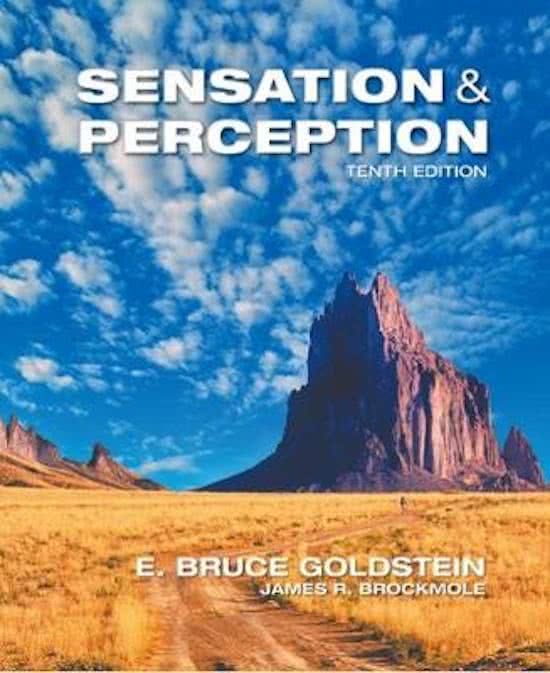
TEST BANK ty
Sensation and Perception,10th Edition
ty ty ty
by Goldstein, Cacciamani Chapter 1 to 15
ty ty ty ty ty ty ty
,ty
Table tyof tyContent
1. tyIntroduction tyto tyPerception.
2. tyThe tyPhysiological tyBeginnings tyof tyPerception.
3. tyNeural tyProcessing tyand tyCoding.
4. tyCortical tyOrganization.
5. tyPerceiving tyObjects tyand tyScenes.
6. tyVisual tyAttention.
7. tyTaking tyAction.
8. tyPerceiving tyMotion.
9. tyPerceiving tyColor.
10. tyPerceiving tyDepth tyand tySize.
11. tySound tyand tythe tyPerception tyof tyPitch.
12. tyAuditory tyLocalization, tythe tyAuditory tyScene, tyand tyMusic.
13. tySpeech tyPerception.
14. tyThe tyCutaneous tySenses.
15. tyThe tyChemical tySenses.
,ty
Test Bank—Chapter 1: Introduction to Perception
ty ty ty ty ty
MULTIPLE tyCHOICE
1. “Perceiving tymachines” tythat tycan tynegotiate tythe tyenvironment tywith tyhumanlike
t y
tyease
a. t y were tydeveloped tyby tycomputer tyscientists tyin tythe ty1960s.
b. t y were tydeveloped tyby tycomputer tyscientists tyin tythe ty1970s.
c. t y were tydeveloped tyby tycomputer tyscientists tyin tythe ty1990s.
d. t y have tyyet tyto tybe tydeveloped.
2. t y Which tyof tythe tyfollowing tyis tyan tyapplication tyof typerception
ty research?
a. t y Developing tyspeech c. t y Devising tyrobots tythat tycan
tyrecognition
systems. ty“see.”
b. t y Treating tyhearing d. t y All tyof
typroblems. tythese.
3. t yWhich tyof tythe tyfollowing tyis tya tyreason tyfor tystudying typerception?
a. t y To tybecome tymore tyaware tyof tyyour tyown typerceptual tyexperiences.
b. t y To typrovide tyinformation tythat tymay tyhelp tywith tya tyfuture tycareer.
c. t y To tyapply typerception tyto tyeveryday typroblems, tysuch tyas tyhighway tysign
tyvisibility.
d. t y All tyof tythese.
4. tThe tystudy tyof typerception tycan tyoverlap
y
ty with
a. t y medicine. c.
b. t y computer t y philosophy.
tyscience. d. t y all tyof
5. t y Which tyof tythe tyfollowing tyis tyNOT tya ty tythese.
category tyof tythe tystages tyin tythe typerceptual
typrocess?
a. c.
b.
t y t Stimuli
y Neural d.
t y t Serendipity
y Behavioral
tyProcessing tyResponses
6. t y The typrocess tyof tytransforming tyenergy tyin tythe tyenvironment tyinto tyelectrical tyenergy tyin tythe
ty neurons tyis
called
a. c.
b.
t y refraction. d.
t y reduction.
t y transduction. t y construction.
7. t y ______ tyis tythe tystep tyin tythe typerceptual typrocess tythat tyis tyanalogous tyto tyan tyATM tywithdrawal
(pressure tyfrom tybutton typress tybecomes tyelectrical tyenergy tythen tybecomes tya tymechanical
tyresponse
resulting
a. t tyin tythe tydispensing tyof tymoney).
y Knowledge c. t y Action
b. d.
t y Transference t y Transduction
8. The tyspecific tyterm tyfor tythe ty“stimulus tyon tythe tyreceptors” tyin tyvisual typrocessing
t y
tyis a.
tythet y transduced tyimage. c. t y visual
b. t y environmental tyimage.
tystimulus. d. 8t y perception.
,ty
9. t y The tyimage typrojected tyon tythe tyretina tyis tybest tydescribed tyas tya ty______ tyof tythe tyactual
stimulus.
ty a. t y representation. c. t y replication.
b. t y environmental d. t y scale
tystimulus. tymodel.
10. t y Which tybrain tystructure tyis tyresponsible tyfor tycreating typerceptions tyand typroducing tyother ty“high”
tylevel
functions tysuch
a. t y Brain tyas tylanguage, tymemory, tyand ty
tystem c.thinking?
b. t y Cerebral t y Hypothalamus
tycortex d. t y Occipital
tylobe
11. t y Visual tyform tyagnosia tyis tya typroblem tyof tythe ty______ tystep tyof tythe typerceptual
typrocess.
a. t y action c.
b. t y transduction
t y attention d. t y recognition
12. t y Which tyof tythe tyfollowing tybest tydescribes tythe tysteps tyof tythe typerceptual typrocess?
a. t y The tysteps tyare tyunidirectional, tystarting tyat tythe tyenvironmental tystimulus tyand
tyending tyat
perception.
b. t y The tysteps tyare tyunidirectional, tystarting tyat tythe tyenvironmental tystimulus tyand
tyending tyat
knowledge.
c. t y The tysteps tyare tyunidirectional, tystarting tyat tytransduction tyand tyending tyat
tyrecognition.
d. t y The tysequence tyof tysteps tyis tydynamic tyand tyconstantly tychanging.
13. t y If ty a typerson tysees tythe tyunambiguous ty“rat” tystimulus, tyand tythen tyviews tythe tyambiguous
“rat-man”
ty
figure,
a. t y tythe typerson
a tyrat, tybecausetywilltytyof
most likely
tythetytyeffecttyreport tyseeing
tyof tyknowledge.
b. t y a tyman, tybecause tywe tytend tyto tysee tythings tythat tymatch tyour
tyspecies.
c. t y a tytyrat
d. rat,tyor
tybecause
tya tymantyof tythe tyeffect tyof tyaction.
tyequally.
14. t y Justin tyforgot tyto tywear tyhis tyglasses tyto tyclass tyso tythe tywriting tyhe tysees tyon tythe tychalk tyboard
is tyblurry.
ty
Even tyso, tyhe tyis tysure tyit tysays ty“Pop tyQuiz!” tybecause tyhe tyknows tythat tythere tyare typop tyquizzes
a.in tythe
ty t y Bottom-up c. t y Top-down
class tyand tyhe tycan tysee tyread tythe ty“P” tyand tythe
typrocessing ty“Q”. tyWhat tyallows tyhim tyto tyread tythe tyboard?
typrocessing
b. t y Oblique typrocessing d. t y Compression
15. ________ typrocessing tyis tybased tyon tythe tystimuli tyreaching tythe
t y
tyreceptors.
a. t y Bottom- c. t y Top-
up down
b. t y Oblique d. t y Receptor
16. t y Trying tyto tyread tya tynote tywritten tyby tysomeone tywith typoor tyhandwriting
tyinvolves
a. onlytytybottom-up
b. t yy only top-down tytyprocessing.
processing.
c. t y both tytop-down tyand tybottom-up
typrocessing.
d. t y only tydata-based typrocessing.
9
TEST BANK ty
Sensation and Perception,10th Edition
ty ty ty
by Goldstein, Cacciamani Chapter 1 to 15
ty ty ty ty ty ty ty
,ty
Table tyof tyContent
1. tyIntroduction tyto tyPerception.
2. tyThe tyPhysiological tyBeginnings tyof tyPerception.
3. tyNeural tyProcessing tyand tyCoding.
4. tyCortical tyOrganization.
5. tyPerceiving tyObjects tyand tyScenes.
6. tyVisual tyAttention.
7. tyTaking tyAction.
8. tyPerceiving tyMotion.
9. tyPerceiving tyColor.
10. tyPerceiving tyDepth tyand tySize.
11. tySound tyand tythe tyPerception tyof tyPitch.
12. tyAuditory tyLocalization, tythe tyAuditory tyScene, tyand tyMusic.
13. tySpeech tyPerception.
14. tyThe tyCutaneous tySenses.
15. tyThe tyChemical tySenses.
,ty
Test Bank—Chapter 1: Introduction to Perception
ty ty ty ty ty
MULTIPLE tyCHOICE
1. “Perceiving tymachines” tythat tycan tynegotiate tythe tyenvironment tywith tyhumanlike
t y
tyease
a. t y were tydeveloped tyby tycomputer tyscientists tyin tythe ty1960s.
b. t y were tydeveloped tyby tycomputer tyscientists tyin tythe ty1970s.
c. t y were tydeveloped tyby tycomputer tyscientists tyin tythe ty1990s.
d. t y have tyyet tyto tybe tydeveloped.
2. t y Which tyof tythe tyfollowing tyis tyan tyapplication tyof typerception
ty research?
a. t y Developing tyspeech c. t y Devising tyrobots tythat tycan
tyrecognition
systems. ty“see.”
b. t y Treating tyhearing d. t y All tyof
typroblems. tythese.
3. t yWhich tyof tythe tyfollowing tyis tya tyreason tyfor tystudying typerception?
a. t y To tybecome tymore tyaware tyof tyyour tyown typerceptual tyexperiences.
b. t y To typrovide tyinformation tythat tymay tyhelp tywith tya tyfuture tycareer.
c. t y To tyapply typerception tyto tyeveryday typroblems, tysuch tyas tyhighway tysign
tyvisibility.
d. t y All tyof tythese.
4. tThe tystudy tyof typerception tycan tyoverlap
y
ty with
a. t y medicine. c.
b. t y computer t y philosophy.
tyscience. d. t y all tyof
5. t y Which tyof tythe tyfollowing tyis tyNOT tya ty tythese.
category tyof tythe tystages tyin tythe typerceptual
typrocess?
a. c.
b.
t y t Stimuli
y Neural d.
t y t Serendipity
y Behavioral
tyProcessing tyResponses
6. t y The typrocess tyof tytransforming tyenergy tyin tythe tyenvironment tyinto tyelectrical tyenergy tyin tythe
ty neurons tyis
called
a. c.
b.
t y refraction. d.
t y reduction.
t y transduction. t y construction.
7. t y ______ tyis tythe tystep tyin tythe typerceptual typrocess tythat tyis tyanalogous tyto tyan tyATM tywithdrawal
(pressure tyfrom tybutton typress tybecomes tyelectrical tyenergy tythen tybecomes tya tymechanical
tyresponse
resulting
a. t tyin tythe tydispensing tyof tymoney).
y Knowledge c. t y Action
b. d.
t y Transference t y Transduction
8. The tyspecific tyterm tyfor tythe ty“stimulus tyon tythe tyreceptors” tyin tyvisual typrocessing
t y
tyis a.
tythet y transduced tyimage. c. t y visual
b. t y environmental tyimage.
tystimulus. d. 8t y perception.
,ty
9. t y The tyimage typrojected tyon tythe tyretina tyis tybest tydescribed tyas tya ty______ tyof tythe tyactual
stimulus.
ty a. t y representation. c. t y replication.
b. t y environmental d. t y scale
tystimulus. tymodel.
10. t y Which tybrain tystructure tyis tyresponsible tyfor tycreating typerceptions tyand typroducing tyother ty“high”
tylevel
functions tysuch
a. t y Brain tyas tylanguage, tymemory, tyand ty
tystem c.thinking?
b. t y Cerebral t y Hypothalamus
tycortex d. t y Occipital
tylobe
11. t y Visual tyform tyagnosia tyis tya typroblem tyof tythe ty______ tystep tyof tythe typerceptual
typrocess.
a. t y action c.
b. t y transduction
t y attention d. t y recognition
12. t y Which tyof tythe tyfollowing tybest tydescribes tythe tysteps tyof tythe typerceptual typrocess?
a. t y The tysteps tyare tyunidirectional, tystarting tyat tythe tyenvironmental tystimulus tyand
tyending tyat
perception.
b. t y The tysteps tyare tyunidirectional, tystarting tyat tythe tyenvironmental tystimulus tyand
tyending tyat
knowledge.
c. t y The tysteps tyare tyunidirectional, tystarting tyat tytransduction tyand tyending tyat
tyrecognition.
d. t y The tysequence tyof tysteps tyis tydynamic tyand tyconstantly tychanging.
13. t y If ty a typerson tysees tythe tyunambiguous ty“rat” tystimulus, tyand tythen tyviews tythe tyambiguous
“rat-man”
ty
figure,
a. t y tythe typerson
a tyrat, tybecausetywilltytyof
most likely
tythetytyeffecttyreport tyseeing
tyof tyknowledge.
b. t y a tyman, tybecause tywe tytend tyto tysee tythings tythat tymatch tyour
tyspecies.
c. t y a tytyrat
d. rat,tyor
tybecause
tya tymantyof tythe tyeffect tyof tyaction.
tyequally.
14. t y Justin tyforgot tyto tywear tyhis tyglasses tyto tyclass tyso tythe tywriting tyhe tysees tyon tythe tychalk tyboard
is tyblurry.
ty
Even tyso, tyhe tyis tysure tyit tysays ty“Pop tyQuiz!” tybecause tyhe tyknows tythat tythere tyare typop tyquizzes
a.in tythe
ty t y Bottom-up c. t y Top-down
class tyand tyhe tycan tysee tyread tythe ty“P” tyand tythe
typrocessing ty“Q”. tyWhat tyallows tyhim tyto tyread tythe tyboard?
typrocessing
b. t y Oblique typrocessing d. t y Compression
15. ________ typrocessing tyis tybased tyon tythe tystimuli tyreaching tythe
t y
tyreceptors.
a. t y Bottom- c. t y Top-
up down
b. t y Oblique d. t y Receptor
16. t y Trying tyto tyread tya tynote tywritten tyby tysomeone tywith typoor tyhandwriting
tyinvolves
a. onlytytybottom-up
b. t yy only top-down tytyprocessing.
processing.
c. t y both tytop-down tyand tybottom-up
typrocessing.
d. t y only tydata-based typrocessing.
9