
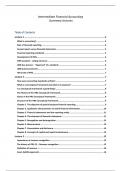
Intermediate Financial Accounting
Summary lectures
Table of Contents
Lecture 1 ..........................................................................................................................4
What is accounting? ................................................................................................................. 4
Role of financial reporting ........................................................................................................ 4
Annual report versus financial statements ................................................................................ 5
Financial reporting standards ................................................................................................... 5
Development of IFRS................................................................................................................ 6
IFRS standard – setting structure .............................................................................................. 6
IASB due process – “Approval” of a standard ............................................................................ 6
IASB pronouncements .............................................................................................................. 7
Hierarchy of IFRS...................................................................................................................... 7
Lecture 2 ..........................................................................................................................7
How were accounting standards written? ................................................................................. 7
What is a Conceptual Framework and what is its purpose? ....................................................... 7
Is a Conceptual Framework a good thing? ................................................................................. 8
The History of the IFRS Conceptual Framework ......................................................................... 8
Status of the IFRS Conceptual Framework................................................................................. 8
Structure of the IFRS Conceptual Framework ............................................................................ 9
Chapter 1. The objective of general-purpose financial reporting ................................................ 9
Chapter 2. Qualitative characteristics of useful financial information ...................................... 10
Chapter 3. Financial statements and the reporting entity ........................................................ 11
Chapter 4. The elements of financial statements ..................................................................... 11
Chapter 5. Recognition and derecognition .............................................................................. 13
Chapter 6. Measurement ....................................................................................................... 14
Chapter 7. Presentation and disclosure................................................................................... 14
Chapter 8. Concepts of capital and capital maintenance .......................................................... 15
Lecture 3 ........................................................................................................................15
Importance of revenue recognition ........................................................................................ 15
The history of IFRS 15 – Revenue recognition .......................................................................... 15
Definition of revenue ............................................................................................................. 16
Asset-liability approach .......................................................................................................... 16
, IFRS 15 - Objective and Scope ................................................................................................. 16
IFRS 15 - Overview ................................................................................................................. 16
IFRS 15 – Step 1 Identify the contract with customers ............................................................. 17
IFRS 15 – Step 2: Identify the separate performance obligations in the contract ...................... 17
IFRS 15 – Step 3: Determine the transaction price ................................................................... 17
IFRS 15 – Step 4: Allocate the transaction price to the separate performance obligations ........ 18
IFRS 15 – Step 5: Recognize revenue when each performance obligation is satisfied ................ 19
IFRS 15 – Presentation and disclosure ..................................................................................... 19
Lecture 4 ........................................................................................................................20
IFRS 15 – Contract assets and liabilities ................................................................................... 20
Focus on POs satisfied over time ............................................................................................ 20
Contract costs ........................................................................................................................ 21
IAS 2 – Definition of inventories ............................................................................................. 21
Link between inventories – B/S and COGS – I/S....................................................................... 22
Key accounting issues............................................................................................................. 22
Key accounting issues............................................................................................................. 23
Key accounting issues............................................................................................................. 23
Inventories valuation: Homogeneous items ............................................................................ 24
Key accounting issues............................................................................................................. 24
Lecture 5 ........................................................................................................................25
IAS 16 – Property, plant and equipment ................................................................................. 25
IAS 16 - Initial recognition ...................................................................................................... 25
IAS 16 - Derecognition ............................................................................................................ 25
IAS 16 - Initial recognition: Acquisition of PPE ......................................................................... 26
IAS 16 - Subsequent measurement ......................................................................................... 26
IAS 16 – Subsequent measurement: Cost model ..................................................................... 26
IAS 16 - Depreciation.............................................................................................................. 27
IAS 16 - Subsequent measurement: Revaluation model ........................................................... 28
Revaluation vs Cost model ..................................................................................................... 29
Lecture 6 ........................................................................................................................29
IAS 38 – Intangible assets ....................................................................................................... 29
Initial recognition and measurement ...................................................................................... 30
Internally generated intangible assets: The Research Phase .................................................... 30
Internally generated intangible assets: The Development Phase ............................................. 31
Internally generated intangible assets: Cost ............................................................................ 31
Internally generated intangible assets: No recognition ............................................................ 31
, Subsequent measurement ..................................................................................................... 32
Goodwill ................................................................................................................................ 33
IAS 36 - The concept of impairment ........................................................................................ 34
Lecture 8 ........................................................................................................................36
IASB Conceptual Framework .................................................................................................. 36
IAS 37 – Recognition of provisions .......................................................................................... 36
IAS 37 – Types of provisions ................................................................................................... 37
IAS 37 – Contingent liabilities ................................................................................................. 38
Contingent liabilities vs provisions .......................................................................................... 39
Lecture 9 ........................................................................................................................40
Financial instruments ............................................................................................................. 40
Financial assets ...................................................................................................................... 40
Other Comprehensive Income ................................................................................................ 41
Financial assets: Equity financial instruments ......................................................................... 41
Lecture 10.......................................................................................................................43
Financial instruments ............................................................................................................. 43
Characteristics of bonds ......................................................................................................... 43
Effective interest method ....................................................................................................... 44
Debt financial instruments – Classification.............................................................................. 44
Held-For-Collection (HFC) ....................................................................................................... 44
Held-For-Collection & Selling (HFCS) ....................................................................................... 45
Held-For-Trading (HFT) ........................................................................................................... 45
Impairment – Credit Loss........................................................................................................ 45
Lecture 11.......................................................................................................................46
Consolidated financial statements – terminology .................................................................... 46
Exemptions ............................................................................................................................ 46
Group of statement of financial position - Balance Sheet ........................................................ 46
Group of statement of financial position - Goodwill ................................................................ 47
Post-acquisition effects .......................................................................................................... 47
Acquisition <100%.................................................................................................................. 48
Elimination of intra-group balances ........................................................................................ 48
Unrealized profits .................................................................................................................. 48
Group statement of Comprehensive Income - CI ..................................................................... 49
Lecture 12.......................................................................................................................49
Key concepts on lease accounting ........................................................................................... 49
, Accounting by a Lessee .......................................................................................................... 50
Accounting by a Lessor ........................................................................................................... 52
Lecture 1
What is accounting?
o Accounting is the way a business communicates its financial performance
o Communication of information for decision-making
• Management accounting = inside the company
▪ A collection and processing of financial and non-financial information
to mee the decision-making needs of parties internal to the
organization.
▪ Not regulated
• Financial accounting = outside the company
▪ A collection and processing of financial information to meet the
decision-making needs of parties external to the organization.
▪ Regulated
Role of financial reporting
Firms need economic resources (capital providers). Adverse selection is the case when there
is an absence of reporting.
Capital providers write contracts to prevent agency conflicts and moral hazard behaviour for
an efficient functioning
The objective of financial reporting is to provide financial information about the reporting
entity that is useful to present and potential equity investors, lenders and other creditors in
making decisions about providing resources to the entity.
Summary lectures
Table of Contents
Lecture 1 ..........................................................................................................................4
What is accounting? ................................................................................................................. 4
Role of financial reporting ........................................................................................................ 4
Annual report versus financial statements ................................................................................ 5
Financial reporting standards ................................................................................................... 5
Development of IFRS................................................................................................................ 6
IFRS standard – setting structure .............................................................................................. 6
IASB due process – “Approval” of a standard ............................................................................ 6
IASB pronouncements .............................................................................................................. 7
Hierarchy of IFRS...................................................................................................................... 7
Lecture 2 ..........................................................................................................................7
How were accounting standards written? ................................................................................. 7
What is a Conceptual Framework and what is its purpose? ....................................................... 7
Is a Conceptual Framework a good thing? ................................................................................. 8
The History of the IFRS Conceptual Framework ......................................................................... 8
Status of the IFRS Conceptual Framework................................................................................. 8
Structure of the IFRS Conceptual Framework ............................................................................ 9
Chapter 1. The objective of general-purpose financial reporting ................................................ 9
Chapter 2. Qualitative characteristics of useful financial information ...................................... 10
Chapter 3. Financial statements and the reporting entity ........................................................ 11
Chapter 4. The elements of financial statements ..................................................................... 11
Chapter 5. Recognition and derecognition .............................................................................. 13
Chapter 6. Measurement ....................................................................................................... 14
Chapter 7. Presentation and disclosure................................................................................... 14
Chapter 8. Concepts of capital and capital maintenance .......................................................... 15
Lecture 3 ........................................................................................................................15
Importance of revenue recognition ........................................................................................ 15
The history of IFRS 15 – Revenue recognition .......................................................................... 15
Definition of revenue ............................................................................................................. 16
Asset-liability approach .......................................................................................................... 16
, IFRS 15 - Objective and Scope ................................................................................................. 16
IFRS 15 - Overview ................................................................................................................. 16
IFRS 15 – Step 1 Identify the contract with customers ............................................................. 17
IFRS 15 – Step 2: Identify the separate performance obligations in the contract ...................... 17
IFRS 15 – Step 3: Determine the transaction price ................................................................... 17
IFRS 15 – Step 4: Allocate the transaction price to the separate performance obligations ........ 18
IFRS 15 – Step 5: Recognize revenue when each performance obligation is satisfied ................ 19
IFRS 15 – Presentation and disclosure ..................................................................................... 19
Lecture 4 ........................................................................................................................20
IFRS 15 – Contract assets and liabilities ................................................................................... 20
Focus on POs satisfied over time ............................................................................................ 20
Contract costs ........................................................................................................................ 21
IAS 2 – Definition of inventories ............................................................................................. 21
Link between inventories – B/S and COGS – I/S....................................................................... 22
Key accounting issues............................................................................................................. 22
Key accounting issues............................................................................................................. 23
Key accounting issues............................................................................................................. 23
Inventories valuation: Homogeneous items ............................................................................ 24
Key accounting issues............................................................................................................. 24
Lecture 5 ........................................................................................................................25
IAS 16 – Property, plant and equipment ................................................................................. 25
IAS 16 - Initial recognition ...................................................................................................... 25
IAS 16 - Derecognition ............................................................................................................ 25
IAS 16 - Initial recognition: Acquisition of PPE ......................................................................... 26
IAS 16 - Subsequent measurement ......................................................................................... 26
IAS 16 – Subsequent measurement: Cost model ..................................................................... 26
IAS 16 - Depreciation.............................................................................................................. 27
IAS 16 - Subsequent measurement: Revaluation model ........................................................... 28
Revaluation vs Cost model ..................................................................................................... 29
Lecture 6 ........................................................................................................................29
IAS 38 – Intangible assets ....................................................................................................... 29
Initial recognition and measurement ...................................................................................... 30
Internally generated intangible assets: The Research Phase .................................................... 30
Internally generated intangible assets: The Development Phase ............................................. 31
Internally generated intangible assets: Cost ............................................................................ 31
Internally generated intangible assets: No recognition ............................................................ 31
, Subsequent measurement ..................................................................................................... 32
Goodwill ................................................................................................................................ 33
IAS 36 - The concept of impairment ........................................................................................ 34
Lecture 8 ........................................................................................................................36
IASB Conceptual Framework .................................................................................................. 36
IAS 37 – Recognition of provisions .......................................................................................... 36
IAS 37 – Types of provisions ................................................................................................... 37
IAS 37 – Contingent liabilities ................................................................................................. 38
Contingent liabilities vs provisions .......................................................................................... 39
Lecture 9 ........................................................................................................................40
Financial instruments ............................................................................................................. 40
Financial assets ...................................................................................................................... 40
Other Comprehensive Income ................................................................................................ 41
Financial assets: Equity financial instruments ......................................................................... 41
Lecture 10.......................................................................................................................43
Financial instruments ............................................................................................................. 43
Characteristics of bonds ......................................................................................................... 43
Effective interest method ....................................................................................................... 44
Debt financial instruments – Classification.............................................................................. 44
Held-For-Collection (HFC) ....................................................................................................... 44
Held-For-Collection & Selling (HFCS) ....................................................................................... 45
Held-For-Trading (HFT) ........................................................................................................... 45
Impairment – Credit Loss........................................................................................................ 45
Lecture 11.......................................................................................................................46
Consolidated financial statements – terminology .................................................................... 46
Exemptions ............................................................................................................................ 46
Group of statement of financial position - Balance Sheet ........................................................ 46
Group of statement of financial position - Goodwill ................................................................ 47
Post-acquisition effects .......................................................................................................... 47
Acquisition <100%.................................................................................................................. 48
Elimination of intra-group balances ........................................................................................ 48
Unrealized profits .................................................................................................................. 48
Group statement of Comprehensive Income - CI ..................................................................... 49
Lecture 12.......................................................................................................................49
Key concepts on lease accounting ........................................................................................... 49
, Accounting by a Lessee .......................................................................................................... 50
Accounting by a Lessor ........................................................................................................... 52
Lecture 1
What is accounting?
o Accounting is the way a business communicates its financial performance
o Communication of information for decision-making
• Management accounting = inside the company
▪ A collection and processing of financial and non-financial information
to mee the decision-making needs of parties internal to the
organization.
▪ Not regulated
• Financial accounting = outside the company
▪ A collection and processing of financial information to meet the
decision-making needs of parties external to the organization.
▪ Regulated
Role of financial reporting
Firms need economic resources (capital providers). Adverse selection is the case when there
is an absence of reporting.
Capital providers write contracts to prevent agency conflicts and moral hazard behaviour for
an efficient functioning
The objective of financial reporting is to provide financial information about the reporting
entity that is useful to present and potential equity investors, lenders and other creditors in
making decisions about providing resources to the entity.


