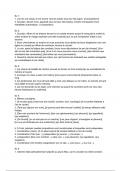
Describe and evaluate the cognitive behaviour therapy for depression.
(16 marks).
Cognitive behavioural therapy (CBT) is a common psychological treatment for depression
and is based cognitive and behavioural techniques. CBT starts with an assessment, in which
the patient and therapist identify the patient’s problem and identify where there might be
negative and irrational thoughts that will benefit from challenge. CBT then aims is to replace
these thoughts them with more effective behaviours (positive one). CBT uses both Becks
and Ellis theories to understand why people may be depressed.
If a therapist uses Becks cognitive therapy, they will help the patient to identify the negative
thoughts in relation to themselves, their world and future from the ‘negative triad.’ Once
identified these thoughts are challenged by the patient taking an active role in their
treatment. Patients are encouraged to test the reality of their irrational beliefs by doing
homework, to challenge and test their negative thoughts. From this the therapist can
produce evidence to prove the patient’s beliefs incorrect.
Ellis rational emotive therapy (REBT) extends the ABC model to an ABCDE to include D for
dispute and E for effect. The main idea is to identify and challenge irrational thoughts, but
with Ellis theory this is achieved through dispute. The two forms of arguments are empirical
and logical arguments. The aim of the argument is to change the irrational belief and so
break the link between negative life events and depression.
Therapists also encourage depressed patients to engage in more enjoyable activities. This is
called behavioural activation provides more evidence for the irrational nature of beliefs.
A strength of CBT is research evidence which suggests its effective. For example, research by
March et al. (2007) compared the effects of CBT with antidepressant drugs and a
combination of the two in 327 depressed adolescents. They found after 36 weeks, 81% of
CBT group, 81% of the antidepressant group and 86% of the CBT + antidepressant group
were significantly improved. This show that CBT is just as effective as medication and that a
combination of both treatments may be more effective. Therefore, this is a strength for CBT
as its good case for making CBT the first choice of treatments in public health care systems
like NHS.
Another strength of CBT is unlike other drug therapies it doesn’t have no side effects. For
example, drugs can have severe side effects affecting the heart and have even be linked to
suicide. Some drug therapies require patients to avoid certain foods such as cheese and
wine, which can have adverse and fatal reactions. However, by using CBT there is no such
risks involved. Thus, for patients suffering from health conditions or those unable to make
such lifestyle changes, CBT may be more appropriate and effective for them.
A limitation of CBT is that’s it ineffective for the most severe cases of depression. For
example, in most cases depression can be so severe that patients cannot motivate
themselves to take on the hard-cognitive work required for CBT. When this is the case
people generally tend to take antidepressants and then when their symptoms are slightly
(16 marks).
Cognitive behavioural therapy (CBT) is a common psychological treatment for depression
and is based cognitive and behavioural techniques. CBT starts with an assessment, in which
the patient and therapist identify the patient’s problem and identify where there might be
negative and irrational thoughts that will benefit from challenge. CBT then aims is to replace
these thoughts them with more effective behaviours (positive one). CBT uses both Becks
and Ellis theories to understand why people may be depressed.
If a therapist uses Becks cognitive therapy, they will help the patient to identify the negative
thoughts in relation to themselves, their world and future from the ‘negative triad.’ Once
identified these thoughts are challenged by the patient taking an active role in their
treatment. Patients are encouraged to test the reality of their irrational beliefs by doing
homework, to challenge and test their negative thoughts. From this the therapist can
produce evidence to prove the patient’s beliefs incorrect.
Ellis rational emotive therapy (REBT) extends the ABC model to an ABCDE to include D for
dispute and E for effect. The main idea is to identify and challenge irrational thoughts, but
with Ellis theory this is achieved through dispute. The two forms of arguments are empirical
and logical arguments. The aim of the argument is to change the irrational belief and so
break the link between negative life events and depression.
Therapists also encourage depressed patients to engage in more enjoyable activities. This is
called behavioural activation provides more evidence for the irrational nature of beliefs.
A strength of CBT is research evidence which suggests its effective. For example, research by
March et al. (2007) compared the effects of CBT with antidepressant drugs and a
combination of the two in 327 depressed adolescents. They found after 36 weeks, 81% of
CBT group, 81% of the antidepressant group and 86% of the CBT + antidepressant group
were significantly improved. This show that CBT is just as effective as medication and that a
combination of both treatments may be more effective. Therefore, this is a strength for CBT
as its good case for making CBT the first choice of treatments in public health care systems
like NHS.
Another strength of CBT is unlike other drug therapies it doesn’t have no side effects. For
example, drugs can have severe side effects affecting the heart and have even be linked to
suicide. Some drug therapies require patients to avoid certain foods such as cheese and
wine, which can have adverse and fatal reactions. However, by using CBT there is no such
risks involved. Thus, for patients suffering from health conditions or those unable to make
such lifestyle changes, CBT may be more appropriate and effective for them.
A limitation of CBT is that’s it ineffective for the most severe cases of depression. For
example, in most cases depression can be so severe that patients cannot motivate
themselves to take on the hard-cognitive work required for CBT. When this is the case
people generally tend to take antidepressants and then when their symptoms are slightly