Malware Analysis and Protection
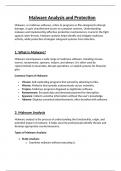
Malware, or malicious software, refers to programs or files designed to disrupt,
damage, or gain unauthorized access to computer systems. Understanding
malware and implementing effective protection mechanisms is crucial in the fight
against cyber threats. Malware analysis helps identify and mitigate malicious
activity, while protection strategies safeguard systems from infection.
1. What is Malware?
Malware encompasses a wide range of malicious software, including viruses,
worms, ransomware, spyware, trojans, and adware. It is often used by
cybercriminals to steal data, disrupt operations, or exploit systems for financial
gain.
Common Types of Malware:
Viruses: Self-replicating programs that spread by attaching to files.
Worms: Malware that spreads autonomously across networks.
Trojans: Malicious programs disguised as legitimate software.
Ransomware: Encrypts data and demands payment for decryption.
Spyware: Collects sensitive information without the user’s knowledge.
Adware: Displays unwanted advertisements, often bundled with software.
2. Malware Analysis
Malware analysis is the process of understanding the functionality, origin, and
potential impact of malware. It helps security professionals identify threats and
develop appropriate countermeasures.
Types of Malware Analysis:
1. Static Analysis:
o Examines malware without executing it.
Malware, or malicious software, refers to programs or files designed to disrupt,
damage, or gain unauthorized access to computer systems. Understanding
malware and implementing effective protection mechanisms is crucial in the fight
against cyber threats. Malware analysis helps identify and mitigate malicious
activity, while protection strategies safeguard systems from infection.
1. What is Malware?
Malware encompasses a wide range of malicious software, including viruses,
worms, ransomware, spyware, trojans, and adware. It is often used by
cybercriminals to steal data, disrupt operations, or exploit systems for financial
gain.
Common Types of Malware:
Viruses: Self-replicating programs that spread by attaching to files.
Worms: Malware that spreads autonomously across networks.
Trojans: Malicious programs disguised as legitimate software.
Ransomware: Encrypts data and demands payment for decryption.
Spyware: Collects sensitive information without the user’s knowledge.
Adware: Displays unwanted advertisements, often bundled with software.
2. Malware Analysis
Malware analysis is the process of understanding the functionality, origin, and
potential impact of malware. It helps security professionals identify threats and
develop appropriate countermeasures.
Types of Malware Analysis:
1. Static Analysis:
o Examines malware without executing it.