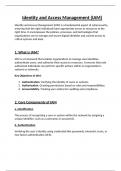
Identity and Access Management (IAM)
Identity and Access Management (IAM) is a fundamental aspect of cybersecurity,
ensuring that the right individuals have appropriate access to resources at the
right time. It encompasses the policies, processes, and technologies that
organizations use to manage and secure digital identities and control access to
critical systems and data.
1. What is IAM?
IAM is a framework that enables organizations to manage user identities,
authenticate users, and authorize their access to resources. It ensures that only
authorized individuals can perform specific actions within an organization's
systems or networks.
Key Objectives of IAM:
1. Authentication: Verifying the identity of users or systems.
2. Authorization: Granting permissions based on roles and responsibilities.
3. Accountability: Tracking user actions for auditing and compliance.
2. Core Components of IAM
a. Identification
The process of recognizing a user or system within the network by assigning a
unique identifier, such as a username or account ID.
b. Authentication
Verifying the user’s identity using credentials like passwords, biometric scans, or
two-factor authentication (2FA).
, c. Authorization
Determining the resources and actions a user is permitted to access based on
predefined policies and roles.
d. Monitoring and Auditing
Keeping track of user activities to detect suspicious behavior, ensure compliance,
and improve security.
3. Types of IAM Systems
a. Single Sign-On (SSO)
Allows users to log in once and access multiple systems without re-authenticating.
Example: Logging into multiple Google services (Gmail, Drive, YouTube)
with one account.
b. Multi-Factor Authentication (MFA)
Requires users to provide multiple forms of verification, such as a password and a
fingerprint.
Example: Logging into a banking app using a PIN and an OTP.
c. Privileged Access Management (PAM)
Manages and monitors access for users with elevated permissions, such as system
administrators.
Example: Restricting access to critical servers or databases.
d. Federated Identity Management (FIM)
Allows users to access resources across multiple organizations using a single
identity.
Identity and Access Management (IAM) is a fundamental aspect of cybersecurity,
ensuring that the right individuals have appropriate access to resources at the
right time. It encompasses the policies, processes, and technologies that
organizations use to manage and secure digital identities and control access to
critical systems and data.
1. What is IAM?
IAM is a framework that enables organizations to manage user identities,
authenticate users, and authorize their access to resources. It ensures that only
authorized individuals can perform specific actions within an organization's
systems or networks.
Key Objectives of IAM:
1. Authentication: Verifying the identity of users or systems.
2. Authorization: Granting permissions based on roles and responsibilities.
3. Accountability: Tracking user actions for auditing and compliance.
2. Core Components of IAM
a. Identification
The process of recognizing a user or system within the network by assigning a
unique identifier, such as a username or account ID.
b. Authentication
Verifying the user’s identity using credentials like passwords, biometric scans, or
two-factor authentication (2FA).
, c. Authorization
Determining the resources and actions a user is permitted to access based on
predefined policies and roles.
d. Monitoring and Auditing
Keeping track of user activities to detect suspicious behavior, ensure compliance,
and improve security.
3. Types of IAM Systems
a. Single Sign-On (SSO)
Allows users to log in once and access multiple systems without re-authenticating.
Example: Logging into multiple Google services (Gmail, Drive, YouTube)
with one account.
b. Multi-Factor Authentication (MFA)
Requires users to provide multiple forms of verification, such as a password and a
fingerprint.
Example: Logging into a banking app using a PIN and an OTP.
c. Privileged Access Management (PAM)
Manages and monitors access for users with elevated permissions, such as system
administrators.
Example: Restricting access to critical servers or databases.
d. Federated Identity Management (FIM)
Allows users to access resources across multiple organizations using a single
identity.