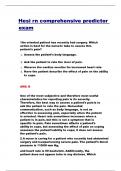
HESI RN COMPREHENSIVE PREDICTOR EXAM.1
m m m m m
00% CORRECT ANS.
m m
MUST READ. m
,HESI RN COMPREHENSIVE PREDICTOR EXAM
m m m m
An oriented patient has recently had surgery. Which action is best for the nurs
m m m m m m m m m m m m m
e to take to assess this patient’s pain?
m m m m m m m
a. Assess the patient’s body language. m m m m
b. Ask the patient to rate the level of pain.
m m m m m m m m
c. Observe the cardiac monitor for increased heart rate.
m m m m m m m
d. Have the patient describe the effect of pain on the ability to cope.
m m m m m m m m m m m m
ANS: B m
One of the most subjective and therefore most useful characteristics for report
m m m m m m m m m m m
ing pain is its severity. Therefore, the best way to assess a patient’s pain is to
m m m m m m m m m m m m m m m m
ask the patient to rate the pain. Nonverbal communication, such as body lang
m m m m m m m m m m m m
uage, is not as effective in assessing pain, especially when the patient is orient
m m m m m m m m m m m m m
ed. Heart rate sometimes increases when a patient is in pain, but this is not a s
m m m m m m m m m m m m m m m m
ymptom that is specific to pain. Pain sometimes affects a patient’s ability to c
m m m m m m m m m m m m m
ope, but assessing the effect of pain on coping assesses the patient’s ability to
m m m m m m m m m m m m m m
cope; it does not assess the patient’s pain.
m m m m m m m
2.A nurse is caring for a patient who recently had abdominal surgery and is experienci
m m m m m m m m m m m m m m
ng severe pain. The patient’s blood pressure is 110/60 mm Hg,
m m m m m m m m m m
and heart rate is 60 beats/min. Additionally, the patient does not appear to
m m m m m m m m m m m m m
be in any distress. Which response by the nurse is most therapeutic?
m m m m m m m m m m m
“Your vitals do not show that you are having pain; can you describe
m m m m m m m m m m m m
a. your pain?” m
b. “OK, I will go get you some narcotic pain relievers immediately.”
m m m m m m m m m m
c. “What would you like to try to alleviate your pain?”
m m m m m m m m m
d. “You do not look like you are in pain.”
m m m m m m m m
ANS: C
mm m
Be sure the patient is a partner in making decisions about the best approaches
m m m m m m m m m m m m m
mfor managing pain. A patient knows the most about his or her pain and is an 205
m m m m m m m m m m m m m m m m
important partner in selecting successful pain therapies. The nurse must belie
m m m m m m m m m m
ve that a patient is in pain whenever the patient reports that he or she is in
m m m m m m m m m m m m m m m m
, pain, even if the patient does not appear to be in pain. The nurse must be care
m m m m m m m m m m m m m m m m
ful to not judge the patient based on vital signs or nonverbal communication a
m m m m m m m m m m m m m
nd must not assume that the patient is seeking narcotics. The patient is a partn
m m m m m m m m m m m m m m
er in pain management, so going to get narcotics to treat the pain without con
m m m m m m m m m m m m m m
sulting with the patient first is not appropriate.
m m m m m m m
3.A nurse teaches the patient about the gate control theory. Which statement m
m m m m m m m m m m m m
ade by a patient reflects a correct understanding about the relationship
m m m m m m m m m m
between the gate control theory of pain and the use of meditation to relieve pai
m m m m m m m m m m m m m m
n?
“Meditation controls pain by blocking pain impulses from coming m m m m m m m m
a. through the gate.” m m
“Meditation alters the chemical composition of pain neuroregulators, m m m m m m m
b. which closes the gate.” m m m
“Meditation will help me sleep through the pain because it opens the m m m m m m m m m m m
c. gate.”
d. “Meditation stops the occurrence of pain stimuli.” m m m m m m
ANS: A m
According to this theory, gating mechanisms located along the central nervou
m m m m m m m m m m
s system regulate or block pain impulses. Pain impulses pass through when a
m m m m m m m m m m m m m
gate is open and are blocked when a gate is closed.
m m m m m m m m m m
Nonpharmacologic pain- m
relief measures, such as meditation, work byclosing the gates, which keeps
m m m m m m m m m m m
mpain impulses from coming through.
m m m m
Meditation does not open pain gates or stop pain from occurring. Meditation al
m m m m m m m m m m m m
so does not have an effect on pain neuroregulators.
m m m m m m m m
4.A nurse is planning care for an older-
m m m m m m m
adult patient who is experiencing pain. Which statement made by the nurse indi
m m m m m m m m m m m m
cates the supervising nurse needs to
m m m m m
follow up? m
a. “As adults age, their ability to perceive pain decreases.”
m m m m m m m m
“Older patients may have low serum albumin in their blood, causing
m m m m m m m m m m
b. toxic effects of analgesic drugs.”
m m m m
“Patients who have dementia probably experience pain, and their pain
m m m m m m m m m
c. s not always well controlled.”
m m m m
205
“It is safe to administer opioids to o
m m m m m m m
lder adults as long as you start with
m m m m m m m
m m m m m
00% CORRECT ANS.
m m
MUST READ. m
,HESI RN COMPREHENSIVE PREDICTOR EXAM
m m m m
An oriented patient has recently had surgery. Which action is best for the nurs
m m m m m m m m m m m m m
e to take to assess this patient’s pain?
m m m m m m m
a. Assess the patient’s body language. m m m m
b. Ask the patient to rate the level of pain.
m m m m m m m m
c. Observe the cardiac monitor for increased heart rate.
m m m m m m m
d. Have the patient describe the effect of pain on the ability to cope.
m m m m m m m m m m m m
ANS: B m
One of the most subjective and therefore most useful characteristics for report
m m m m m m m m m m m
ing pain is its severity. Therefore, the best way to assess a patient’s pain is to
m m m m m m m m m m m m m m m m
ask the patient to rate the pain. Nonverbal communication, such as body lang
m m m m m m m m m m m m
uage, is not as effective in assessing pain, especially when the patient is orient
m m m m m m m m m m m m m
ed. Heart rate sometimes increases when a patient is in pain, but this is not a s
m m m m m m m m m m m m m m m m
ymptom that is specific to pain. Pain sometimes affects a patient’s ability to c
m m m m m m m m m m m m m
ope, but assessing the effect of pain on coping assesses the patient’s ability to
m m m m m m m m m m m m m m
cope; it does not assess the patient’s pain.
m m m m m m m
2.A nurse is caring for a patient who recently had abdominal surgery and is experienci
m m m m m m m m m m m m m m
ng severe pain. The patient’s blood pressure is 110/60 mm Hg,
m m m m m m m m m m
and heart rate is 60 beats/min. Additionally, the patient does not appear to
m m m m m m m m m m m m m
be in any distress. Which response by the nurse is most therapeutic?
m m m m m m m m m m m
“Your vitals do not show that you are having pain; can you describe
m m m m m m m m m m m m
a. your pain?” m
b. “OK, I will go get you some narcotic pain relievers immediately.”
m m m m m m m m m m
c. “What would you like to try to alleviate your pain?”
m m m m m m m m m
d. “You do not look like you are in pain.”
m m m m m m m m
ANS: C
mm m
Be sure the patient is a partner in making decisions about the best approaches
m m m m m m m m m m m m m
mfor managing pain. A patient knows the most about his or her pain and is an 205
m m m m m m m m m m m m m m m m
important partner in selecting successful pain therapies. The nurse must belie
m m m m m m m m m m
ve that a patient is in pain whenever the patient reports that he or she is in
m m m m m m m m m m m m m m m m
, pain, even if the patient does not appear to be in pain. The nurse must be care
m m m m m m m m m m m m m m m m
ful to not judge the patient based on vital signs or nonverbal communication a
m m m m m m m m m m m m m
nd must not assume that the patient is seeking narcotics. The patient is a partn
m m m m m m m m m m m m m m
er in pain management, so going to get narcotics to treat the pain without con
m m m m m m m m m m m m m m
sulting with the patient first is not appropriate.
m m m m m m m
3.A nurse teaches the patient about the gate control theory. Which statement m
m m m m m m m m m m m m
ade by a patient reflects a correct understanding about the relationship
m m m m m m m m m m
between the gate control theory of pain and the use of meditation to relieve pai
m m m m m m m m m m m m m m
n?
“Meditation controls pain by blocking pain impulses from coming m m m m m m m m
a. through the gate.” m m
“Meditation alters the chemical composition of pain neuroregulators, m m m m m m m
b. which closes the gate.” m m m
“Meditation will help me sleep through the pain because it opens the m m m m m m m m m m m
c. gate.”
d. “Meditation stops the occurrence of pain stimuli.” m m m m m m
ANS: A m
According to this theory, gating mechanisms located along the central nervou
m m m m m m m m m m
s system regulate or block pain impulses. Pain impulses pass through when a
m m m m m m m m m m m m m
gate is open and are blocked when a gate is closed.
m m m m m m m m m m
Nonpharmacologic pain- m
relief measures, such as meditation, work byclosing the gates, which keeps
m m m m m m m m m m m
mpain impulses from coming through.
m m m m
Meditation does not open pain gates or stop pain from occurring. Meditation al
m m m m m m m m m m m m
so does not have an effect on pain neuroregulators.
m m m m m m m m
4.A nurse is planning care for an older-
m m m m m m m
adult patient who is experiencing pain. Which statement made by the nurse indi
m m m m m m m m m m m m
cates the supervising nurse needs to
m m m m m
follow up? m
a. “As adults age, their ability to perceive pain decreases.”
m m m m m m m m
“Older patients may have low serum albumin in their blood, causing
m m m m m m m m m m
b. toxic effects of analgesic drugs.”
m m m m
“Patients who have dementia probably experience pain, and their pain
m m m m m m m m m
c. s not always well controlled.”
m m m m
205
“It is safe to administer opioids to o
m m m m m m m
lder adults as long as you start with
m m m m m m m