

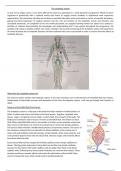
The Lymphatic system
As part of my college course, I have been offered the chance to participate in a work placement programme. Which has been
organised in partnership with a national charity that works to engage science students in aspirational work experience
opportunities. This placement will allow me to observe specialist laboratory work and practice a variety of scientific techniques,
gaining first-hand experience of medical research into the role and function of the lymphatic system and disorders and
associated treatments. On completion of my one-month placement; my assigned learning mentor has asked me to produce a
portfolio of evidence demonstrating the knowledge and understanding that I have gained throughout the programme. My
portfolio will contain a detailed ‘patient case study’ relating to the normal functioning of the lymphatic system and impairment
of normal function due to lymphatic diseases and the treatments that can be prescribed in order to recover from the effects of
lymphatic diseases.
What does the Lymphatic system do?
The immune system includes the lymphatic system. It has many functions such as the Removal of interstitial fluid from tissues,
Maintenance of hydrostatic pressure and absorption of fats from the digestive system. I will now go through each function in
detail.
Removal of interstitial fluid from tissues
The lymphatic system is a vital part of the body that helps maintain a healthy balance of
fluids. It collects and returns the fluids to the blood system. Together, lymphatic veins,
tissues, organs, and glands remove lymph, a watery fluid, from all parts of the body. The
fluid found in between cells in tissues is known as interstitial fluid. Also known as tissue
fluid. When interstitial fluid starts to accumulate, it is taken out by lymphatic vessels and
then returns to the blood. It is referred to as lymph once it enters the lymph capillaries.
This process helps maintain a healthy blood pressure and prevents oedema. The source of
the substance is plasma that was ejected from blood capillaries at the arterial end. It
cleans cells and facilitates material exchange. Carbon dioxide, other waste products, and
some proteins disperse from cells into tissue fluid, whereas oxygen and nutrients diffuse
from tissue fluid into cells.
Excess tissue fluid that has escaped from blood capillaries enters lymph capillaries at
tissues. The big protein molecules in tissue fluid can also flow into lymph capillaries
because the tiny holes in the lymph capillary walls are larger than those in the blood
Slide player
capillary walls. Following that, these protein molecules are removed from tissues. These
proteins would exert osmotic effects and restrict the elimination of tissue fluid if they
weren't transported away, which would result in swelling (oedema).
, Maintenance of Hydrostatic Pressure
The hydrostatic pressure is high enough to drive fluid out of a capillary when blood is at the arterial end of the capillary. As
proteins are too big to fit through the capillary wall pores, they remain in the blood. A water potential gradient (osmotic
pressure) between the capillary fluid and the tissue fluid is produced by the increased protein content. Because of the high
hydrostatic pressure, which is greater than the osmotic pressure, water is moving out of capillaries and into tissue fluid.
The hydrostatic pressure inside the capillary decreases at the venous end. Water starts to flow back into the capillary from the
tissue fluid because the water potential gradient between the capillary and the tissue fluid is the same as it was at the arterial
end. Overall, the capillary loses more fluid than it gains, leaving tissue fluid behind to hydrate cells. Around 90% of the fluid lost
at the capillary's arterial end is reabsorbed at its venous end. The remaining 10% remains as tissue fluid, eventually getting
gathered by lymph vessels and sent back into the circulatory system.
Say media content
Absorption of Fats
The small intestine's villi must have lymphatic capillaries, also known as lacteals, in order to absorb dietary lipids. Lacteals play a
crucial role in the transport of lipids from the small intestine epithelium to the lymphatic system and blood flow. Because fat
molecules are simply too massive to be absorbed by the tiny capillaries that line the gut, they would simply clog them, fat
cannot be absorbed directly into the blood from the gut like other nutrients can. It must instead be absorbed through the
lymphatic system, a different pathway.
Sawtryva
Spleen
Above the stomach inside your left ribcage a small organ is located, it is called the spleen. It belongs to the lymphatic system
(which is part of the immune system). The spleen works as filter. It helps regulate the amount of blood and blood cells that
circulate in the body by removing outdated and damaged cells. The spleen also aids in the elimination of bacteria, as it contains
lymphocytes and macrophages, two types of white blood cells that protect you against infection.
Thymus gland
The lymphatic system's thymus is a tiny gland that produces and develops T-cells, specialised white blood cells. Your immune
system fights sickness and infection with the aid of the T-cells. By the time you reach adolescence, the majority of your T-cells
should be fully developed and should aid in your lifelong defence against illness and infection. Before birth, your thymus gland
produces the majority of your T-cells.
As part of my college course, I have been offered the chance to participate in a work placement programme. Which has been
organised in partnership with a national charity that works to engage science students in aspirational work experience
opportunities. This placement will allow me to observe specialist laboratory work and practice a variety of scientific techniques,
gaining first-hand experience of medical research into the role and function of the lymphatic system and disorders and
associated treatments. On completion of my one-month placement; my assigned learning mentor has asked me to produce a
portfolio of evidence demonstrating the knowledge and understanding that I have gained throughout the programme. My
portfolio will contain a detailed ‘patient case study’ relating to the normal functioning of the lymphatic system and impairment
of normal function due to lymphatic diseases and the treatments that can be prescribed in order to recover from the effects of
lymphatic diseases.
What does the Lymphatic system do?
The immune system includes the lymphatic system. It has many functions such as the Removal of interstitial fluid from tissues,
Maintenance of hydrostatic pressure and absorption of fats from the digestive system. I will now go through each function in
detail.
Removal of interstitial fluid from tissues
The lymphatic system is a vital part of the body that helps maintain a healthy balance of
fluids. It collects and returns the fluids to the blood system. Together, lymphatic veins,
tissues, organs, and glands remove lymph, a watery fluid, from all parts of the body. The
fluid found in between cells in tissues is known as interstitial fluid. Also known as tissue
fluid. When interstitial fluid starts to accumulate, it is taken out by lymphatic vessels and
then returns to the blood. It is referred to as lymph once it enters the lymph capillaries.
This process helps maintain a healthy blood pressure and prevents oedema. The source of
the substance is plasma that was ejected from blood capillaries at the arterial end. It
cleans cells and facilitates material exchange. Carbon dioxide, other waste products, and
some proteins disperse from cells into tissue fluid, whereas oxygen and nutrients diffuse
from tissue fluid into cells.
Excess tissue fluid that has escaped from blood capillaries enters lymph capillaries at
tissues. The big protein molecules in tissue fluid can also flow into lymph capillaries
because the tiny holes in the lymph capillary walls are larger than those in the blood
Slide player
capillary walls. Following that, these protein molecules are removed from tissues. These
proteins would exert osmotic effects and restrict the elimination of tissue fluid if they
weren't transported away, which would result in swelling (oedema).
, Maintenance of Hydrostatic Pressure
The hydrostatic pressure is high enough to drive fluid out of a capillary when blood is at the arterial end of the capillary. As
proteins are too big to fit through the capillary wall pores, they remain in the blood. A water potential gradient (osmotic
pressure) between the capillary fluid and the tissue fluid is produced by the increased protein content. Because of the high
hydrostatic pressure, which is greater than the osmotic pressure, water is moving out of capillaries and into tissue fluid.
The hydrostatic pressure inside the capillary decreases at the venous end. Water starts to flow back into the capillary from the
tissue fluid because the water potential gradient between the capillary and the tissue fluid is the same as it was at the arterial
end. Overall, the capillary loses more fluid than it gains, leaving tissue fluid behind to hydrate cells. Around 90% of the fluid lost
at the capillary's arterial end is reabsorbed at its venous end. The remaining 10% remains as tissue fluid, eventually getting
gathered by lymph vessels and sent back into the circulatory system.
Say media content
Absorption of Fats
The small intestine's villi must have lymphatic capillaries, also known as lacteals, in order to absorb dietary lipids. Lacteals play a
crucial role in the transport of lipids from the small intestine epithelium to the lymphatic system and blood flow. Because fat
molecules are simply too massive to be absorbed by the tiny capillaries that line the gut, they would simply clog them, fat
cannot be absorbed directly into the blood from the gut like other nutrients can. It must instead be absorbed through the
lymphatic system, a different pathway.
Sawtryva
Spleen
Above the stomach inside your left ribcage a small organ is located, it is called the spleen. It belongs to the lymphatic system
(which is part of the immune system). The spleen works as filter. It helps regulate the amount of blood and blood cells that
circulate in the body by removing outdated and damaged cells. The spleen also aids in the elimination of bacteria, as it contains
lymphocytes and macrophages, two types of white blood cells that protect you against infection.
Thymus gland
The lymphatic system's thymus is a tiny gland that produces and develops T-cells, specialised white blood cells. Your immune
system fights sickness and infection with the aid of the T-cells. By the time you reach adolescence, the majority of your T-cells
should be fully developed and should aid in your lifelong defence against illness and infection. Before birth, your thymus gland
produces the majority of your T-cells.


