Test Bank – Essentials of Pediatric Nursing (4th Edition) by Kyle and Carman 106
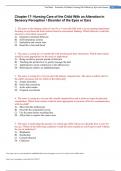
Chapter 17- Nursing Care of the Child With an Alteration in
Sensory Perception / Disorder of the Eyes or Ears
1. The nurse is developing a plan of care for a 5-year-old child with a severe hearing impairment
focusing on psychosocial interventions based on assessment findings. Which behavior would the
nurse have most likely assessed?
A) Immature emotional behavior
B) Self-stimulatory actions
C) Inattention and vacant stare
D) Head tilt or forward thrust
2. The nurse is caring for a 3-month-old with nasolacrimal duct obstruction. Which intervention
would be most appropriate for the nurse to implement?
A) Being careful to prevent spread of infection
B) Teaching the parents how to gently massage the duct
C) Applying hot, moist compresses to the affected eye
D) Referring the child to an ophthalmologist
3. The nurse is caring for a 10-year-old with allergic conjunctivitis. The nurse would be alert to
the child's increased risk for which of the following?
A) Atopic dermatitis
B) Insect bite sensitivity
C) Acute otitis media
D) Frequent sore throats
4. The nurse is caring for a 6-year-old visually impaired boy and is about to begin the physical
examination. Which intervention would be most appropriate to promote effective communication
with the child?
A) Show him the stethoscope.
B) Describe the examination room.
C) Use his name before touching him.
D) Allow him to explore the exam room.
5. The nurse is instructing the parents of a school-age child with an eye disorder how to care for
her eye. Which of the following conditions would the nurse explain as resolving by itself without
the use of antibiotics?
A) Blepharitis
B) Hordeolum
C) Corneal abrasion
D) Chalazion
This study source was downloaded by 100000889438651 from nursinghero.com on 01-31-2025 16:26:16 GMT -06:00
https://www.nursinghero.com//study-files/7166373
, Test Bank – Essentials of Pediatric Nursing (4th Edition) by Kyle and Carman 107
6. The nurse is caring for a 4-year-old boy with infectious conjunctivitis. Which intervention
would be least appropriate to include in the child's plan of care?
A) Rinsing the eye with cool water
B) Educating the family about the disease
C) Encouraging frequent hand washing
D) Promoting eye safety
7. The nurse is examining a 7-year-old boy with blepharitis. Which of the following would the
nurse least likely expect to assess?
A) Redness
B) Scaling
C) Pain
D) Edema
8. The nurse is caring for a newborn and knows that his vision, unlike his hearing, is not fully
developed. Which aspect of the child's vision would the nurse expect to be similar to his father's
vision?
A) Adequate color detection
B) Visual acuity of 20/100
C) Nearsightedness
D) Monocular vision
9. The nurse is taking a health history for a 9-year-old girl. Which finding would alert the nurse
to a possible risk factor specifically associated with visual impairment?
A) Being born at 39 weeks' gestation
B) Having several hours of homework daily
C) Being of African American heritage
D) Being active in sports
10. The nurse is examining a 3-year-old boy with acute otitis media who has a mild earache and
a temperature of 38.5º C. Which of the following actions will be taken?
A) Obtain a culture of the middle ear fluid.
B) Instruct the parents to watch for worsening symptoms.
C) Administer antibiotics.
D) Administer antivirals.
11. A nurse is examining a 7-year-old boy with hordeolum. Which of the following would the
nurse expect to find?
A) Redness
B) Scaling
C) Pain
This study source was downloaded by 100000889438651 from nursinghero.com on 01-31-2025 16:26:16 GMT -06:00
https://www.nursinghero.com//study-files/7166373
Chapter 17- Nursing Care of the Child With an Alteration in
Sensory Perception / Disorder of the Eyes or Ears
1. The nurse is developing a plan of care for a 5-year-old child with a severe hearing impairment
focusing on psychosocial interventions based on assessment findings. Which behavior would the
nurse have most likely assessed?
A) Immature emotional behavior
B) Self-stimulatory actions
C) Inattention and vacant stare
D) Head tilt or forward thrust
2. The nurse is caring for a 3-month-old with nasolacrimal duct obstruction. Which intervention
would be most appropriate for the nurse to implement?
A) Being careful to prevent spread of infection
B) Teaching the parents how to gently massage the duct
C) Applying hot, moist compresses to the affected eye
D) Referring the child to an ophthalmologist
3. The nurse is caring for a 10-year-old with allergic conjunctivitis. The nurse would be alert to
the child's increased risk for which of the following?
A) Atopic dermatitis
B) Insect bite sensitivity
C) Acute otitis media
D) Frequent sore throats
4. The nurse is caring for a 6-year-old visually impaired boy and is about to begin the physical
examination. Which intervention would be most appropriate to promote effective communication
with the child?
A) Show him the stethoscope.
B) Describe the examination room.
C) Use his name before touching him.
D) Allow him to explore the exam room.
5. The nurse is instructing the parents of a school-age child with an eye disorder how to care for
her eye. Which of the following conditions would the nurse explain as resolving by itself without
the use of antibiotics?
A) Blepharitis
B) Hordeolum
C) Corneal abrasion
D) Chalazion
This study source was downloaded by 100000889438651 from nursinghero.com on 01-31-2025 16:26:16 GMT -06:00
https://www.nursinghero.com//study-files/7166373
, Test Bank – Essentials of Pediatric Nursing (4th Edition) by Kyle and Carman 107
6. The nurse is caring for a 4-year-old boy with infectious conjunctivitis. Which intervention
would be least appropriate to include in the child's plan of care?
A) Rinsing the eye with cool water
B) Educating the family about the disease
C) Encouraging frequent hand washing
D) Promoting eye safety
7. The nurse is examining a 7-year-old boy with blepharitis. Which of the following would the
nurse least likely expect to assess?
A) Redness
B) Scaling
C) Pain
D) Edema
8. The nurse is caring for a newborn and knows that his vision, unlike his hearing, is not fully
developed. Which aspect of the child's vision would the nurse expect to be similar to his father's
vision?
A) Adequate color detection
B) Visual acuity of 20/100
C) Nearsightedness
D) Monocular vision
9. The nurse is taking a health history for a 9-year-old girl. Which finding would alert the nurse
to a possible risk factor specifically associated with visual impairment?
A) Being born at 39 weeks' gestation
B) Having several hours of homework daily
C) Being of African American heritage
D) Being active in sports
10. The nurse is examining a 3-year-old boy with acute otitis media who has a mild earache and
a temperature of 38.5º C. Which of the following actions will be taken?
A) Obtain a culture of the middle ear fluid.
B) Instruct the parents to watch for worsening symptoms.
C) Administer antibiotics.
D) Administer antivirals.
11. A nurse is examining a 7-year-old boy with hordeolum. Which of the following would the
nurse expect to find?
A) Redness
B) Scaling
C) Pain
This study source was downloaded by 100000889438651 from nursinghero.com on 01-31-2025 16:26:16 GMT -06:00
https://www.nursinghero.com//study-files/7166373