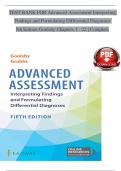
TEST BANK FOR Advanced Assessment Interpreting
Findings and Formulating Differential Diagnoses
5th Edition Goolsby Chapters 1 - 22 | Complete
, TABLE OF CONTENTS
c c
➢ Chapterc1.cAssessmentcandcClinicalcDecisioncMaking:cAncOverview
➢ Chapterc2.cGenomiccAssessment:cInterpretingcFindingscandcFormulatingcDifferentialcDiagnoses
➢ Chapterc3.cSkin
➢ Chapterc4.cHead,cFace,candcNeck
➢ Chapterc5.cThecEye
➢ Chapterc6.cEar,cNose,cMouth,candcThroat
➢ Chapterc7.cCardiaccandcPeripheralcVascularcSystems
➢ Chapterc8.cRespiratorycSystem
➢ Chapterc9.cBreasts
➢ Chapterc10.cAbdomen
➢ Chapterc11.cGenitourinarycSystem
➢ Chapterc12.cMalecReproductivecSystem
➢ Chapterc13.cFemalecReproductivecSystem
➢ Chapterc14.cMusculoskeletalcSystem
➢ Chapterc15.cNeurologicalcSystem
➢ Chapterc16.cNonspecificcComplaints
➢ Chapterc17.cPsychiatriccMentalcHealth
➢ Chapterc18.cPediatriccPatients
➢ Chapterc19.cPregnantcPatients
➢ Chapterc20.cAssessmentcofcthecTransgendercorcGendercDiversecAdult
➢ Chapterc21.cOldercPatients
➢ Chapterc22.cPersonscWithcDisabilities
, ➢ Chapter 1. Assessment and Clinical Decision Making: An Overview
c c c c c c c c
Multiplec Choice
Identifycthecchoicecthatcbestccompletescthecstatementcorcanswerscthecquestion.
c 1. Whichctypecofcclinicalcdecision-makingciscmostcreliable?
A. Intuitive
B. Analytical
C. Experiential
D. Augenblick
c 2. Whichcofcthecfollowingciscfalse?cTocobtaincadequatechistory,chealth-carecproviderscmustcbe:
A. Methodicalcandcsystematic
B. Attentivectocthecpatient’scverbalcandcnonverbalclanguage
C. Ablectocaccuratelycinterpretcthecpatient’scresponses
D. Adeptcatcreadingcintocthecpatient’scstatements
c 3. Essentialcpartscofcachealthchistorycincludecallcofcthecfollowingcexcept:
A. Chiefccomplaint
B. Historycofcthecpresentcillness
C. Currentcvitalcsigns
D. Allcofcthecabovecarecessentialchistoryccomponents
c 4. Whichcofcthecfollowingciscfalse?cWhilecperformingcthecphysicalcexamination,cthecexaminercmustcbecablecto:
A. Differentiatecbetweencnormalcandcabnormalcfindings
B. Recallcknowledgecofcacrangecofcconditionscandctheircassociatedcsignscandcsymptoms
C. Recognizechowccertaincconditionscaffectcthecresponsectocothercconditions
D. Foreseecunpredictablecfindings
c 5. Thecfollowingciscthecleastcreliablecsourcecofcinformationcforcdiagnosticcstatistics:
A. Evidence-basedcinvestigations
B. Primarycreportscofcresearch
C. Estimationcbasedconcacprovider’scexperience
D. Publishedcmeta-analyses
c 6. Thecfollowingccancbecusedctocassistcincsoundcclinicalcdecision-making:
A. Algorithmcpublishedcincacpeer-reviewedcjournalcarticle
, B. Clinicalcpracticecguidelines
C. Evidence-basedcresearch
D. Allcofcthecabove
c 7. Ifcacdiagnosticcstudychaschighcsensitivity,c thiscindicatesca:
A. Highcpercentagecofcpersonscwithcthecgivencconditioncwillchavecancabnormalcresult
B. Lowcpercentagecofcpersonscwithcthecgivencconditioncwillchavecancabnormalcresult
C. Lowclikelihoodcofcnormalcresultcincpersonscwithoutcacgivenccondition
D. Nonecofcthecabove
c 8. Ifcacdiagnosticcstudychaschighcspecificity,c thiscindicatesca:
A. Lowcpercentagecofchealthycindividualscwillcshowcacnormalcresult
B. Highcpercentagecofchealthycindividualscwillcshowcacnormalcresult
C. Highcpercentagecofcindividualscwithcacdisordercwillcshowcacnormalcresult
D. Lowcpercentagecofcindividualscwithcacdisordercwillcshowcancabnormalcresult
c 9. Aclikelihoodcratiocabovec1cindicatescthatcacdiagnosticctestcshowingca:
A. Positivecresultciscstronglycassociatedcwithcthecdisease
B. Negativecresultciscstronglycassociatedcwithcabsencecofcthecdisease
C. Positivecresultciscweaklycassociatedcwithcthecdisease
D. Negativecresultciscweaklycassociatedcwithcabsencecofcthecdisease
Findings and Formulating Differential Diagnoses
5th Edition Goolsby Chapters 1 - 22 | Complete
, TABLE OF CONTENTS
c c
➢ Chapterc1.cAssessmentcandcClinicalcDecisioncMaking:cAncOverview
➢ Chapterc2.cGenomiccAssessment:cInterpretingcFindingscandcFormulatingcDifferentialcDiagnoses
➢ Chapterc3.cSkin
➢ Chapterc4.cHead,cFace,candcNeck
➢ Chapterc5.cThecEye
➢ Chapterc6.cEar,cNose,cMouth,candcThroat
➢ Chapterc7.cCardiaccandcPeripheralcVascularcSystems
➢ Chapterc8.cRespiratorycSystem
➢ Chapterc9.cBreasts
➢ Chapterc10.cAbdomen
➢ Chapterc11.cGenitourinarycSystem
➢ Chapterc12.cMalecReproductivecSystem
➢ Chapterc13.cFemalecReproductivecSystem
➢ Chapterc14.cMusculoskeletalcSystem
➢ Chapterc15.cNeurologicalcSystem
➢ Chapterc16.cNonspecificcComplaints
➢ Chapterc17.cPsychiatriccMentalcHealth
➢ Chapterc18.cPediatriccPatients
➢ Chapterc19.cPregnantcPatients
➢ Chapterc20.cAssessmentcofcthecTransgendercorcGendercDiversecAdult
➢ Chapterc21.cOldercPatients
➢ Chapterc22.cPersonscWithcDisabilities
, ➢ Chapter 1. Assessment and Clinical Decision Making: An Overview
c c c c c c c c
Multiplec Choice
Identifycthecchoicecthatcbestccompletescthecstatementcorcanswerscthecquestion.
c 1. Whichctypecofcclinicalcdecision-makingciscmostcreliable?
A. Intuitive
B. Analytical
C. Experiential
D. Augenblick
c 2. Whichcofcthecfollowingciscfalse?cTocobtaincadequatechistory,chealth-carecproviderscmustcbe:
A. Methodicalcandcsystematic
B. Attentivectocthecpatient’scverbalcandcnonverbalclanguage
C. Ablectocaccuratelycinterpretcthecpatient’scresponses
D. Adeptcatcreadingcintocthecpatient’scstatements
c 3. Essentialcpartscofcachealthchistorycincludecallcofcthecfollowingcexcept:
A. Chiefccomplaint
B. Historycofcthecpresentcillness
C. Currentcvitalcsigns
D. Allcofcthecabovecarecessentialchistoryccomponents
c 4. Whichcofcthecfollowingciscfalse?cWhilecperformingcthecphysicalcexamination,cthecexaminercmustcbecablecto:
A. Differentiatecbetweencnormalcandcabnormalcfindings
B. Recallcknowledgecofcacrangecofcconditionscandctheircassociatedcsignscandcsymptoms
C. Recognizechowccertaincconditionscaffectcthecresponsectocothercconditions
D. Foreseecunpredictablecfindings
c 5. Thecfollowingciscthecleastcreliablecsourcecofcinformationcforcdiagnosticcstatistics:
A. Evidence-basedcinvestigations
B. Primarycreportscofcresearch
C. Estimationcbasedconcacprovider’scexperience
D. Publishedcmeta-analyses
c 6. Thecfollowingccancbecusedctocassistcincsoundcclinicalcdecision-making:
A. Algorithmcpublishedcincacpeer-reviewedcjournalcarticle
, B. Clinicalcpracticecguidelines
C. Evidence-basedcresearch
D. Allcofcthecabove
c 7. Ifcacdiagnosticcstudychaschighcsensitivity,c thiscindicatesca:
A. Highcpercentagecofcpersonscwithcthecgivencconditioncwillchavecancabnormalcresult
B. Lowcpercentagecofcpersonscwithcthecgivencconditioncwillchavecancabnormalcresult
C. Lowclikelihoodcofcnormalcresultcincpersonscwithoutcacgivenccondition
D. Nonecofcthecabove
c 8. Ifcacdiagnosticcstudychaschighcspecificity,c thiscindicatesca:
A. Lowcpercentagecofchealthycindividualscwillcshowcacnormalcresult
B. Highcpercentagecofchealthycindividualscwillcshowcacnormalcresult
C. Highcpercentagecofcindividualscwithcacdisordercwillcshowcacnormalcresult
D. Lowcpercentagecofcindividualscwithcacdisordercwillcshowcancabnormalcresult
c 9. Aclikelihoodcratiocabovec1cindicatescthatcacdiagnosticctestcshowingca:
A. Positivecresultciscstronglycassociatedcwithcthecdisease
B. Negativecresultciscstronglycassociatedcwithcabsencecofcthecdisease
C. Positivecresultciscweaklycassociatedcwithcthecdisease
D. Negativecresultciscweaklycassociatedcwithcabsencecofcthecdisease