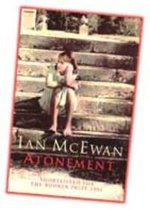
Atonement - Ian McEwan
Context
- Born in 1948 in Aldershot, England →Aldershot=main training centre British army,
and McEwan’s father was an army officer.
- During his childhood, family posted with army to Singapore, Tripoli and Germany.
- With his subsequent ~ collection, In Between the Sheets (1978), and his first novel,
The Cement Garden (1978)→reputation being one of new breed of ‘dirty realist’
writers who explored dingy corners human psyche.
- Plot is shadowed by Western Europe’s violent 20th-century history.
- In all McEwan’s fiction→key moment, often accidental or inadvertent event, which
leads to destruction of lives, from which there is no turning back, and from which
terrible and inevitable train of events unravels.
- violence and sexual perversion McEwan’s earlier fiction maturely realised and fully
embedded Atonement→Paul Marshall frighteningly recognisable and wholly
plausible psychologically, more alarming for his apparent normality
- McEwan’s work nominated for many awards and won several prizes→ Booker Prize
1998 for Amsterdam and Whitbread for The Child in Time in 1987, made a
Companion of the British Empire in 2000, a recognition lifetime’s achievements in
British fiction.
- Influence of Lucilla Andrews’ “No Time For Romance” (1977) → account of a nurse
during WW2
- Literary Period: Contemporary
- Genre: Historical fiction, crime writing, modernism
- Climax: Briony Tallis’s false testimony, condemning Robbie Turner for the rape of
Lola Quincey
- Antagonist: Paul Marshall
- Point of View: Limited 3rd person
- For the first act, we see a change in perspective changing during each chapter (Ex:
Chp 2: Cecilia, Chp 3: Briony, Chp 4: Cecilia, Chp 5: Lola/Paul)
- Second act has only the perspective of Robbie and Third chapter only Briony
Context
- Born in 1948 in Aldershot, England →Aldershot=main training centre British army,
and McEwan’s father was an army officer.
- During his childhood, family posted with army to Singapore, Tripoli and Germany.
- With his subsequent ~ collection, In Between the Sheets (1978), and his first novel,
The Cement Garden (1978)→reputation being one of new breed of ‘dirty realist’
writers who explored dingy corners human psyche.
- Plot is shadowed by Western Europe’s violent 20th-century history.
- In all McEwan’s fiction→key moment, often accidental or inadvertent event, which
leads to destruction of lives, from which there is no turning back, and from which
terrible and inevitable train of events unravels.
- violence and sexual perversion McEwan’s earlier fiction maturely realised and fully
embedded Atonement→Paul Marshall frighteningly recognisable and wholly
plausible psychologically, more alarming for his apparent normality
- McEwan’s work nominated for many awards and won several prizes→ Booker Prize
1998 for Amsterdam and Whitbread for The Child in Time in 1987, made a
Companion of the British Empire in 2000, a recognition lifetime’s achievements in
British fiction.
- Influence of Lucilla Andrews’ “No Time For Romance” (1977) → account of a nurse
during WW2
- Literary Period: Contemporary
- Genre: Historical fiction, crime writing, modernism
- Climax: Briony Tallis’s false testimony, condemning Robbie Turner for the rape of
Lola Quincey
- Antagonist: Paul Marshall
- Point of View: Limited 3rd person
- For the first act, we see a change in perspective changing during each chapter (Ex:
Chp 2: Cecilia, Chp 3: Briony, Chp 4: Cecilia, Chp 5: Lola/Paul)
- Second act has only the perspective of Robbie and Third chapter only Briony