Seed Science and Technology (PPH31306 period
3, 2025)
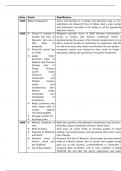
Lecture 1 + 2 Introduction Chapter 1 What is a seed?
Seed is our food. Seed are in the environment (soil seed banks), seeds are
stored in the seedbanks (gene banks)
Seed: next generation of a plant, which contains a complete new next
generation (embryo) as well as other supportive (endosperm) and
protective (seed coat) structures.
Finiculus: when it is still attached
to the mother plant only than you
can see this.
Microplyle: allows pollen to enter,
for germination, location allowing
water and oxygen enter the seed.
Hilum: scar were it was attached
to mother plant via funiculus. No
direct function but close to the
micropyle
Seed coat: outer protective layer, crucial for survival, other name Testa,
protection against pathogens, dormancy preventing water and gas
exchange ensuring the seed to germinate in favourable conditions.
Radicle: embryonic root, first structure to emerge during germination.
Apical meristem: dividing of cells take place, SAM and RAM.
Undifferentiated cells
Angiosperm: flowering plants, seeds can be enclosed by fruits, double
fertilization, monocots and dicots (one or two cotyledons). Important for
food
Gymnosperm: group of the cones, not enclosed in fruit, no flowers, often
needle, pollination by wind, insects or animals
- Megagametophyte: food storage, they do not have an endosperm.
Endosperm: triploid: two female cells and one of the male gamete,
provide food for the first growth till plant can do photosynthesis.
Embryo: diploid by male and female gamete fertilization
Integuments/seed coat/Testa: diploid but only female, integument
develop in seed coat. Around the ovule.
Perisperm: found in some seeds, produced from nucellus. Maternal in
origin. Storage, starch, proteins, fats. Mostly present in seeds with no
endosperm or not the primary source of nutrients.
Hypocotyl: part of embryo between radicle and cotyledon. Hold
cotyledon above ground. Connection root shoot
Some seeds have fruit around the seed coat. Like sunflower. They have
layer called pericarp.
,Seed have different types of reserves, carbohydrates (sugars, starch,
fibers), oils, proteins.
- And in smaller amounts, different per specie: alkaloids, lectins,
proteinase inhibitors, phytin, raffinose family oligosaccharides
(RFOs)
Agricultural revolution:
- Neolithic Revolution: 10.000BC, transition from hunting to settle
- British Agricultural revolution: 17th-19th century: selective breeding,
increase production
- Green revolution: 1930s-1960s: irrigation (water installations),
fertilizers, pesticides, machinery
Domestication:
- the onset or initiation of process of evolutionary divergence from the
wild ancestral species. Plants are bred and modified over
generations for specific purposes.:
Diversification:
- subsequent evolution of new varieties, including greater
improvement in yield, adaptation or quality in crop species.
- Non-chattering: you want to harvest you seeds yourself. Different
genes involved in. small mutation before the start codon. Maiz
small removal of exons.
- Plant architecture: change in structure plant by mutation.
Sigmoid curve, cumulative frequency distribution:
- Not every seed in the population germinates at the same time.
Dormancy releases over time.
- Every seed needs a specific time
Gel-diffusion assay: endo-b-mannanase that helps to make the
endosperm less solid. Agarose + galactomannan is being degraded when
the seed is going to germinate.
,Chapter 1 Structure and Composition
1.1 Introduction
Seeds are value for there reserves of protein starch and oil production
during development and maturation.
Over the years farmers selected seed that improved the yield, improved in
understanding breeding and genetics, seed food quality and that is grown
to what is today. The seeds are mostly used are for cereals (meergranen)
and legumes (groenten)
Seed = seed contain an embryo, which is the next generation of plant in
miniature, it is usually formed by sexual reproduction and arises from the
ovule during development.
This success of formation of new individuals is determined by physiological
and biochemical features of the seed. Key importance to this success is
the responses of the seed to its environment, and the food reserves it
contains, these are available to sustain the young plant in the early stages
of growth before it becomes an independent, autotrophic organism, able to
use light energy
1.2 Seed structure
Spermatophytes = angiosperms and gymnosperms where seed
develops from the fertilized ovule.
1) Embryo = ferritization of egg cell nucleus and male pollen tube
nuclei
2) Endosperm = two polar nuclei of central cells embryo and one
other pollen tube nucleus.
3) The perisperm = development of nucellus
4) Testa (Seed coat) = formed by outer integuments around the
ovule
The presence of endosperm and perisperm varies among species. In
gymnosperms no fusion of male polar nuclei and pollen nucleus leads to
triploid endosperm. They form megagamethphyte that is haploid and
also stores nutrients. Embryos can be formed secual repdroduction but
also more rarely by nonsexual processes.
1.2.1 Embryo
Embryo consist of embryonic root and one or more cotyledons.
Monocots only have one cotyledon.
- Embryonic root (radicle)
- Hypocotyl (cotyledons attached), form mesocotyl
- Shoot apex (first leave formed)
- Primordia (plumule = first leave)
Embryo less of the seed in well-developed endosperms and more in non-
endospermic seeds. Cotyledons are thin and flattened in well-developed
, because of not much food storage. In non-endospermic cotyledons contain
the food content and is almost the hole seed mass
Non-endospermic seed are epigeal (born above the ground), and
cotyledons become photosynthetic and do not contain that much storage
compared to hypogeal types that types that germinates in the ground.
Polycotyledonous = several cotyledons
Polyembryony = more than one embryo in a seed, division of the
fertilized egg cell to form several zygote initials. Haploid.
3, 2025)
Lecture 1 + 2 Introduction Chapter 1 What is a seed?
Seed is our food. Seed are in the environment (soil seed banks), seeds are
stored in the seedbanks (gene banks)
Seed: next generation of a plant, which contains a complete new next
generation (embryo) as well as other supportive (endosperm) and
protective (seed coat) structures.
Finiculus: when it is still attached
to the mother plant only than you
can see this.
Microplyle: allows pollen to enter,
for germination, location allowing
water and oxygen enter the seed.
Hilum: scar were it was attached
to mother plant via funiculus. No
direct function but close to the
micropyle
Seed coat: outer protective layer, crucial for survival, other name Testa,
protection against pathogens, dormancy preventing water and gas
exchange ensuring the seed to germinate in favourable conditions.
Radicle: embryonic root, first structure to emerge during germination.
Apical meristem: dividing of cells take place, SAM and RAM.
Undifferentiated cells
Angiosperm: flowering plants, seeds can be enclosed by fruits, double
fertilization, monocots and dicots (one or two cotyledons). Important for
food
Gymnosperm: group of the cones, not enclosed in fruit, no flowers, often
needle, pollination by wind, insects or animals
- Megagametophyte: food storage, they do not have an endosperm.
Endosperm: triploid: two female cells and one of the male gamete,
provide food for the first growth till plant can do photosynthesis.
Embryo: diploid by male and female gamete fertilization
Integuments/seed coat/Testa: diploid but only female, integument
develop in seed coat. Around the ovule.
Perisperm: found in some seeds, produced from nucellus. Maternal in
origin. Storage, starch, proteins, fats. Mostly present in seeds with no
endosperm or not the primary source of nutrients.
Hypocotyl: part of embryo between radicle and cotyledon. Hold
cotyledon above ground. Connection root shoot
Some seeds have fruit around the seed coat. Like sunflower. They have
layer called pericarp.
,Seed have different types of reserves, carbohydrates (sugars, starch,
fibers), oils, proteins.
- And in smaller amounts, different per specie: alkaloids, lectins,
proteinase inhibitors, phytin, raffinose family oligosaccharides
(RFOs)
Agricultural revolution:
- Neolithic Revolution: 10.000BC, transition from hunting to settle
- British Agricultural revolution: 17th-19th century: selective breeding,
increase production
- Green revolution: 1930s-1960s: irrigation (water installations),
fertilizers, pesticides, machinery
Domestication:
- the onset or initiation of process of evolutionary divergence from the
wild ancestral species. Plants are bred and modified over
generations for specific purposes.:
Diversification:
- subsequent evolution of new varieties, including greater
improvement in yield, adaptation or quality in crop species.
- Non-chattering: you want to harvest you seeds yourself. Different
genes involved in. small mutation before the start codon. Maiz
small removal of exons.
- Plant architecture: change in structure plant by mutation.
Sigmoid curve, cumulative frequency distribution:
- Not every seed in the population germinates at the same time.
Dormancy releases over time.
- Every seed needs a specific time
Gel-diffusion assay: endo-b-mannanase that helps to make the
endosperm less solid. Agarose + galactomannan is being degraded when
the seed is going to germinate.
,Chapter 1 Structure and Composition
1.1 Introduction
Seeds are value for there reserves of protein starch and oil production
during development and maturation.
Over the years farmers selected seed that improved the yield, improved in
understanding breeding and genetics, seed food quality and that is grown
to what is today. The seeds are mostly used are for cereals (meergranen)
and legumes (groenten)
Seed = seed contain an embryo, which is the next generation of plant in
miniature, it is usually formed by sexual reproduction and arises from the
ovule during development.
This success of formation of new individuals is determined by physiological
and biochemical features of the seed. Key importance to this success is
the responses of the seed to its environment, and the food reserves it
contains, these are available to sustain the young plant in the early stages
of growth before it becomes an independent, autotrophic organism, able to
use light energy
1.2 Seed structure
Spermatophytes = angiosperms and gymnosperms where seed
develops from the fertilized ovule.
1) Embryo = ferritization of egg cell nucleus and male pollen tube
nuclei
2) Endosperm = two polar nuclei of central cells embryo and one
other pollen tube nucleus.
3) The perisperm = development of nucellus
4) Testa (Seed coat) = formed by outer integuments around the
ovule
The presence of endosperm and perisperm varies among species. In
gymnosperms no fusion of male polar nuclei and pollen nucleus leads to
triploid endosperm. They form megagamethphyte that is haploid and
also stores nutrients. Embryos can be formed secual repdroduction but
also more rarely by nonsexual processes.
1.2.1 Embryo
Embryo consist of embryonic root and one or more cotyledons.
Monocots only have one cotyledon.
- Embryonic root (radicle)
- Hypocotyl (cotyledons attached), form mesocotyl
- Shoot apex (first leave formed)
- Primordia (plumule = first leave)
Embryo less of the seed in well-developed endosperms and more in non-
endospermic seeds. Cotyledons are thin and flattened in well-developed
, because of not much food storage. In non-endospermic cotyledons contain
the food content and is almost the hole seed mass
Non-endospermic seed are epigeal (born above the ground), and
cotyledons become photosynthetic and do not contain that much storage
compared to hypogeal types that types that germinates in the ground.
Polycotyledonous = several cotyledons
Polyembryony = more than one embryo in a seed, division of the
fertilized egg cell to form several zygote initials. Haploid.