Chapter Two: Tools for Your Financial Journey
Overview of Interest
Interest
● The root of making your money work for you
● The price paid for the use of money
When you borrow money you pay it back plus interest
- Example: Loans for cars/house
Simple interest
● Based on the initial principal
● The total payback amount will be the principal plus interest
Compound interest
● Interest calculated at the end of each period is added to the
principal
Compound Growth
● Investment gains earned in the 1st time period are put to work
in the 2nd time period to earn more investment returns
Risk and Return
When you deposit money into a savings account at a bank or credit
union, you are lending it to that financial institution
● The bank pays you interest for the use of your money
● You make a low-risk loan because you can get your money back
any time
● Your savings deposit is protected against loss
The Federal Deposit insurance Corporation (FDIC) and the National
Credit Union Administration (NCUA) protect your deposit up to 250,00
APR & APY Formulas
Annual Percentage Rate (APR)
● If interest is calculated more frequently than once per year,
then the annual percentage rate (APR) becomes the annual sum
, of the periodic interest rates applied to the account, without
considering the effect of compound growth
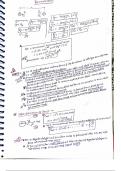
APR= Periodic Interest Rate X Number of Periods in the Year
Annual Percentage Yield (APY)
● The annual percentage yield (APY) accounts for
compound growth, or the additional interest earns
APY=[(1+Periodic Interest Rate)^(number of periods in year)]-1
Consider Interest Strategically
Minimizing Interest Payments
● The only way to stop interest is to eliminate the cause- the
loan principal amount accruing interest
● Pay off your credit card debt in full
● Wait to spend money: this will often determine whether
you pay interest or receive interest
The Advantages of Patient Planning
● Some financial accounts have early withdrawal penalties
● Other financial products, like U.S. savings bonds, will not
let you cash in the bond for at least 1 year
Understanding Time Value of Money (TVM)
Anytime you are working with a financial goal that involves
money,time, and interest, you will want to use
TVM calculations
Future Value
● How much current savings and investments will be worth
at a certain date in the future
Present Value
● The current value of a future amount
Overview of Interest
Interest
● The root of making your money work for you
● The price paid for the use of money
When you borrow money you pay it back plus interest
- Example: Loans for cars/house
Simple interest
● Based on the initial principal
● The total payback amount will be the principal plus interest
Compound interest
● Interest calculated at the end of each period is added to the
principal
Compound Growth
● Investment gains earned in the 1st time period are put to work
in the 2nd time period to earn more investment returns
Risk and Return
When you deposit money into a savings account at a bank or credit
union, you are lending it to that financial institution
● The bank pays you interest for the use of your money
● You make a low-risk loan because you can get your money back
any time
● Your savings deposit is protected against loss
The Federal Deposit insurance Corporation (FDIC) and the National
Credit Union Administration (NCUA) protect your deposit up to 250,00
APR & APY Formulas
Annual Percentage Rate (APR)
● If interest is calculated more frequently than once per year,
then the annual percentage rate (APR) becomes the annual sum
, of the periodic interest rates applied to the account, without
considering the effect of compound growth
APR= Periodic Interest Rate X Number of Periods in the Year
Annual Percentage Yield (APY)
● The annual percentage yield (APY) accounts for
compound growth, or the additional interest earns
APY=[(1+Periodic Interest Rate)^(number of periods in year)]-1
Consider Interest Strategically
Minimizing Interest Payments
● The only way to stop interest is to eliminate the cause- the
loan principal amount accruing interest
● Pay off your credit card debt in full
● Wait to spend money: this will often determine whether
you pay interest or receive interest
The Advantages of Patient Planning
● Some financial accounts have early withdrawal penalties
● Other financial products, like U.S. savings bonds, will not
let you cash in the bond for at least 1 year
Understanding Time Value of Money (TVM)
Anytime you are working with a financial goal that involves
money,time, and interest, you will want to use
TVM calculations
Future Value
● How much current savings and investments will be worth
at a certain date in the future
Present Value
● The current value of a future amount